




NISAR Launch Marks Milestone in Indo-US Space Partnership, Will Revolutionize Earth Observation: Jitendra Singh
Union Minister of State Dr. Jitendra Singh on Wednesday hailed the successful launch of the NASA-ISRO Synthetic Aperture Radar (NISAR) satellite, describing it as a landmark in Earth observation technology and a shining example of Indo-US scientific cooperation.
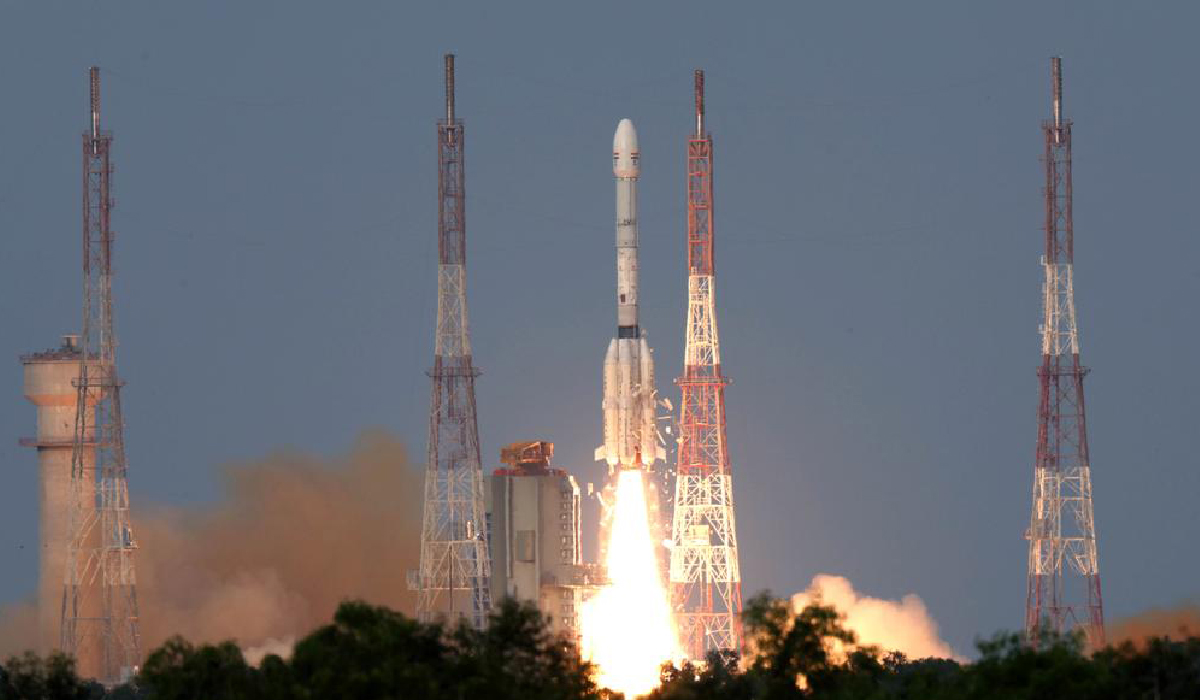
Although his parliamentary responsibilities kept him in New Delhi, Singh joined scientists and senior officials at the CSIR Auditorium to watch the satellite’s perfect launch via live broadcast from the Satish Dhawan Space Centre in Sriharikota, where the GSLV-F16 rocket carried NISAR into orbit.
“More than just a satellite, NISAR represents India’s scientific outreach to the world,” Singh stated, noting the mission’s role in showcasing the evolution of India’s space ambitions—from meeting domestic needs to contributing to global scientific knowledge.
Weighing 2,393 kilograms, NISAR is the first satellite to feature dual-frequency synthetic aperture radar technology—L-band provided by NASA and S-band by ISRO—on a single platform. This cutting-edge design allows for high-resolution imaging of Earth’s land and ice surfaces under any weather conditions, day or night, with a revisit cycle of 12 days.
In a major milestone for ISRO, the GSLV-F16 rocket inserted the satellite into a 747-kilometre sun-synchronous polar orbit. This launch marked the 18th mission for the GSLV series and the 12th time it has flown using an Indian-made cryogenic upper stage.
Singh emphasized the wide-ranging applications of NISAR, including its role in monitoring natural disasters, tracking glaciers, supporting agricultural planning, and observing climate patterns. He also underlined its relevance for sectors like civil aviation, marine navigation, coastal development, and urban infrastructure planning.
“This satellite will provide crucial data that will inform smarter decisions in areas such as air traffic control, shipping lanes, and infrastructure design,” he added.
With an open-access data policy, NISAR’s output will be available to researchers, emergency response teams, and governments around the world, especially benefiting developing nations throughout the mission’s projected five-year duration.
The $1.5 billion mission was co-funded by NASA and ISRO, with both agencies playing key roles in its development. NASA contributed the L-band radar system, GPS receiver, high-speed telecom components, and a 12-meter deployable antenna. ISRO provided the S-band radar, spacecraft bus, launch vehicle, and other support infrastructure.
Concluding his remarks, Singh credited India’s rising profile in space exploration to the leadership of Prime Minister Narendra Modi. “Whether it’s Chandrayaan or NISAR, we are not merely launching satellites—we are unlocking new frontiers in global science, sustainability, and collaborative progress,” he said.