
India Hails Historic ISS Docking as Dragon Spacecraft Ferrying Astronaut Shubhanshu Shukla Arrives
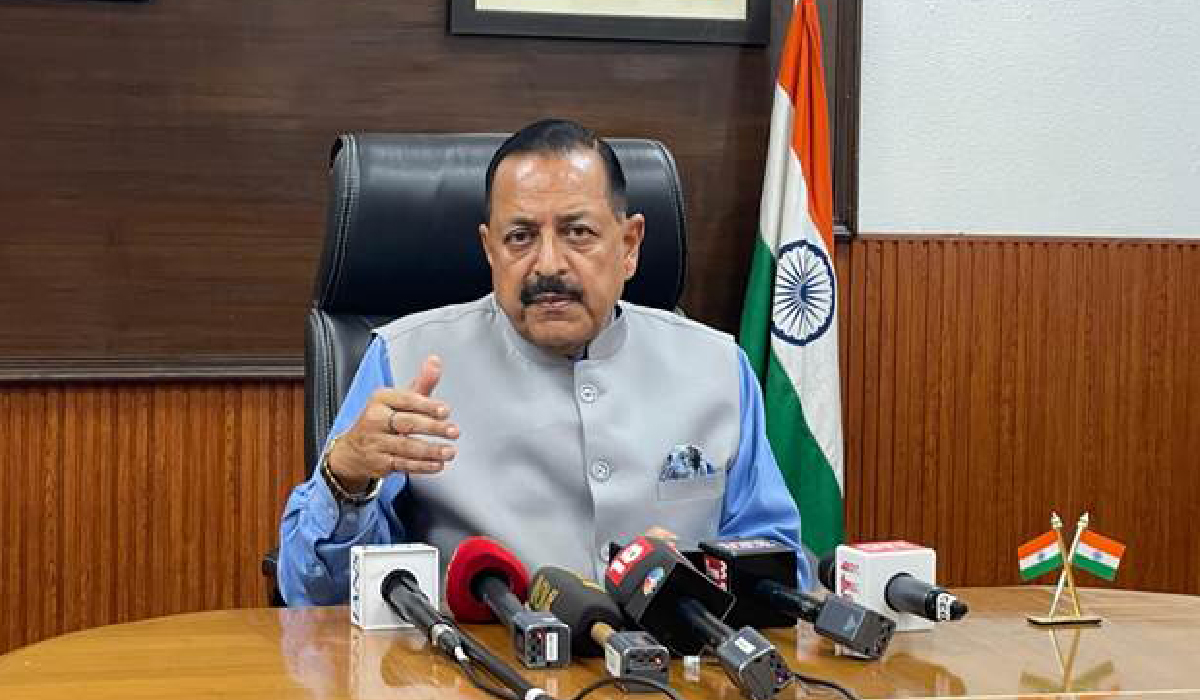
In a major milestone for India’s space programme, Dr. Jitendra Singh, Union Minister of State (Independent Charge) for Science & Technology, applauded the successful docking of the SpaceX Dragon capsule with the International Space Station (ISS). Among the crew is Group Captain Shubhanshu Shukla, representing India as he embarks on a pioneering mission to conduct seven entirely homegrown microgravity experiments—a notable advancement in the country’s pursuit of space exploration.
Praising this achievement, Dr. Singh stated that the mission embodies the principles of Atmanirbhar Bharat (self-reliant India) and Vishwabandhu Bharat (India as a global friend), ideals championed by Prime Minister Narendra Modi. He highlighted that all the experiments Shukla will conduct have been fully developed by Indian institutions, and emphasized that the scientific results will be shared worldwide for the benefit of all humanity.
“India’s presence in space exploration has moved far beyond just launching rockets,” said Dr. Singh, who also oversees the Prime Minister’s Office, Department of Space, and Department of Atomic Energy. “Today, we are actively shaping the future of life sciences and research in space. Group Captain Shubhanshu Shukla is carrying India’s scientific aspirations to the cutting edge of microgravity studies.”
The Axiom-4 mission represents India’s most significant direct involvement in space biosciences to date. According to Dr. Singh, the seven experiments being conducted aboard the ISS are expected to deliver important advances in space sustainability and drive innovative solutions here on Earth.
The first experiment, designed by the ICGEB and BRIC-NIPGR in New Delhi, investigates how edible microalgae behave in microgravity. This study focuses on their growth, metabolism, and ability to recycle oxygen and carbon dioxide—key factors essential for supporting life during extended space missions.
The second experiment, a joint effort by UAS Dharwad and IIT Dharwad, investigates the germination and nutritional characteristics of sprouting seeds such as moong and methi in microgravity. This research aims to contribute to the development of nutrient-dense and medicinal food sources for astronauts.
The third experiment, conducted by BRIC-InStem Bengaluru, studies muscle regeneration in microgravity to better understand and counteract the muscle loss astronauts often face during long-duration spaceflights. Insights from this research could also benefit rehabilitation treatments for patients on Earth.
The fourth experiment, led by researchers from IISc Bengaluru, examines the survival and reproduction of tardigrades—tiny organisms renowned for their extreme resilience—under space conditions. This study aims to shed light on strategies that could enhance human survival in harsh environments.
The fifth experiment, also conducted by IISc Bengaluru, investigates how astronauts interact with electronic displays in a zero-gravity environment. The findings will help improve the design of spacecraft control systems, enhancing both usability and safety.
Another experiment by ICGEB studies the growth of cyanobacteria using urea as a nitrogen source in microgravity. Given their capacity to recycle carbon and nitrogen, cyanobacteria could play a vital role in developing sustainable life support systems for space habitats.
The final experiment tests the resilience of seeds from rice, cowpea, sesame, brinjal, and tomato when exposed to space conditions. This study aims to advance space agriculture and support the development of climate-resilient crops on Earth.
“These groundbreaking initiatives highlight India’s rise as a global frontrunner in space biosciences,” said Dr. Singh. “India has moved beyond being a follower and is now at the forefront of missions with planetary significance. These experiments will pave the way for sustainable life in space and foster resilient ecosystems here on Earth.”