India, Maldives Sign 6 MoUs; ₹4,850 Crore Credit Announced During Modi-Muizzu Talks
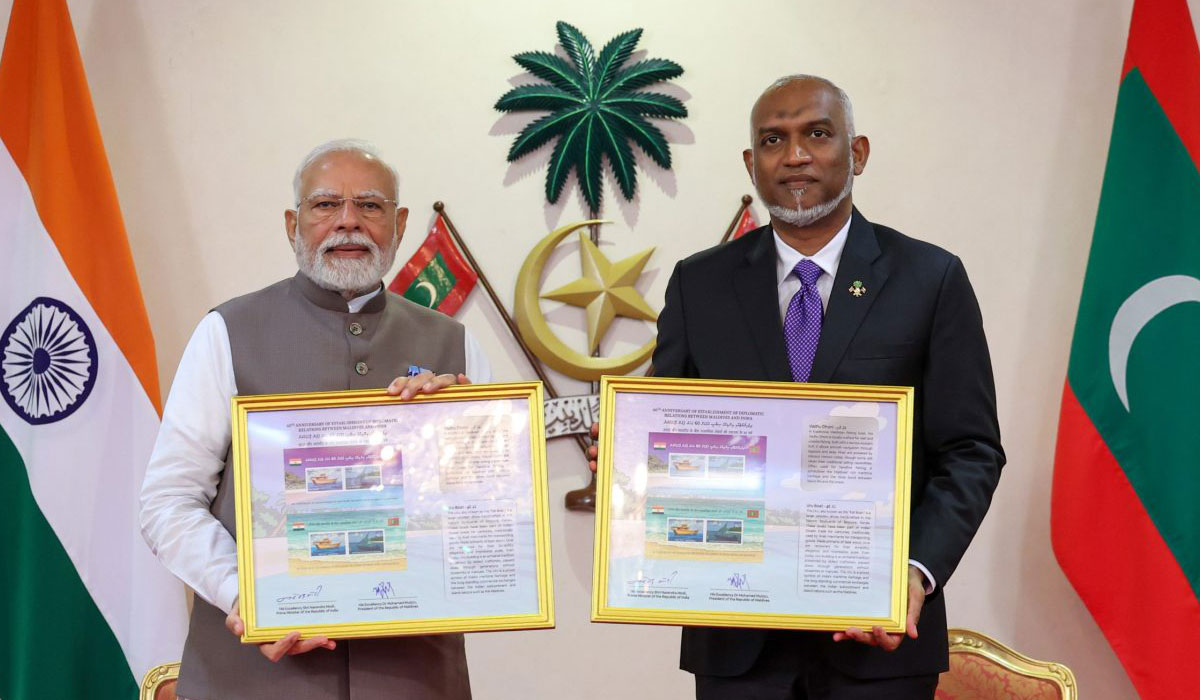
In a significant diplomatic engagement, Indian Prime Minister Narendra Modi met Maldivian President Dr. Mohamed Muizzu at the President’s Office in Male on Friday, marking a new chapter in bilateral relations between India and the Maldives. The meeting, held during Modi’s visit to commemorate the 60th anniversary of Maldives’ independence and six decades of diplomatic ties between the two nations, led to the signing of six Memorandums of Understanding (MoUs) and the announcement of a ₹4,850 crore ($580 million approx.) line of credit from India to the Maldives.
This high-level dialogue comes at a time of regional flux and growing strategic engagement in the Indian Ocean. The discussions between the two leaders underscored the importance of historical ties, mutual respect, and regional cooperation.
A Milestone Visit
Prime Minister Modi’s presence in Male to mark the 60th year of Maldivian independence was symbolic and politically significant. This was his first visit to the Maldives since the formation of the new Maldivian administration under President Muizzu, whose early days in office were marked by a recalibration of the country’s foreign policy priorities.
Speaking after the meeting, PM Modi emphasized India’s enduring commitment to the Maldives’ development and sovereignty. “India and the Maldives are not just neighbors; we are maritime partners, cultural cousins, and development collaborators. Our shared past inspires a shared future,” he said.
President Muizzu welcomed Prime Minister Modi and expressed appreciation for India’s continuous support in key sectors such as health, education, infrastructure, and disaster resilience. “This visit reflects the strength of our relationship. We have had frank, forward-looking discussions on cooperation and regional peace,” Muizzu stated.
Six MoUs to Deepen Cooperation
The six MoUs signed during the bilateral talks span multiple areas, including:
Infrastructure Development – Agreement for the expansion of connectivity and public infrastructure across islands, particularly focusing on water and sanitation systems.
Health Sector Cooperation – A new partnership to upgrade health facilities and enable joint training programs for medical professionals.
Education and Skill Development – Joint programs to enhance vocational training and digital education in Maldivian schools.
Disaster Risk Reduction and Climate Resilience – A pact to develop early warning systems and coastal protection mechanisms, crucial for the low-lying island nation.
Tourism Collaboration – Initiatives to promote sustainable tourism and facilitate easier travel between both countries.
Renewable Energy – A roadmap to implement solar and hybrid energy projects in remote islands.
Officials from both sides hailed these agreements as evidence of a “results-oriented” relationship that prioritizes the real needs of the Maldivian people.
₹4,850 Crore Line of Credit
A major outcome of the visit was India’s announcement of a ₹4,850 crore credit line aimed at funding priority development projects across the Maldives. This financial support is expected to fund climate-resilient infrastructure, renewable energy initiatives, and island connectivity projects.
The line of credit is seen as a counterbalance to the growing financial influence of other powers in the region and reflects India’s commitment to providing non-intrusive, transparent, and demand-driven assistance to its neighbors.
Indian External Affairs Minister Dr. S. Jaishankar, who accompanied PM Modi, stated that the credit line “reinforces India’s neighborhood-first policy and highlights our intention to walk the development journey with the people of the Maldives.”
Navigating Diplomatic Waters
The Modi-Muizzu meeting also served to reset the tone of bilateral relations, which had witnessed a period of tension following President Muizzu’s electoral victory in 2023. His administration initially signaled a shift in foreign policy focus, particularly with regard to Indian military presence and economic partnerships.
However, Friday’s meeting indicated a willingness from both sides to move forward on the basis of mutual respect and non-interference. While the issue of Indian military personnel stationed in the Maldives was not discussed publicly, diplomatic sources confirmed that the matter remains under review with constructive dialogue ongoing.
Analysts view the visit as a critical juncture in South Asia’s strategic equation. “This is more than a symbolic trip. It shows India’s adaptability and persistent diplomacy in a region where influence is increasingly contested,” said Dr. Meera Kumar, a senior fellow at the Indian Ocean Policy Institute.
A Shared Vision for the Indian Ocean
Both leaders reiterated their commitment to a free, open, and inclusive Indian Ocean region. Security cooperation, maritime surveillance, and anti-piracy measures were briefly discussed, though no specific agreements were announced in this domain.
A joint statement issued after the talks emphasized the two countries’ intention to collaborate in multilateral forums and uphold the rules-based international order.
Looking Ahead
Prime Minister Modi concluded his visit by attending a special ceremony hosted by the Maldivian government to commemorate 60 years of diplomatic ties. Cultural performances, photo exhibitions, and youth interactions marked the occasion, reinforcing the people-to-people connection that underpins India-Maldives relations.
As both nations look to the future, the outcomes of this visit suggest a renewed willingness to cooperate on shared priorities—from sustainable development to regional security. With six new MoUs signed and a multi-billion-rupee credit line committed, India and the Maldives have set a clear path forward for the next decade of partnership.