



Global Wildlife Fair 2025: A Turning Point for Conservation and Ecotourism
The bustling heart of India’s capital played host to a unique confluence of conservation visionaries, eco-entrepreneurs, artists, and explorers at the inaugural Global Wildlife Fair 2025 held at the Constitution Club of India. Over three vibrant days, the fair showcased the future of sustainable wildlife tourism—and perhaps, more importantly, offered a powerful reminder of the delicate balance between biodiversity, local communities, and responsible travel.
For a first-time event, GWF 2025 punched well above its weight, attracting global and regional players from across the wildlife and ecotourism spectrum. It was a rare platform where field biologists mingled with tour operators, indigenous community leaders shared space with tech innovators, and wildlife artists sketched side-by-side with conservation NGOs.
While there were teething issues—crowded venues, limited space for breakout events, and some confusion over ticketing—the fair delivered a dynamic blend of ideas, business opportunities, and public engagement. More than a traditional expo, it felt like a living, breathing ecosystem of global collaboration.
A Showcase of Global Expertise
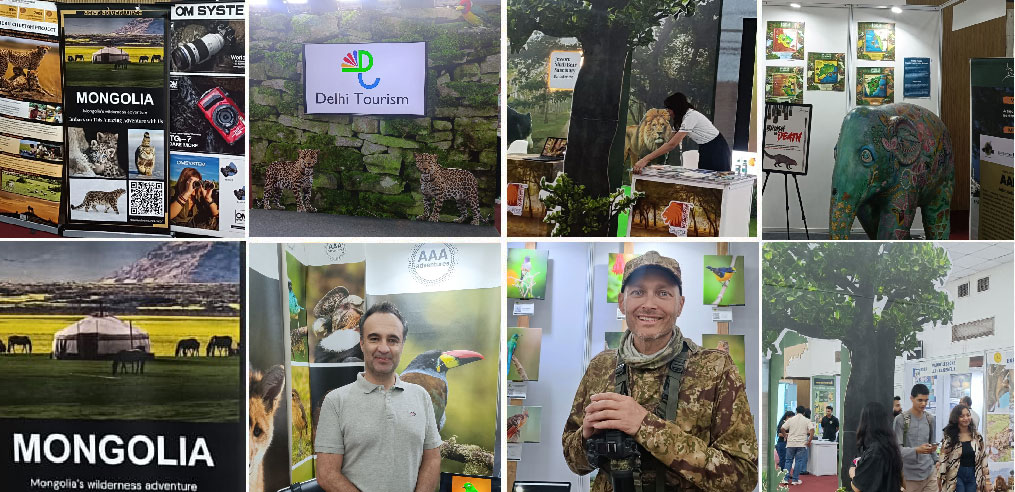
Among the international participants that stood out, Adventures Worldwide brought a compelling focus on immersive, community-based wildlife expeditions across Asia and Africa. Their exhibit emphasized not just exploration, but education—offering experiences that foster understanding between travelers and the ecosystems they visit.
Latin America was also strongly represented, particularly through specialist birding and wildlife travel companies. Manakin Nature Tours and Kolibri Expeditions, both respected names in South American ecotourism, used the fair to promote their conservation-through-tourism models, with an emphasis on endemic species, local employment, and habitat protection. From the Peruvian Amazon to the cloud forests of Colombia, their message was clear: biodiversity can be protected when tourism becomes a force for good.
Africa’s voice was powerfully present as well. Birdwatching Kenya, known for its conservation-first travel model, showcased a mix of avian riches and community involvement. Their focus on citizen science and rural development added depth to the usual safari narrative, reminding delegates that birding isn’t just a niche hobby—it’s a catalyst for conservation in some of the continent’s most threatened ecosystems.
Adding an edge of raw authenticity was Wildman – Tiwan, a boutique operator blending wilderness survival, indigenous knowledge, and conservation awareness in the Amazon basin. Their presence at GWF offered a more primal, immersive view of ecotourism—one that blurs the line between guide and guest, culture and nature.
Art, Advocacy and Adam Rainoff
Beyond business and policy, the fair celebrated the power of storytelling and visual art in conservation. A highlight was the work of Adam Rainoff, a Colombian photographer whose vivid imagery of South America’s most fragile ecosystems left an indelible impression. His ability to capture both wildlife and the human connection to nature offered a compelling argument for photography as both art and activism.
Rainoff’s work resonated with audiences not just for its technical brilliance, but for its emotional weight—evoking wonder, urgency, and a quiet plea for preservation. Many attendees described his exhibit as one of the most moving experiences of the entire fair.
India at the Center
While the fair had a strong international flavor, India was at its core. The Delhi government’s support was visible, and the showcase of Uttar Pradesh’s ecotourism potential—especially Dudhwa and Pilibhit tiger reserves—served as a regional model for how conservation and local economies can intersect. Nature art workshops, bird walks, and panel sessions on human–wildlife conflict all reflected the urgent need to reconcile development with ecological stewardship.
The Constitution Club may not have been the ideal venue logistically, but it offered a symbolic setting: a space historically associated with policy and governance now playing host to voices from the field—many of whom seldom find a seat at official tables.
Spotlight on Uttar Pradesh: A Model for Regional Ecotourism
One of the standout features of the fair was the vibrant Uttar Pradesh Tourism stall, which drew significant attention for its immersive showcase of the state’s diverse natural heritage. With a focus on the Dudhwa Tiger Reserve, Pilibhit, and the wetlands of Sarsai Nawar, the stall offered a compelling narrative about UP’s rising potential as a wildlife tourism destination. Informative displays, interactive maps, and live cultural presentations highlighted how the state is integrating conservation with community-based tourism. Officials from the UP Forest Department and Tourism Board engaged directly with visitors, sharing insights into ongoing efforts to promote lesser-known eco-destinations while ensuring local livelihoods and habitat protection. The stall served as a regional best-practice model—demonstrating how state-led initiatives, when rooted in sustainability, can uplift both biodiversity and rural economies.
A Future Worth Building
For all its ambitions, GWF 2025 was not perfect. The depth of some discussions could be improved, and the fair will need a clearer post-event roadmap if it aims to influence long-term policy or partnerships. However, as a first step, it was remarkably promising.
What stood out most was the fair’s spirit of collaboration. There was a shared recognition among global participants—from Colombia to Kenya, from Peru to India—that the future of ecotourism depends not just on protecting wildlife, but on empowering people, sharing knowledge, and building networks that cross borders.
The Global Wildlife Fair 2025 didn’t just put conservation on display—it made it personal, political, and practical. For policymakers, diplomats, and development strategists, it offered a living example of how soft power, sustainability, and storytelling can come together in service of the planet. As part of its commitment to spotlighting global environmental diplomacy and cross-border cooperation, Diplomat Today was proud to report from the ground, bringing these vital conversations to its international readership.
If future editions build on this momentum, GWF could well become a landmark in the global conservation calendar.