


India Looks to Korea’s Maritime Strength: Hardeep Singh Puri’s Visit to Hanwha Ocean Signals Strategic Shift
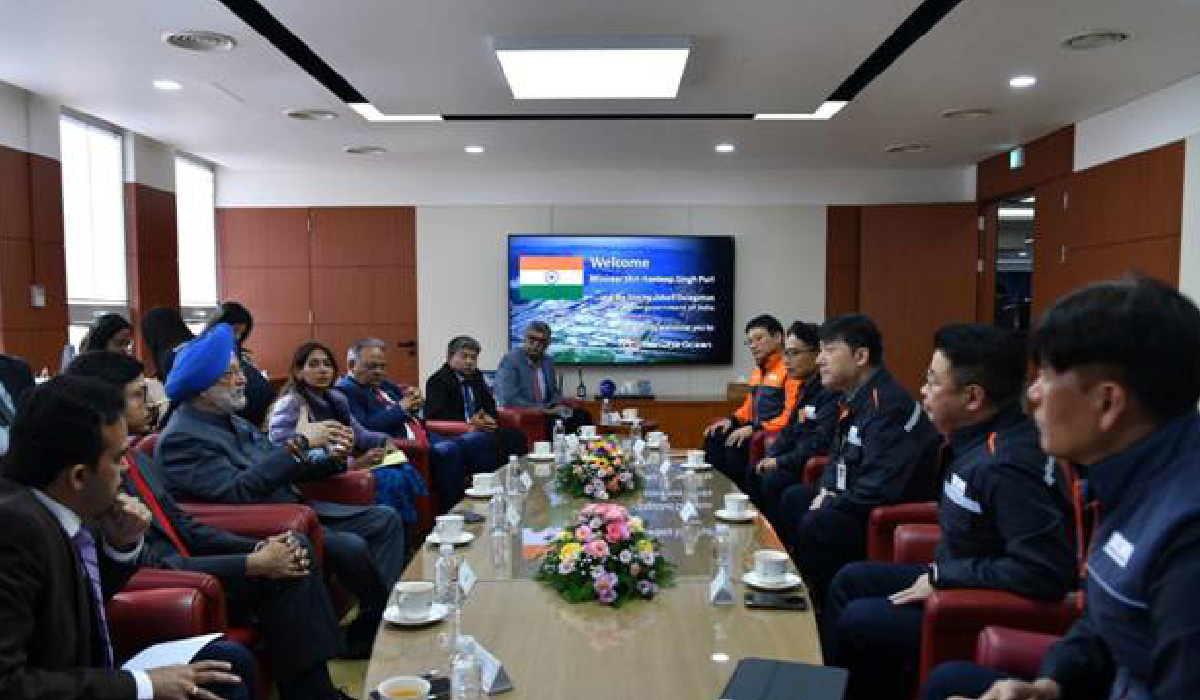
India’s growing ambitions in the global maritime arena took a visible step forward with Petroleum and Natural Gas Minister Hardeep Singh Puri’s recent visit to the Hanwha Ocean shipyard in Geoje, South Korea. The visit, part of a larger outreach to Korea’s shipbuilding giants, reflects New Delhi’s intention to reshape how India engages with the global shipping industry—moving from dependence to strategic capability.
A Meeting of Ambitions and Capabilities
Hanwha Ocean, known for some of the world’s most sophisticated shipbuilding systems, offered Puri a firsthand look at its cutting-edge production lines. The scale of the yard, its automation, and its ability to deliver high-value vessels—ranging from LNG carriers to specialized energy ships—stood out as major strengths India hopes to learn from.
For India, which relies heavily on foreign-flagged vessels to transport crude oil and LNG, the gap between its maritime needs and its domestic production ability has long been evident. Puri’s message at Hanwha was clear: India wants to narrow that gap, not gradually, but through high-impact partnerships.
India’s Maritime Moment
India’s energy sector spends billions annually on maritime freight—a cost that New Delhi increasingly views as both a financial strain and a strategic vulnerability. The government now wants more Indian-built, Indian-owned, and Indian-flagged vessels handling the nation’s vital energy supply chains.
Puri emphasized that India is ready to scale. Demand for new crude, LNG, and petrochemical carriers is rising; policies supporting shipbuilding have been strengthened; and long-term planning through initiatives like maritime development funds and targeted incentives is underway.
In short, India is preparing a framework that makes shipbuilding partnerships not just possible, but commercially attractive.
Why South Korea Matters
South Korea remains an undisputed leader in shipbuilding, with a technological edge that few countries can match. For India, tapping into that expertise—whether through joint ventures, technology collaboration, or building ships in India with Korean support—offers a faster route to strengthening its maritime industry.
Puri’s visit to Hanwha Ocean sends an important diplomatic signal: India sees South Korea not only as a supplier of ships, but as a strategic collaborator capable of helping it leapfrog into a new phase of maritime capability.
Win-Win Logic
For Korean shipyards, India represents a rare combination of scale, long-term demand, and policy support. For India, Korean know-how can accelerate timelines, reduce costs, and raise the technical standards of domestic production.
The logic behind the partnership is straightforward:
- India brings demand, workforce, and strategic geography.
- South Korea brings advanced shipbuilding technology and global leadership.
Together, they can develop a competitive shipbuilding ecosystem well beyond bilateral needs.
A Strategic Roadmap Emerging
Puri’s stop at Hanwha was part of a broader engagement with Korea’s shipping and shipbuilding sectors, indicating that India plans not just one-off deals, but a sustained maritime partnership. The long-term vision appears to be an integrated approach: Korean-backed construction, Indian shipyards, and shared expertise building a fleet designed for both Indian and global markets.
Conclusion: A New Phase in India–Korea Maritime Relations
Puri’s visit to Hanwha Ocean was more than a tour—it was a statement of intent. India wants to move from being a major shipping customer to an active participant in global shipbuilding, and it sees South Korea as a key ally in that transition. As India’s trade and energy needs grow, and as it seeks a stronger role in the Indo-Pacific maritime landscape, partnerships like this will shape the next chapter of India’s economic and strategic trajectory.