Modi and Lee Chart a New Course for India–South Korea Ties at G20 Johannesburg
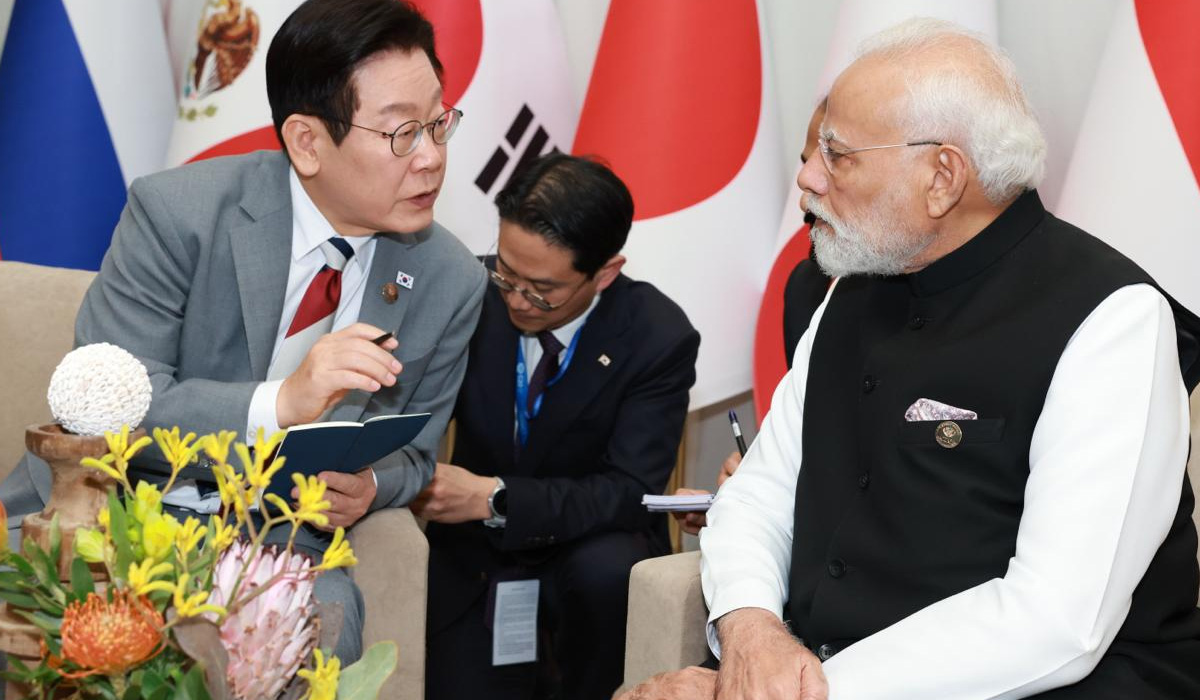
Prime Minister Narendra Modi and South Korean President Lee Jae-myung used their meeting at the G20 Summit in Johannesburg to inject new energy into the growing relationship between their two countries. Held on the sidelines of the summit, the discussion reflected a shared understanding that India and South Korea are well-positioned to expand cooperation in areas that are increasingly shaping global affairs—most notably the economy, defence and high-technology sectors.
The conversation unfolded in a warm and constructive atmosphere. President Lee spoke of his intention to strengthen economic ties and expand cultural and security engagement with India. Prime Minister Modi echoed this sentiment, highlighting South Korea’s reputation for technological leadership and industrial excellence. He expressed particular appreciation for Korea’s shipbuilding industry and noted opportunities for deeper collaboration in defence-related manufacturing and maritime technologies.
A key takeaway from the meeting was the decision to open formal working-level channels focused on artificial intelligence and defence industry cooperation. Both leaders agreed that these sectors offer significant potential for joint innovation, shared expertise, and practical partnerships that can directly support national security and economic modernization.
Modi also extended an invitation to President Lee to visit India, a gesture Lee welcomed enthusiastically. He conveyed his intention to travel soon, underscoring his desire to broaden exchanges not only in business and technology but also in cultural and educational fields.
After the meeting, Modi described the engagement as a reflection of the “strong momentum” shaping the India–South Korea partnership—a sentiment that aligns with recent diplomatic outreach between the two nations. As both countries navigate a rapidly shifting geopolitical environment, the willingness of their leaders to push for closer coordination suggests a clear recognition that their strategic interests are increasingly aligned.
The Johannesburg meeting may have been brief, but it marked an important step toward a more ambitious and structured phase of cooperation—one anchored in shared priorities, complementary strengths, and a mutual commitment to shaping a stable and innovative Indo-Pacific region.