


Modi and Carney Forge New Momentum for India–Canada Partnership at G20
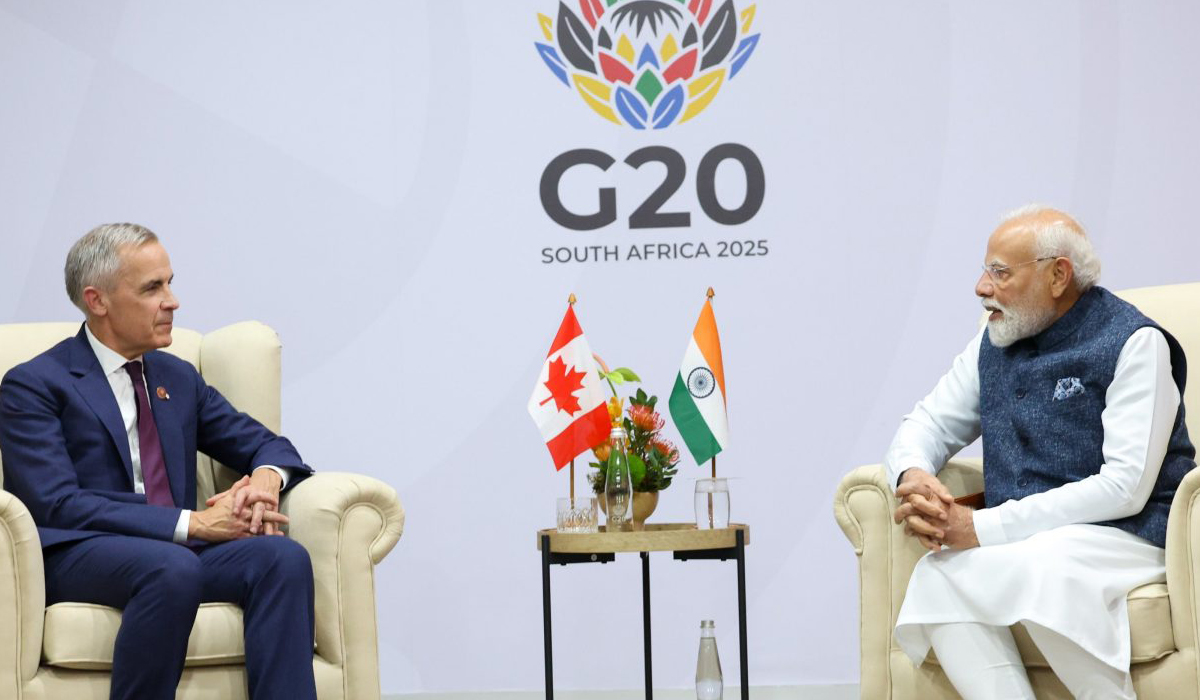
On the sidelines of the G20 Summit in Johannesburg, Prime Minister Narendra Modi met with Canadian Prime Minister Mark Carney to strengthen bilateral ties and explore a new roadmap for economic, technological, and strategic cooperation. The meeting underscored both nations’ intent to move beyond past differences and deepen engagement across trade, investment, and security.
Renewing the Relationship
Modi and Carney highlighted the renewed energy in India–Canada relations, building on recent diplomatic exchanges and discussions between their foreign ministries. Both leaders emphasized the importance of consistent dialogue and high-level visits to maintain momentum and foster mutual understanding. Modi formally invited Carney to India, an invitation Carney welcomed, signaling a commitment to closer people-to-people and business connections.
Economic Cooperation: Laying the Groundwork for CEPA
A key focus of the discussions was the launch of negotiations for a Comprehensive Economic Partnership Agreement (CEPA). The proposed framework seeks to significantly expand bilateral trade, targeting a potential increase to $50 billion by 2030. Areas of emphasis include trade in goods and services, investment facilitation, agriculture, digital commerce, and sustainable development. Both leaders agreed that the CEPA would provide a structured mechanism to enhance economic ties while promoting inclusive growth.
Strategic Collaboration Across Sectors
Beyond commerce, Modi and Carney explored avenues for deeper strategic cooperation. Discussions covered defence, education, science and technology, space, and energy, highlighting the breadth of India–Canada collaboration. In addition, the two leaders welcomed a new trilateral initiative — the Australia–Canada–India Technology & Innovation (ACITI) partnership — aimed at fostering innovation in critical technologies, artificial intelligence, and supply chain resilience. Modi also highlighted India’s upcoming AI Impact Summit, which Carney endorsed as an important platform for collaboration.
Civil nuclear cooperation also featured prominently in the talks. Modi and Carney reaffirmed commitments to strengthen long-term nuclear energy collaboration, including uranium supply and potential joint projects that could benefit both countries’ energy security.
Strengthening People-to-People and Institutional Links
Recognizing the importance of robust people-to-people connections, both leaders agreed to enhance consular support and streamline processes for businesses and citizens engaging with each other’s countries. They also emphasized the role of frequent ministerial and business delegations in sustaining high-level dialogue and deepening bilateral ties.
A Reset with Geopolitical Significance
This meeting represents a pragmatic reset in India–Canada relations, which had experienced strains in recent years. Strengthening ties with Canada offers India access to advanced technologies, critical minerals, and innovation ecosystems, while Canada benefits from India’s growing market and dynamic workforce. The discussions in Johannesburg signal that both nations are prepared to set aside past frictions in favor of a long-term, strategic partnership that encompasses trade, technology, energy, and global governance.
Looking Ahead
By initiating CEPA negotiations, expanding collaboration in high-tech sectors, and reaffirming shared interests in energy and defence, Modi and Carney have laid the foundation for a robust India–Canada partnership. Their engagement at the G20 underscores the importance both countries attach to building a forward-looking relationship, one that combines economic growth with strategic foresight and global collaboration.