




Diplomacy Meets Decarbonization: ICGH 2025 – India’s Bold Pitch for Green Hydrogen at the Center of Global Climate Diplomacy
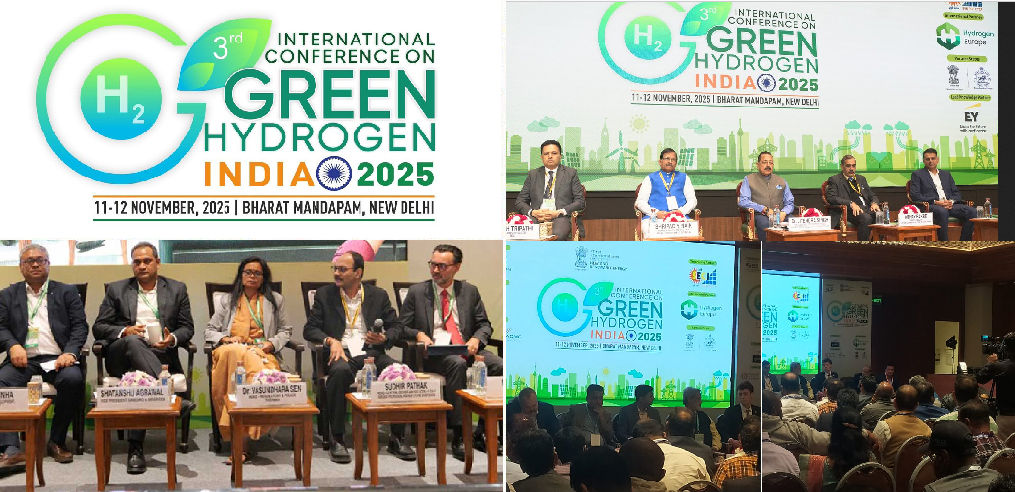
The International Conference on Green Hydrogen (ICGH) 2025, hosted at New Delhi’s striking Bharat Mandapam on 11–12 November, set the tone for what many describe as a defining decade for clean energy. This year’s gathering was not just a technical meet; it was a powerful showcase of political will, global collaboration, and India’s ambition to lead the emerging green hydrogen landscape.
Over two days, the venue brought together ministers, global climate envoys, technology pioneers, port authorities, industrial leaders, and researchers—each stepping forward with a unified message: green hydrogen must move from promise to practice, and India is prepared to accelerate that shift.
A Clear Signal From New Delhi
From the inaugural session, the government sent an unmistakable signal of commitment. Senior ministers outlined India’s progress under the National Green Hydrogen Mission and announced new initiatives aimed at pushing innovation and real-world deployment.
One of the most significant policy moves unveiled at the conference was fresh funding for pilot projects that explore producing green hydrogen from biomass and waste—an area with immense potential for a country with India’s agricultural footprint. This marked a shift toward diversifying hydrogen pathways and strengthening domestic technological capabilities.
Leaders also reiterated a bold projection: India intends to meet a meaningful share of global green hydrogen demand by 2030. With renewable energy capacity expanding at record pace, India is setting out to position itself not just as a consumer but as a global supplier in the clean-molecule economy.
Hydrogen Valleys: India Prepares for Real-World Demonstration
A highlight of ICGH 2025 was the announcement of four “hydrogen valleys”—integrated clusters where hydrogen will be produced, stored, transported, and used within the same region. These valleys are expected to become living laboratories that test the economics and practicality of hydrogen-based industries, from mobility to steelmaking.
Industry partners, technology developers, and research institutions are expected to collaborate within these hubs, making them key testing grounds for large-scale deployment. For policymakers and investors attending the conference, these valleys served as tangible evidence that India is moving beyond vision statements.
Building the Value Chain: Technology, Standards, and Skills
The technical sessions at ICGH 2025 were rich and highly participatory. Experts engaged in detailed conversations on hydrogen production technologies, electrolyser manufacturing, storage solutions, and downstream industrial use.
Beyond technology, the conference placed strong emphasis on standardization and certification—critical components for global trade. Discussions repeatedly underscored the need for clear carbon-intensity benchmarks, safety protocols, and compatible international frameworks.
Another area of focus was workforce development. Hydrogen, being a new sector, will require a skilled talent pool—engineers, technicians, safety specialists, port operators, and research scientists. The conference made it clear that India must build not only infrastructure but also human capital.
India’s Diplomatic Moment: Green Hydrogen on the Global Stage
A defining feature of ICGH 2025 was its international character. Delegates from Europe, Asia, the Middle East, and the Global South joined Indian leaders to explore cross-border opportunities. With several countries crafting hydrogen import strategies, India’s growing renewable capacity and cost advantages position it as a natural partner.
Port authorities discussed the prospect of green shipping routes. Representatives from global hydrogen alliances examined potential certification partnerships. International research organizations looked at co-developing technologies and standards.
The event highlighted an important shift: green hydrogen has become a diplomatic tool, shaping alliances, trade routes, and geopolitical strategy. For India, it opens an avenue to strengthen its leadership in climate action while deepening global partnerships.
Balancing Ambition With Reality
While the atmosphere was filled with optimism, the conference did not shy away from acknowledging real challenges.
Key questions emerged:
- How do we scale production while keeping costs competitive?
- Can infrastructure—pipelines, terminals, ports—develop fast enough to support supply and demand?
- Will industries adopt hydrogen quickly, or will high costs delay adoption?
- How do we ensure stable financing for projects that require large, long-term investment?
Speakers stressed that the transition will require persistence, policy stability, and strong public–private coordination. Hydrogen valleys, pilot projects, and early adoption cases will play a crucial role in building confidence.
A Defining Start to a Transformative Journey
ICGH 2025 ultimately succeeded in doing something ambitious: it blended policy, diplomacy, industry, and innovation into a single narrative of national and global urgency.
For India, the event marked a milestone. It turned hydrogen from a conceptual opportunity into a structured, funded, internationally supported pathway. The decisions made here—and the collaborations forged—will shape the months and years ahead.
The world now watches to see how India converts its bold commitments into visible, scalable results.
But one thing is clear: ICGH 2025 has firmly placed India at the center of the global conversation on green hydrogen—and the journey from New Delhi may well chart the direction of the world’s clean-energy future.
Diplomat Today’s Perspective
At Diplomat Today, we see ICGH 2025 as more than a conference—it was a moment where India’s climate ambition, technological progress, and global diplomacy came together. The event highlighted that green hydrogen is not only an energy solution but also a tool of international influence and partnership. For media collaboration or in-depth reporting and analysis on events covering renewable and clean energy, diplomacy, sustainability, and more, Diplomat Today welcomes inquiries and expert contributions.