23rd Russia-India Annual Summit
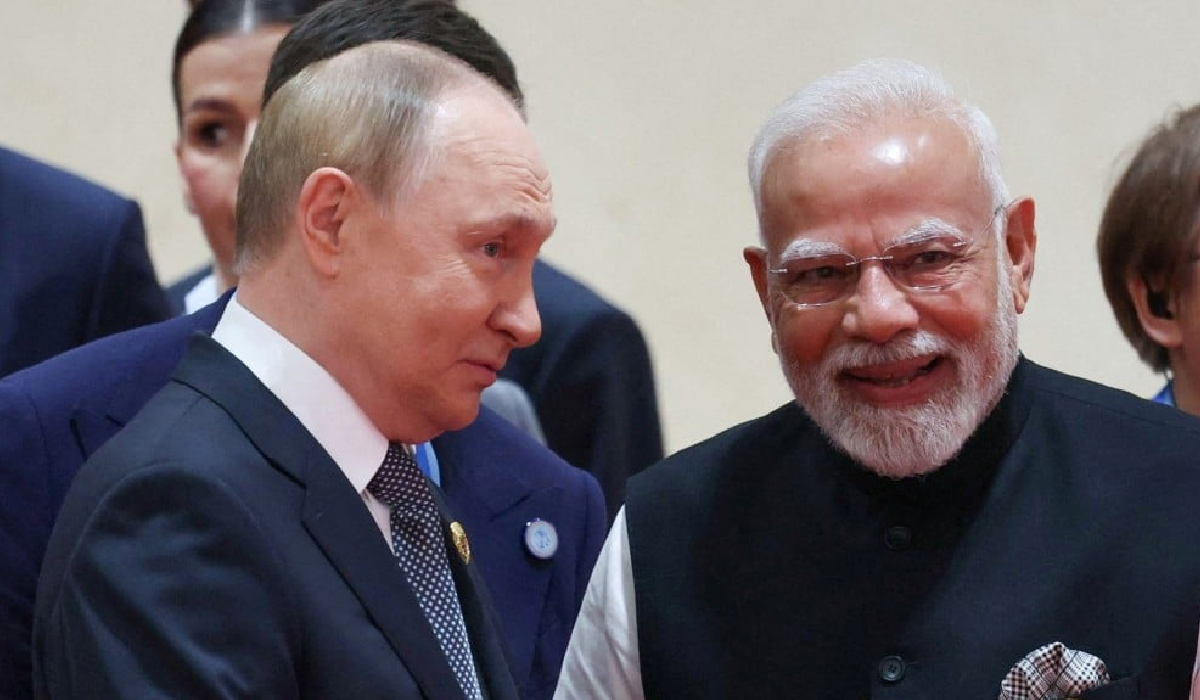
India served the warmest welcome to Russian Federation President Vladimir Putin during his visit to India for the 23rd Indian-Russian Annual Summit on December 4 and 5, 2025. After a four-year break since the conflict between Russia and Ukraine in 2022, President Putin’s visit marks a significant milestone in the eight decades of India-Russian relations. Prime Minister Narendra Modi’s choice to personally greet President Putin on the Palam Airport tarmac and ride in the same vehicle exemplifies Moscow-India strategic calculation in light of unpredictable geopolitical challenges. The 23rd Annual Russia-India Summit began with President Putin’s ceremonial greeting, which included carpooling moments, a private dinner at the PM’s residence, and a banquet at President Murmu’s house, signifying the two countries’ longstanding friendship. PM Modi gave Vladimir Putin a Russian translation of the Bhagwat Gita, highlighting the Hindu text’s worldwide appeal, and praised the India-Russian partnership
as a “pole star” (dhruvtara).
President Putin’s visit for the 23rd Russia-India Annual Summit came at the significant moment demonstrating the
steady partnership that has stood the test of time for over seven decades. Against the background of long-drawn Ukraine-Russia war and Western sanctions out casting Russia, the high-end meeting corroborates New Delhi’s commitment to a strategic self-sufficiency as well as Moscow’s pivot for reliable partners in Global south. The India-Russia relationship is deep-rooted in mutual trust and exemplifies navigating multipolarity in a world of complex alliances and shifting balances.
Accomplishment of the 23rd Annual Summit
The Russian President Vladimir Putin’s state visit to New Delhi for 23rd the Annual Summit signifies strengthening of decades-old partnership through prioritising the economic pillar of bilateral relationship largely shielded from pressures of external world and yielded various outcomes for India:
• Unhindered Russian Fuel Supplies to India
President Putin promised ongoing oil and energy exports to the country, offering stability in the face of international sanctions and market turbulence.
• Development of Strategic Areas of India — Russia Economic Cooperation till 2030
In order to achieve balanced growth beyond energy, a roadmap was adopted to diversify and maintain bilateral
trade and investments.
• Bilateral Investment Promotion and Protection Agreement
This agreement is intended to safeguard Indian companies doing business in Russia and encourage further reciprocal
investments.
• Headway for a Free Trade Agreement (FTA) with the Eurasian Economic Union (EAEU)
The leaders decided to expedite talks, which may lower trade barriers and increase Indian exports to the EAEU.
• Settlement of Bilateral Trade in National Currencies
In order to lessen reliance on the US currency and ease payment concerns, all parties decided to increase the use
of rupees and roubles.
• Agreements on Labour Mobility and Temporary Work Pacts
In order to facilitate job opportunities for Indians and fulfil Russia’s labour shortages a pact was agreed upon by both the leaders.
• Agreements in Healthcare and Medical Research
Memorandums of Understanding (MoUs) were signed by both the leaders to strengthen joint efforts in medical education, scientific research, pharmaceuticals, and health regulation, including potential anticancer drug
production.
• Reinstating focus on Defense Cooperation
With advancements in co-production, spare parts, and maintenance support, the emphasis was on collaborative
production and technology transfer, which is in line with India’s objectives for defense manufacturing selfreliance.
• Maritime and Logistics Cooperation
These protocols, which include postal/e-commerce logistics and the construction of Arctic routes, are intended
to enhance connectivity and assist India’s commercial diversification.
India-Russia- The tale of unrestrained partnership The India-Russia bond was established shortly before the
formation of independent India in the year 1947. Historically, Indo-Russian ties dates back to the Cold War era, India then being a non-aligned country and USSR a super power. In the years following India’s independence India and Russia signed a Treaty of Friendship and Cooperation on 9th August, 1971further solidifying their relation. The treaty proved decisive for India during India’s war with Pakistan, and more importantly a counterweight to Western supremacy. It treaty laid the foundation for India’s deep ties in defense, nuclear power, and trade which brought powerful defense equipments such as MiG-21s, T-72 tanks, and nuclear submarines like the INS Chakra. By the 2010s, Moscow was still providing more than 60% of India’s military equipment, despite the country’s economic liberalization and outreach to the West. Sukhoi Su-30MKI fighters, T-90 tanks, and the combined development of BrahMos supersonic missiles—the latter of which is a gem of collaborative innovation—were some of the important
Russian defense imports in India. The Kundakulam Nuclear Energy plant in India is Russia’s extension of its defense
cooperation.
The dissolution of Soviet Union of Russia has been a turning point for both the countries but India has firmly stood with Russia as its gesture of solidarity. In the year 2000, during the post-revival period, India-Russia signed a Strategic Partnership Declaration for enhanced collaboration in areas such as defense, energy and culture. This collaboration was elevated to a new privileged partnership in the year 2010.
One of the biggest foreign contributors to Indian economy, the Soviet Union had helped India established huge companies like ONGC, BHEL and BHILAI Plant which are owned by Indian Government sectors now. According to the reports issued by the Ministry of Commerce and Trade in 2025, India’s total export to Russia surged from 3.1 US dollars to 4.2 US dollars in 2024. In the year 2023-24, the reported trade closed near $65.7 billion between the two allies with an ambition of further scaling it up to 100 billion by 2030. India largely benefits by crude oil and refined oil products export from Russia at a more subsidized rates and many Indian companies have explored opportunities for collaboration in oil and gas exploration, production, and transportation. Furthermore, the
Rupee-Rouble agreement, revived during Russian crisis years with Ukraine, showcases India’s camaraderie towards Russia.
For the unversed, the Rupee-Rouble is a trade agreement which is an alternative payment mechanism to settle dues in
rupees instead of dollars. There has been a dramatic increase in the bilateral trade between both nations, qualitatively and quantitatively. Since 2000, President Putin has made eighteen trips to India, demonstrating his close relationship with the country’s consecutive prime leaders.
Striking a balance between practical gains and Ukraine’s shadow
President Putin’s visit for the 23rd Annual Summit underscores, both strategic, and diplomatically significant
timing. The visit comes at a time of Russia’s continued invasion, which has staggered Europe’s post-Cold War order,
and Moscow has hoisted an intense US-led peace proposal targeting to end the four-year-long conflict. In addition to this, the West has imposed economic sanctions barring importexport activities with Russia and the US has threatened India secondary sanctions on Russian oil purchase. However, India’s stance on Ukraine-Russia is not neutral rather as a nation it hopes for the on-going war to end. The war has been a testing time for India to show its diplomacy fineness. As a peace-loving country, India has been providing non-lethal aid as well as medicines to Kyiv too.
But the sanctions imposed by the West on Russia, which have cost India dearly, cast a greater shadow over the negotiations. Although Mr. Putin pledged “uninterrupted fuel supplies to India” and the Ministry of External Affairs (MEA) stated that it would only give in to “commercial considerations” when it came to oil purchases, it appears that European sanctions against Russian and Indian oil companies, along with the substantial 25% tariff imposed by the United States on Indian goods, have weakened India’s resolve. According to data, the annual consumption of Russian oil has significantly decreased in 2025 (38% y-o-y decrease). For India, the end to Ukraine-
Russia war would ease the current polarisation it is facing.
The Future
The challenges existing, Russia-India partnership remains indispensable holding a promise of renewal while navigating sanctions and challenges. In Russia’s war-ravaged economy, sanctions continue to erode quality. Furthermore, the challenges arising between India-Russia partnerships do not muss up its relevance but demands to be adjusted to the contemporary realities where both the countries engage meaningfully. While the Western sanctions besiege Russia’s economy, India is diversifying its export destinations and indigenizing 70% of defense procurement through programs such as the “Tejas” and BrahMos missiles. As far as the future co-production with Russia is concerned India looks ahead for co-production of BrahMos-II and S-500 air defense systems. The joint space cooperation with Russia is very important involving Gaganyaan cosmonaut training in Star City and joint Lunar missions. In terms of the economy, Russian investments in rare earths and Andaman refineries are viewed as a challenge to China’s hegemony over minerals.
With Russia’s reliance on China the challenges loom large as India could face the risk of slipping into subservient role. Moscow’s bandwidth may be restricted by the on-going drag of the Ukraine crisis, and supplies are at risk from escalation threats (like NATO intervention). India’s goal of becoming a $5 trillion economy by 2027 is driving its westward economic tilt, which calls for cautious hedging.
India-Russia is regarded as a paradigm of perseverance in a world of shifting orders characterized by the war in Ukraine, the spread of nuclear energy, and economic repression through tariff war. It reaffirms a connection that has persevered through shaky international relations and growing tension.
About the Author