




Defense & Maritime Dialogue Charts India’s Seapower Vision
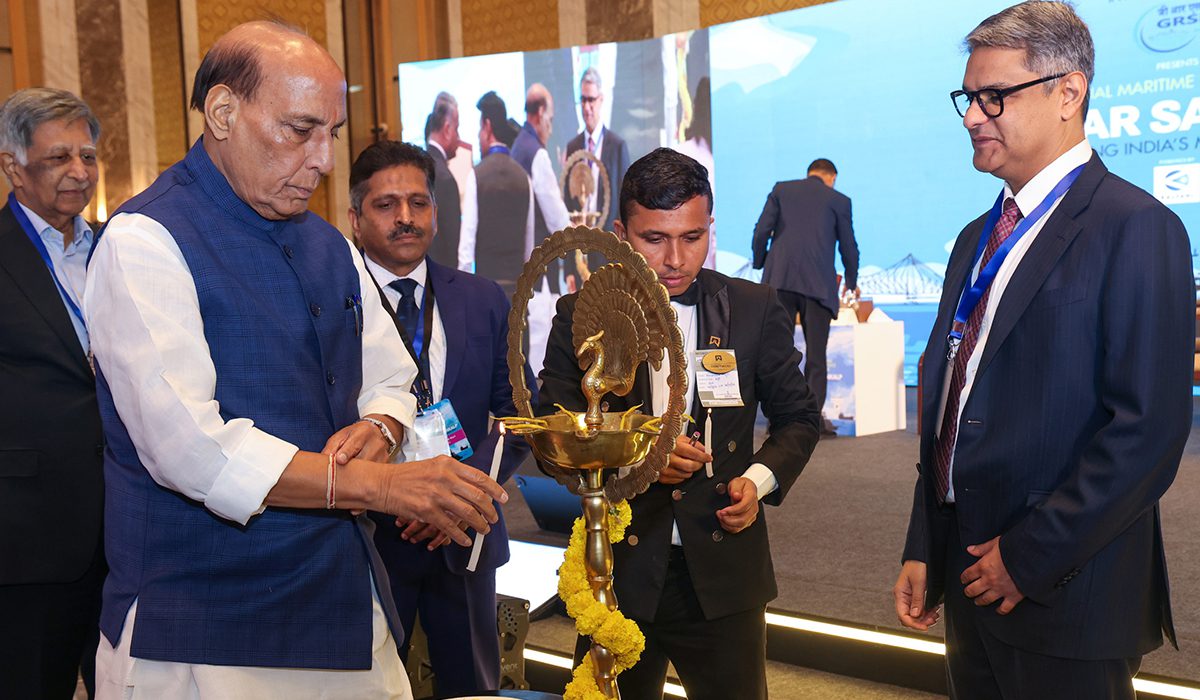
On 6 March 2026, Rajnath Singh inaugurated the defence and maritime dialogue “Sagar Sankalp – Reclaiming India’s Maritime Glory” at a high‑profile event in Kolkata, West Bengal. The dialogue, jointly organised by Garden Reach Shipbuilders & Engineers Limited (GRSE) and a prominent private media organisation, brought together policymakers, defence industry leaders, maritime strategists, and thought champions to deliberate on India’s maritime priorities and shipbuilding ambitions.
The Defence Minister commenced the event by lighting the ceremonial lamp: a symbolic gesture signifying the beginning of a dialogue aimed at advancing India’s maritime strength and strategic autonomy.
Charting a Vision for Maritime Security
In his inaugural address, Shri Rajnath Singh underlined the centrality of the maritime domain to India’s national security and economic prosperity. With a long coastline, extensive Exclusive Economic Zone (EEZ), and rapidly expanding maritime interests, India’s seas have become pivotal to both strategic planning and defence preparedness.
Addressing a distinguished gathering, the Defence Minister emphasised that maritime security is no longer a peripheral concern but a core strategic priority. “Our seas are the lifeline of our trade, energy security, and economic growth,” he noted, highlighting the need for a strong indigenous defence and shipbuilding ecosystem to safeguard national interests.
Self‑Reliance and Indigenous Defence Production
A recurring theme at Sagar Sankalp was Atmanirbharta – the drive for self‑reliance in defence production. Shri Singh reiterated that indigenisation remains the cornerstone of India’s defence policy, especially in the context of maritime platforms and naval systems.
He drew attention to the ongoing efforts to enhance domestic shipbuilding capacities, modernise naval infrastructure, and integrate public sector shipyards like GRSE with private industry players and MSMEs. According to official projections, India’s defence exports are on a steady upswing, with estimates suggesting they could reach approximately ₹29,000 crore by April 2026, underscoring the growing competitiveness of Indian defence manufacturing in global markets.
“This is not merely an industry priority,” the Defence Minister said, “it is a strategic imperative that enhances our operational readiness and strengthens India’s role as a dependable security partner in the Indo‑Pacific.”
Strategic Conversations and Future Pathways
The dialogue sessions at Sagar Sankalp explored a range of maritime and defence topics, including naval shipbuilding innovations, human capital development in maritime professions, emerging technologies for naval applications, and approaches to securing critical sea lanes in an increasingly contested global environment.
Industry experts, naval veterans, and strategic thinkers shared insights on the integration of advanced technologies, collaborative R&D between defence firms and research institutions, and the importance of building a resilient maritime industrial base. Conversations also addressed the changing contours of maritime geopolitics, particularly in the Indo‑Pacific, where India plays an increasingly influential role.
A Maritime Narrative for the Future
By convening Sagar Sankalp in Kolkata – a historic maritime gateway – the organisers underscored the growing recognition of maritime issues in national policy discourse. The dialogue provided a timely platform for charting pathways that align India’s traditional maritime strengths with its future‑oriented defence and security ambitions.
Underlining the government’s commitment to building a robust naval and shipbuilding ecosystem, Shri Rajnath Singh’s address sent a clear message: maritime security and indigenous defence capabilities are critical for India’s long‑term strategic trajectory.
As Sagar Sankalp concluded, the event left participants with a shared conviction that reclaiming India’s maritime glory is not just an aspiration but an actionable objective – anchored in strategic vision, industrial capability, and collective resolve.