





Energy Security in South Asia amid the Iran Conflict: India – Bangladesh Diesel Cooperation and the Role of Regional Energy Diplomacy
Rising geopolitical tensions in the Middle East – particularly the confrontation involving Iran, Israel, and the United States have once again demonstrated how fragile global energy supply systems can be. When conflict threatens major oil-producing regions or critical shipping routes, the consequences quickly extend beyond the Middle East to energy-import-dependent economies around the world. In South Asia, one of the countries feeling the immediate effects of such disruptions is Bangladesh, whose energy system relies heavily on imported petroleum products.
Amid growing uncertainty in global fuel markets, India has stepped forward as a regional energy partner by providing diesel to Bangladesh through a cross-border pipeline connected to the Numaligarh Refinery Limited in the northeastern Indian state of Assam. This cooperation illustrates how regional partnerships can soften the impact of international energy shocks and strengthen economic stability in neighboring countries.
Bangladesh’s Growing Energy Pressure
Bangladesh’s rapid economic expansion over the past decade has been accompanied by a steady increase in energy demand. Industrial growth, urbanization, and rising electricity consumption have placed significant pressure on the country’s fuel supply system. However, domestic energy resources remain limited, forcing the country to depend largely on imported petroleum products.
Diesel is particularly important in Bangladesh’s energy mix. It fuels transportation networks, powers irrigation pumps in the agricultural sector, and serves as a critical backup fuel for electricity generation during power shortages. Any disruption in diesel supply therefore has far-reaching consequences for both economic productivity and daily life.
The recent instability in global oil markets – driven by tensions in the Middle East – has complicated Bangladesh’s fuel procurement efforts. Rising prices and supply uncertainties have increased the cost of energy imports and created logistical challenges for the country’s fuel distribution system. In some areas, these pressures have led to tighter fuel availability and heightened concerns about maintaining reliable energy supplies.
India’s Diesel Assistance through the Friendship Pipeline
In response to these challenges, India has increased its diesel exports to Bangladesh through the Bangladesh–India Friendship Pipeline, which links the Indian fuel network with northern Bangladesh. The pipeline originates near the Indian city of Siliguri and connects to the fuel depot at Parbatipur in Bangladesh’s Dinajpur district.
Through this pipeline, India recently delivered approximately 5,000 tonnes of diesel to Bangladesh, helping stabilize fuel availability during a period of heightened energy uncertainty. The fuel was refined at the Numaligarh refinery in Assam and transported directly to Bangladesh through the pipeline system.
This infrastructure has significantly improved the efficiency of cross-border fuel trade between the two countries. Before the pipeline was operational, diesel shipments had to be transported by railway tankers or road convoys, which were both slower and more expensive. The pipeline now provides a faster and more reliable supply route, enabling fuel to reach Bangladesh within a short period of time.
Statement from Bangladesh Petroleum Corporation
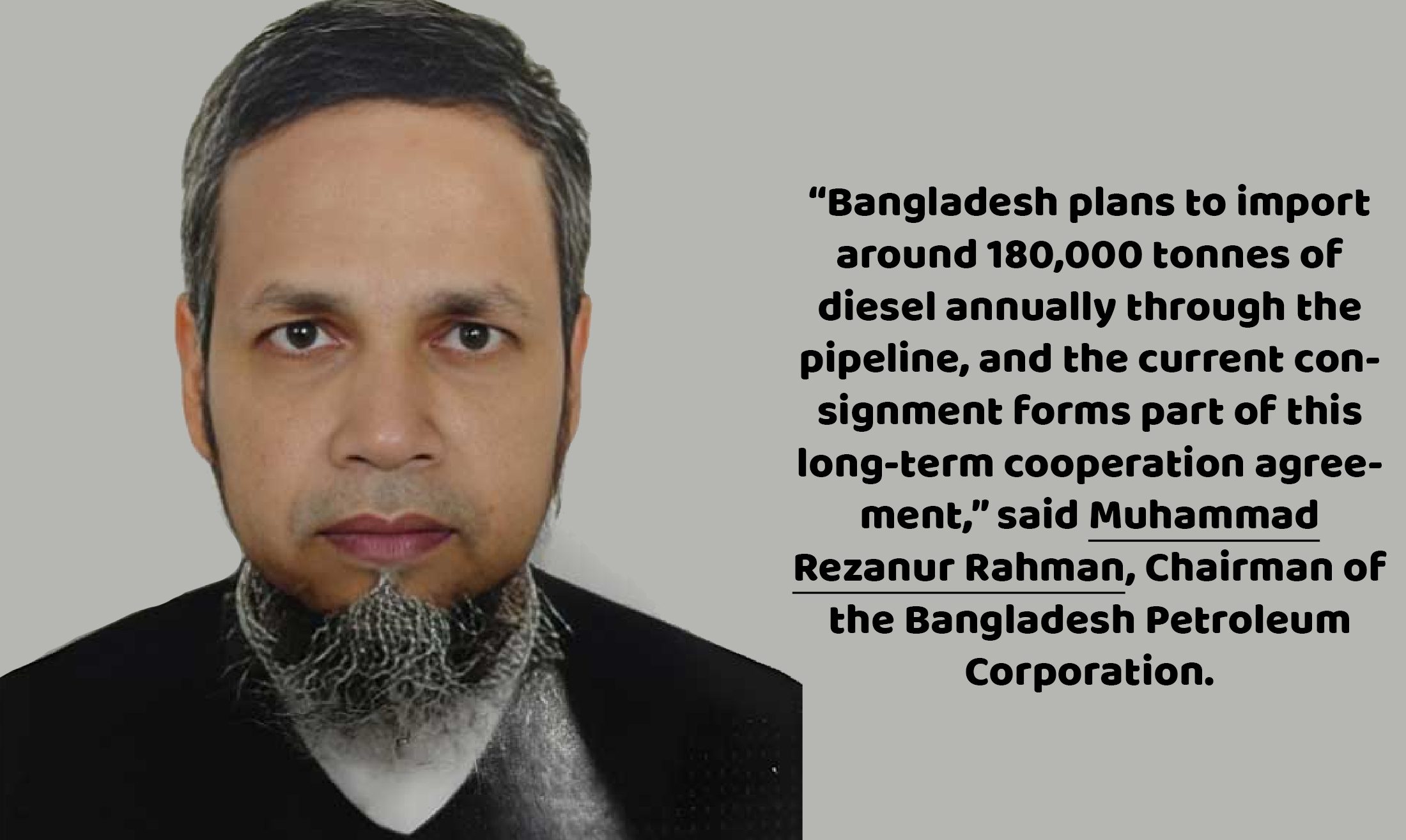
The importance of this cooperation was emphasized by Muhammad Rezanur Rahman, Chairman of the Bangladesh Petroleum Corporation (BPC). Speaking about the diesel delivery, Rahman explained that the shipment forms part of a broader bilateral agreement designed to strengthen long-term energy cooperation between the two countries.
He noted that Bangladesh plans to import around 180,000 tonnes of diesel annually from India through the pipeline infrastructure. The 5,000-ton shipment represents one of the scheduled consignments under this agreement.
Rahman further indicated that Bangladesh expects to receive around 90,000 tonnes of diesel over the next six months, ensuring that the country maintains sufficient fuel supplies despite global market disruptions. According to BPC officials, the pipeline has become a critical component of Bangladesh’s strategy to secure stable fuel imports while reducing transportation costs.
Strategic Value of the Numaligarh Pipeline
The diesel supply arrangement highlights the strategic importance of the pipeline connecting India and Bangladesh. With a total length of more than 130 kilometers, the pipeline has created a direct fuel corridor between the two countries. Its annual capacity allows Bangladesh to import substantial volumes of diesel from India without relying entirely on maritime fuel shipments.
For Bangladesh, this infrastructure provides a dependable supply channel that can operate even when global shipping routes face disruptions or delays. For India, the pipeline strengthens its role as an energy partner within South Asia and demonstrates its ability to support regional stability through practical economic cooperation.
Such projects also contribute to broader regional integration by building interconnected energy systems that benefit multiple countries.
Regional Implications of the Iran Conflict
The current geopolitical tensions involving Iran have once again highlighted the vulnerability of global energy supply chains. Much of the world’s oil trade flows through maritime chokepoints in the Middle East, making energy markets highly sensitive to political instability in the region.
For countries like Bangladesh, which rely heavily on imported fuel, sudden price increases or supply interruptions can have immediate economic consequences. Higher fuel costs affect electricity generation, transportation, and manufacturing sectors, potentially slowing economic growth.
In this context, India’s ability to supply diesel through an overland pipeline provides an alternative to maritime supply routes that might be affected by geopolitical tensions.
Conclusion
The evolving conflict in the Middle East has demonstrated how geopolitical events can quickly influence energy security far beyond the region where they occur. For Bangladesh, the uncertainty in global oil markets has created significant pressure on its fuel supply system.
India’s diesel deliveries through the Numaligarh–Bangladesh pipeline therefore represent more than a simple commercial transaction. They illustrate the growing importance of regional energy diplomacy in managing global supply disruptions.
By providing a reliable source of diesel and strengthening cross-border infrastructure, India and Bangladesh are building a cooperative framework that enhances energy resilience across South Asia. In an era of increasingly unpredictable geopolitical tensions, such partnerships may prove essential for maintaining economic stability and ensuring secure energy supplies in the region.