



From the Gulf to South Asia: Why Pakistan Faces Immediate Fallout from the Energy Crisis
I. Introduction: A Crisis That Travels Quickly
The Gulf crisis is often framed as a contest of oil markets and great power rivalry. Yet its most immediate and destabilizing consequences are felt far beyond the Gulf itself—particularly in South Asia. For Pakistan, the crisis is not distant; it is immediate. With deep economic ties to Gulf economies, millions of expatriate workers in Saudi Arabia and the UAE, and heavy reliance on imported energy, Pakistan stands at the frontline of this unfolding shock.
The crisis has already begun to translate into tangible pressures: disrupted energy shipments, volatile prices, and mounting inflation. But beyond economics, it is reshaping Pakistan’s diplomacy, forcing Islamabad to balance its longstanding Gulf partnerships with its geographic proximity to Iran, while also engaging global powers that have stakes in the region. The fallout is multidimensional—economic, social, and geopolitical—and Pakistan’s response will shape not only its own trajectory but also South Asia’s broader resilience.
II. Economic Exposure: Remittances, Energy, and Inflation
Pakistan’s economic linkage with the Gulf is anchored in remittances. Millions of Pakistani workers in Saudi Arabia and the UAE send billions of dollars annually, sustaining household consumption, education, healthcare, and small-scale investments. These flows are the invisible glue holding together both micro-level stability and macroeconomic resilience. Yet instability in host economies threatens this lifeline. Layoffs or wage cuts would immediately reduce remittance inflows, weaken reserves, and strain Pakistan’s already fragile external account.
Energy dependency amplifies the risk. Pakistan imports substantial volumes of LNG, and recent disruptions have already delayed shipments. Limited reserves mean industrial output and domestic energy availability are at risk. This vulnerability is structural: domestic energy production lags far behind demand, diversification has been slow, and shocks in Gulf supply chains translate directly into shortages at home. Factories face reduced output, households experience gas rationing, and transport systems struggle with rising fuel costs.
Price volatility compounds the challenge. LPG and oil prices have surged, intensifying inflation. For households, higher cooking fuel and transport costs erode purchasing power. For industry, rising input costs reduce competitiveness. At the macro level, Pakistan’s import bill climbs, the rupee weakens, and inflationary trends deepen. Supply chains are also strained: LNG cargo delays disrupt production schedules, shipping premiums rise, and insurance costs for cargo through the Strait of Hormuz escalate. Export competitiveness declines, while import dependence becomes more expensive.
III. Regional Exposure: South Asia’s Shared Risk
The Gulf crisis is not Pakistan’s burden alone. South Asia as a whole faces similar vulnerabilities. India, Bangladesh, and Sri Lanka rely heavily on Gulf energy supplies. Rising costs feed inflation, reduce growth prospects, and strain fiscal balances. For countries already grappling with debt burdens and fragile recoveries from the pandemic, the Gulf crisis adds another layer of uncertainty.
This shared vulnerability underscores the interconnected nature of Asia’s energy dependence. The Gulf is not just a supplier—it is a strategic artery for South Asia’s stability. Any prolonged disruption could have cascading effects across regional economies, magnifying fragility and testing political leadership. Pakistan’s experience is therefore emblematic of a wider regional challenge: how to insulate economies from external shocks in an era of deep interdependence.
IV. Diplomacy and Geopolitical Balancing
Geopolitically, Pakistan is navigating a complex environment. Longstanding defense and economic ties with Saudi Arabia and the UAE coexist with geographic and cultural linkages to Iran. Aligning too closely with one side risks alienating the other, while neutrality becomes harder to sustain in a polarized environment. Meanwhile, global powers—China, the United States, and Russia—watch closely, making Pakistan’s positioning even more delicate.
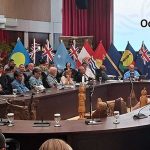
Recognizing the urgency, Pakistan has intensified diplomacy. Delegations have visited Riyadh, Tehran, and Abu Dhabi, urging restraint and dialogue. Most significantly, on 29 March 2026, Islamabad hosted a quadrilateral meeting of the foreign ministers of Pakistan, Saudi Arabia, Turkey, and Egypt. The forum underscored Pakistan’s role as a convener, bringing together key stakeholders to discuss de-escalation and energy security. The joint communiqué stressed keeping energy corridors open, protecting expatriate workers, and preventing the Gulf crisis from spiraling into wider conflict. For Pakistan, convening such a forum bolsters its diplomatic standing while directly serving its economic interests.
At the multilateral level, Pakistan has raised the issue at the Organization of Islamic Cooperation (OIC), advocating collective action to safeguard energy flows. Domestically, contingency planning includes emergency LNG talks with Qatar and Azerbaijan, renewable energy expansion under CPEC, and consideration of strategic reserves and rationing mechanisms. Though constrained by fiscal limits, these steps signal Pakistan’s recognition that diplomacy abroad must be matched by resilience at home.
V. Conclusion: Navigating Fragility with Strategy
The Gulf crisis is not a distant geopolitical event—it is a regional economic shock with global implications. For Pakistan, the fallout is immediate: remittance flows at risk, energy supplies disrupted, inflation surging, and geopolitical balancing becoming more precarious. The quadrilateral meeting in Islamabad highlights Pakistan’s attempt to move beyond reactive policy toward proactive diplomacy, positioning itself as a mediator and convener in a volatile region.
Yet diplomacy alone cannot shield Pakistan from the structural vulnerabilities of energy dependence and fragile external accounts. The crisis underscores the urgent need for diversification of energy sources, investment in domestic production, and stronger regional coordination. For South Asia more broadly, the lesson is equally stark: resilience in the face of external shocks requires both economic foresight and diplomatic agility.
In today’s global economy, the frontline of conflict is not only the battlefield—it is the energy systems that power nations. Pakistan’s response, balancing diplomacy, economic resilience, and domestic stability, will serve as a test case for how South Asia navigates the turbulence of a volatile global energy order.
About The Author