


Women in Diplomacy: India’s Rising Leadership
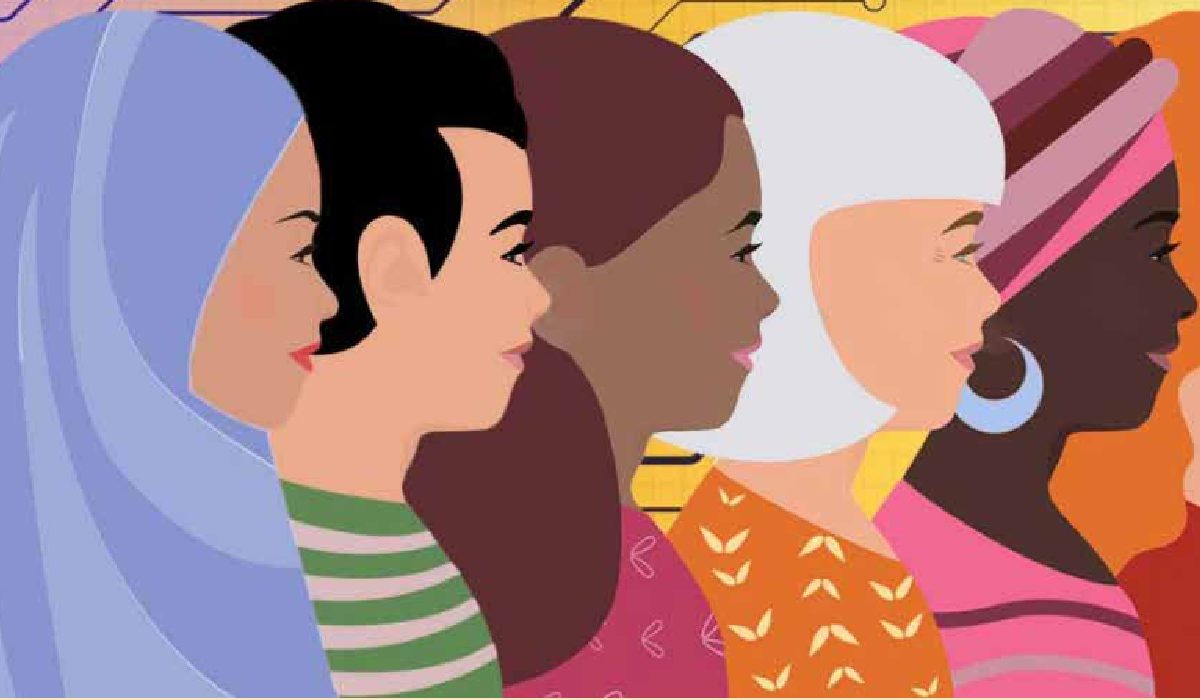
Diplomacy has long been shaped by the language of power, strategy and national interest. Yet in the 21st century, the architecture of global diplomacy is quietly evolving. Across negotiating tables in New York, Geneva, Washington and Beijing, a new generation of women diplomats is helping reshape how nations engage with one another. In India, this transformation is particularly significant. As the country’s global influence expands, Indian women diplomats and policymakers are increasingly emerging as key architects of international negotiations, bringing new perspectives to global governance, multilateral cooperation and inclusive foreign policy.
The Quiet Transformation of Global Diplomacy
Global diplomacy has long been shaped by power politics, strategic bargaining and closed-door negotiations, traditionally dominated by men. Yet the architecture of international relations is quietly evolving. Across multilateral forums, bilateral negotiations and global institutions, women are increasingly emerging as influential voices shaping international policy.
In 2026, Indian women are not merely participating in diplomacy; they are defining it. From the high-stakes negotiation halls of the United Nations to the complex bilateral relationships across Asia, the Gulf and the West, Indian women diplomats are shifting the narrative from participation to power, bringing empathy, strategic foresight and collaborative approaches to the global dais.
What was once a heavily male-dominated domain has gradually become more inclusive. This paradigm shift, characterised by a rising number of women in the Indian Foreign Service (IFS) and high-level policymaking roles, has crucial implications for India's global stature. Nearly 30% of new entrants to the Indian Foreign Service (IFS) today are women, which is an important shift from the earlier decades when diplomacy was often described as a
“gentlemen’s club.” This transformation is not merely symbolic. It represents a strategic shift in India’s approach to diplomacy, bringing collaborative leadership, diverse perspectives, and people-centric thinking to the forefront of foreign policy.
Trailblazers, Who Opened the Door
The rise of Indian women in diplomacy is built on the indomitable legacy of pioneer who defied societal norms and institutional bias.
One of the earliest trailblazers was C. B. Muthamma, who joined the Indian Foreign Service in 1949 as its first woman officer. At a time when women diplomats were expected to resign after marriage, she challenged discriminatory rules within the Ministry of External Affairs and fought a landmark legal battle in the Supreme Court. Her bravery secured a permanent place for women in the service and reshaped the institutional culture of the Indian civil
services for future generations of women diplomats.
Another historic figure was Vijaya Lakshmi Pandit, who in 1953 became the first woman to preside over the United Nations General Assembly. Her leadership during the early Cold War years showcased India’s commitment to international cooperation and gender equality.
Similarly, Hansa Mehta played a critical role in shaping the language of the Universal Declaration of Human Rights. Her intervention ensured that the historic text used the phrase “all human beings are born free and equal” instead of “all men,” making the declaration more inclusive and universal.
The first decisive institutional breakthrough came in 2001, when Chokila Iyer became India's first woman Foreign Secretary, proving that foreign policy leadership has no gender boundaries.
Nirupama Rao went from being India's first woman MEA spokesperson, handling tense India-China border negotiations, to ambassador to China and eventually Foreign Secretary. Meera Shankar strengthened Indo-US relations as Ambassador to the United States by combining personal engagement with formal diplomacy. What began as an exception slowly
became a pattern and then a principle.
These pioneers did more than achieve individual milestones; they fundamentally transformed perceptions about women’s ability to lead complex international negotiations.
Contemporary Leaders Shaping Global Negotiations
Today, a new generation of Indian women diplomats is spearheading critical negotiations and high-stakes diplomacy across every continent. Their impact is visible in both multilateral forums and crucial bilateral relations.
Among the most prominent is Ruchira Kamboj, who served as India’s woman Permanent Representative to the United Nations. As the first Indian woman to preside over the UN Security Council in 2022, managing delicate debates on humanitarian aid, security challenges and global governance.
Her tenure was marked by navigating the geopolitical minefields of the Russia-Ukraine war and the Israel-Hamas conflict with a unique blend of "sheer grace and steel." Beyond her diplomatic acumen, Kamboj's legacy lies in her visibility, her articulate defence of India's positions at the General Assembly made diplomacy accessible and projected an image of a confident, feminine, and modern India.
Another notable diplomat is Nagma Mohamed Mallick, a 1991-batch IFS officer, had earlier served as India's first woman ambassador to Tunisia, navigating the post-Arab Spring turbulence, now serving as India’s ambassador to Japan, who plays a vital role in strengthening one of Asia’s most important strategic partnerships—particularly in areas such as technology cooperation, economic investment, and Indo-Pacific security.
The appointment of Paramita Tripathi has also made history as India’s first woman ambassador to Kuwait, symbolising a significant breakthrough in the Gulf region, where diplomatic postings were historically dominated by men. This is more than a routine transfer; it is a calculated signal that India's diplomatic heft is gender-neutral, trusting its women diplomats to navigate the most complex and sensitive geopolitical landscapes.
Other notable contemporary leaders include Vani Rao, currently Ambassador to Italy, who previously headed the Americas Division during a critical phase, managing India's relations with the USA and the Quad framework. Sneha Dubey gained global attention for her sharp, direct response to Pakistan at the UNGA, effectively asserting India's position on the Kashmir dispute.
Geetika Srivastava created history by being appointed as the first woman Charge d'Affaires at the Indian High Commission in Islamabad in 2023, handling one of India's most complex diplomatic assignments. Lakshmi Puri represents the expanding influence of Indian women within international organisations, rising to become an Assistant Secretary-General at the United Nations and Deputy Executive Director of UN Women.
Similarly, Gloria Gangte (Norway), Nilakshi Saha Sinha (Armenia) and Deepa Gopalan Wadhwa (the first Indian woman ambassador to a Gulf nation, Qatar and later Japan), Swati Vijay Kulkarni in Algiers and M. Manimekalai in a conflict-ridden Libya have demonstrated that Indian women are in leadership positions across all continents, driving both traditional and non-traditional diplomacy.By posting women to these "hard" posts, India is signalling
that its foreign policy is modernising faster than the stereotypes it encounters.
Indeed, these diplomats represent a generational shift in India’s foreign policy establishment while showing the world that Women are no longer exceptions within the diplomatic corps as effective diplomacy relies on acumen, not gender, thus shaping India’s global strategy.
Women in Strategic, Economic and Foreign Diplomacy Policy Initiatives
Women in Indian diplomacy are not confined to "soft" areas. They are increasingly dominating hard negotiations and strategic dialogues. Lakshmi Puri served as Assistant Secretary-General of the United Nations and Deputy Executive Director of UN Women, where she led global initiatives on gender equality and women’s empowerment.
Meanwhile, diplomats such as Riva Ganguly Das have played important roles in strengthening India’s Act East policy and expanding economic ties across Southeast Asia. Women leaders have also been central to India’s engagement with global financial institutions and multilateral development initiatives, ensuring that economic diplomacy is
linked with inclusive growth and sustainable development.
Nirmala Sitharaman, as India's Defence Minister (2017-2019) and current Finance Minister, has heavily influenced military strategy and international economic negotiations, including G20 debt restructuring and trade reform.
Aparna Subramani has steered World Bank initiatives aligned with India's sustainable growth priorities, while Riva Ganguly Das, as Secretary (East), strengthened India's Act East Policy. From trade negotiations in Geneva to investment summits in Tokyo, women diplomats bring collaborative approaches and people-centric perspectives that broaden India's global influence. Women in general tend to bring more empathetic and panoramic views of policies
and their impacts, instilling humane virtues in global voices.
In 2007, India made history by deploying the first all-women Formed Police Unit (FPU) to Liberia, a mission that became a template for community engagement and inspired a generation of Liberian women. This legacy continues. According to the MEA, India has already surpassed the UN Gender Parity Strategy targets for staff officers and observers, achieving 22% deployment against the 2028 target of 25%.
In February 2025, India convened the "Conference on Women Peacekeepers from the Global South" in New Delhi, bringing together 35 countries to share strategies on addressing sexual exploitation and enhancing the role of technology in peacekeeping. By positioning itself as a leader in this space, India is not just supporting the UN's agenda; it is shaping the discourse on how the Global South approaches gender and security.
During India's G20 Presidency in 2023, women-led development emerged as a central theme, with women assuming vital roles in forming international policies, steering debt restructuring talks, and managing economic trade negotiations.
The initiative highlighted how empowering women economically and politically can accelerate global growth and social stability. The MEA has also participated in the UN Women “HeForShe” campaign and introduced sensitisation modules at the Sushma Swaraj.
Foreign Service Institute.
These initiatives reflect a broader shift in India’s diplomatic philosophy: gender equality is no longer treated solely as a social objective but increasingly as a strategic component of sustainable global development.
A New Global Voice as an International Impact:
The presence of Indian women at the diplomatic table has changed the quality of discussions. Indian women diplomats have been crucial in advocating for humanitarian and development-oriented policies, thus strengthening India's image as a responsible nation as their ability to engage civil society groups, community leaders, and grassroots organisations can make diplomatic agreements more sustainable.
India's development cooperation initiatives, ranging from capacity-building programs in Afghanistan to humanitarian assistance in Lesotho and Cambodia, have increasingly prioritised projects that make women engines for sustainable growth.
This approach strengthens India's soft power by aligning its foreign policy with global aspirations for inclusive development, which ensures India as a responsible global nation that is committed to inclusive growth and human-centred diplomacy.
Challenges and the Road Ahead
Despite significant progress, structural barriers persist. Women still hold only a small fraction of the top diplomatic posts worldwide, and in India, the "glass ceiling" remains visible in the very highest echelons. The "mid-career hurdle", where work-life balance and caregiving responsibilities coincide with demanding professional phases, often leads to attrition.
The 2026 Women Leadership Survey indicates that while senior-level representation has increased, perceptions of fairness and consistency in advancement have weakened. Only 28% of employees believe leadership evaluation processes are genuinely fair and transparent.
Furthermore, critics note that a truly inclusive policy must extend beyond women to encompass all marginalised genders. India's abstention on votes regarding the UN's Independent Expert on Sexual Orientation and Gender Identity (SOGI) has drawn criticism from activists who argue that a "gender-balanced" policy cannot be blind to LGBTQ+ rights.
To truly harness this rising leadership, India must take deliberate steps:
1. Enhance Senior Representation: Move beyond 30% intake to 30% senior leadership by increasing the number of women ambassadors and heads of critical divisions.
2. Build Transparent Evaluation Systems: Standardise assessment mechanisms, conduct regular audits of promotion and pay parity, and rebuild trust through consistent communication.
3. Institutionalise Mentorship and Sponsorship: Move beyond training to formal sponsorship, senior-leader advocacy, and cross-functional opportunities that position women for leadership.
4. Reframe Leadership Roles for Sustainability: Redesign leadership roles with flexibility and shared accountability, recognising that rigid expectations of constant availability disproportionately limit women's access.
5. Adopt a Comprehensive Framework: While India's approach is increasingly inclusive, formalising a Feminist Foreign Policy framework, thus focusing on human security and gender-disaggregated data in humanitarian aid and disaster relief, could further strengthen its position as a global leader.
Redefining the Grammar of Global Power
The story of Indian women in diplomacy is ultimately a story of resilience, leadership and transformation.
From pioneers like C.B. Muthamma and Vijaya Lakshmi Pandit to contemporary leaders shaping negotiations at the United Nations.
Nagma Mohamed Mallick takes charge in Tokyo, Paramita Tripathi settles into Kuwait City and a new generation of women officers enters the IFS with nearly 30% representation; they unanimously carry with them the legacy of a changing India. They represent a foreign policy that is shedding its inhibitions and embracing a more inclusive internationalism.
Indian women diplomats have steadily expanded the boundaries of what diplomacy can achieve.
As India’s global influence grows, these leaders are demonstrating that inclusive diplomacy is not merely an ethical imperative; it is a strategic advantage.
By bringing diverse perspectives to the negotiating table and championing gender-inclusive policies, India’s women diplomats are helping reshape the global conversation on power, cooperation and development.
"The future of diplomacy will not be defined solely by power, but by perspective and women are bringing perspectives that the world can no longer afford to ignore."
About The Author