







About India
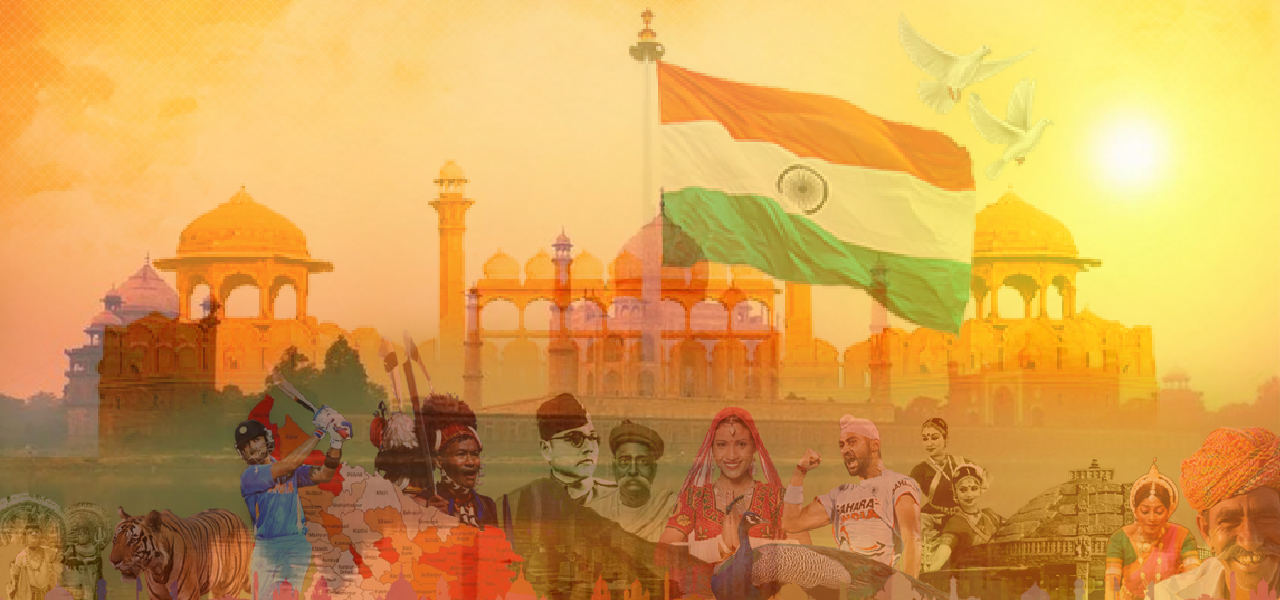
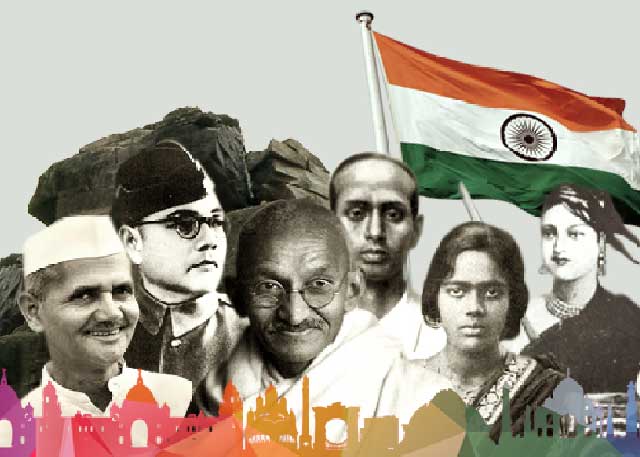
India is among the world's oldest civilizations, known for its vibrant diversity and rich cultural traditions. Since gaining independence, the country has made significant strides in socio-economic development. It is now self-reliant in agriculture and ranks among the leading industrial nations globally. India is also one of the few countries to have ventured into space exploration, aiming to harness natural forces for the benefit of its people.
National Flag
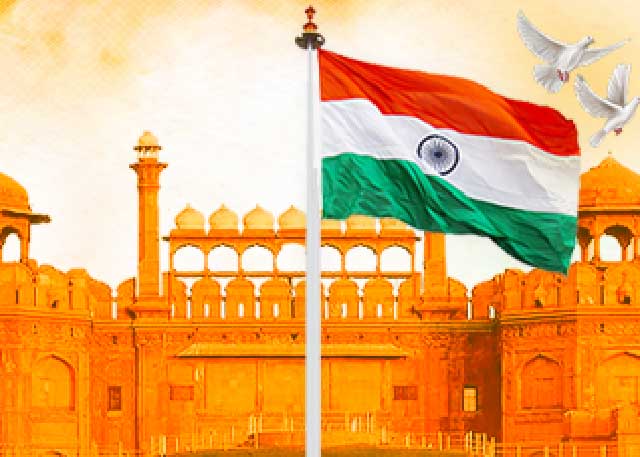
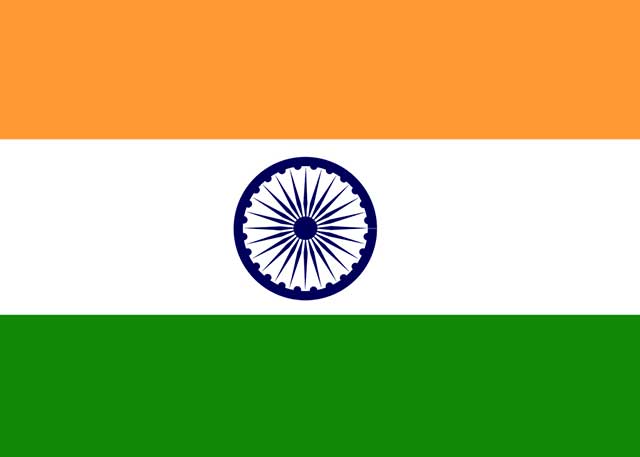 The Indian flag was designed as a symbol of freedom. The late Prime Minister Nehru called it a flag not only of freedom for ourselves, but a symbol of freedom to all people.
The flag is a horizontal tricolour in equal proportion of deep saffron on the top, white in the middle and dark green at the bottom. The ratio of the width to the length of the flag is two is to three. In the centre of the white band, there is a wheel in navy blue to indicate the Dharma Chakra, the wheel of law in the Sarnath Lion Capital. Its diameter approximates the width of the white band and it has 24 spokes. The saffron stands for courage, sacrifice and the spirit of renunciation; the white, for purity and truth; the green for faith and fertility.
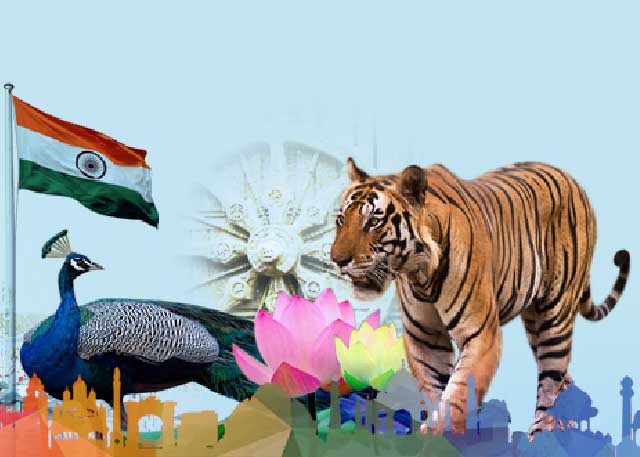
National animal: Tiger
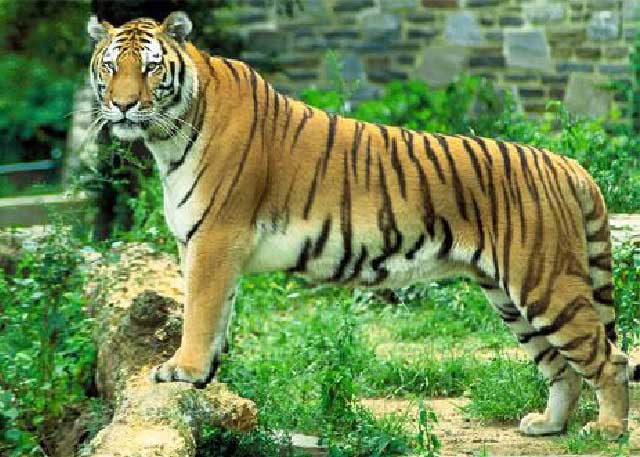 A large, four-legged carnivorous feline native to Asia, the tiger (Panthera tigris) is a majestic, maneless creature known for its striking appearance — a golden-yellow coat marked with black stripes and a white underbelly.
It is renowned for its strength and grandeur.
National bird: Peacock
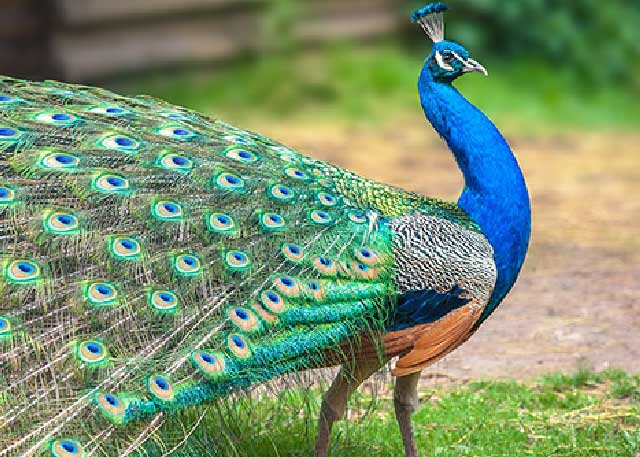 The male of the species Pavo cristatus, commonly known as the peacock, is native to India and is famous for its vibrant plumage. Its upper tail coverts are adorned with iridescent eye-like patterns (ocelli), which it can fan out in a stunning display to attract mates. Peacocks are closely related to pheasants. In India, they are found both in the wild—typically in forested areas near water—and domesticated in rural villages.
National Flower: Lotus
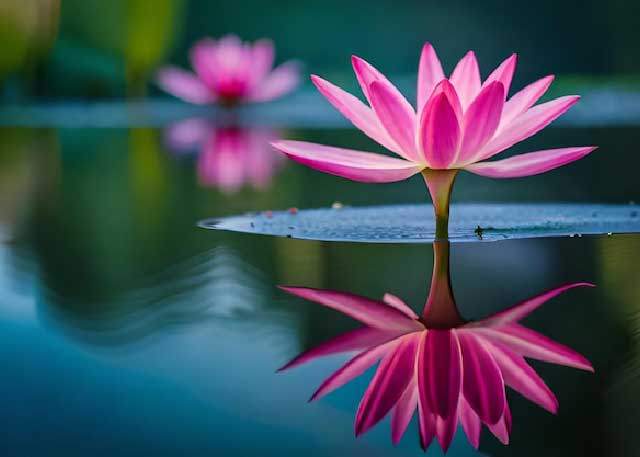 The lotus, or water lily, is an aquatic plant belonging to the Nymphaea genus, characterized by its wide, floating leaves and vibrant, fragrant flowers that bloom in shallow water. In India, the sacred lotus holds deep cultural and spiritual significance, with numerous legends, folklore, and religious traditions centered around it.
National Tree: Banyan
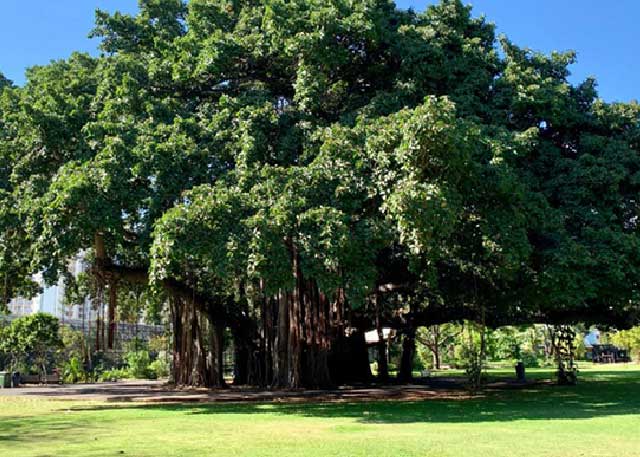 The Indian fig tree, Ficus benghalensis, is known for its unique growth pattern, where its branches send down aerial roots that take hold in the ground and grow into new trunks. This process allows the tree to spread over a vast area, creating a forest-like canopy. Due to its remarkable longevity and regenerative nature, the tree is regarded as immortal and holds a significant place in Indian mythology and folklore.
National Fruit: Mango
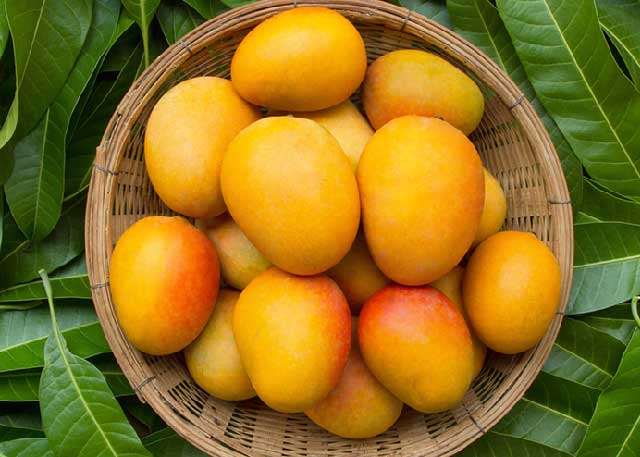 The mango, a fleshy fruit from the tree Mangifera indica, is either eaten ripe or used green in pickles and other preparations. It is one of the most significant and widely grown fruits in tropical regions. Rich in vitamins A, C, and D, the mango is highly valued for its taste and nutritional benefits. India is home to over 100 varieties of mangoes, varying in size, shape, and color. The cultivation of mangoes in India dates back to ancient times.
National currency: Rupees
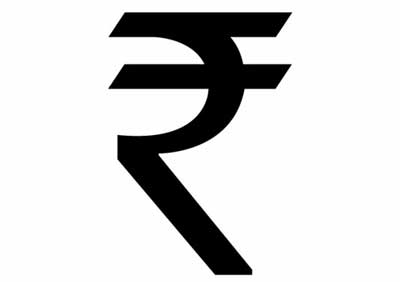 The Indian Rupee symbol represents the nation's global identity in financial transactions and reflects its economic strength. It embodies the spirit of Indian culture, blending the Devanagari letter "Ra" with the Roman capital "R." The two parallel horizontal lines at the top symbolize both the Indian national flag and the equality sign. This distinctive symbol was officially adopted by the Government of India on July 15, 2010.
India - You Should Know it...
- Is among the few countries to have sent own satellites into space.
- India has more than 10 satellites into space. Also launched its own satellite launch vehicles, used by other countries to launch their satellites
- Is a globally acknowledged software power and leader in the knowledge based economy.
- Has one of the largest number of software engineers in the world
- Ranks 1st in the production of milk and butter, mango, tea, raw sugar, jute, coconut, cashew
- Ranks 1st in the cutting, processing and manufacturing of gems and jewellery
- Ranks 1st in the diamond cutting and polishing trade
- Largest manufacturer of tractors and leather goods
- 2nd largest producer of vegetables and fruits
- 2nd largest producer of rice, groundnuts, sugarbeet, tobacco
- 2nd largest manufacturer of motorcycles and scooters
- 3rd largest producer of wheat
- 4th largest producer of natural rubber
- 4th largest producer of cement
- Has the world’s largest postal network
- Has the world’s largest rail network: Indian Railways is the world’s single largest employer
- Has the oldest film industry and produces the maximum number of films in the world
- Inventor of Hotmail (Sabeer Bhatia) and the Pentium chip (Vinod Dham) are both persons of Indian origin
- Inventor of the Number system and Zero was the Indian mathematician Aryabhatta
- The decimal system was developed in India in 100 B.C.
- The value of ‘pi’ (π) was first calculated by Budhyana in the 6th century
- The time taken by the earth to orbit the Sun was first calculated by the Indian mathematician-astronomer Bhaskaracharya in the 5th century as 365.259756484 days
- The world’s first university was established in Takshila in India in 700 B.C.
- Ayurveda of India was the earliest school of medicine known to the world
- Chess was invented in India