



APEC 2025: Asia-Pacific Leaders Call for Resilient Trade Amid Global Fractures
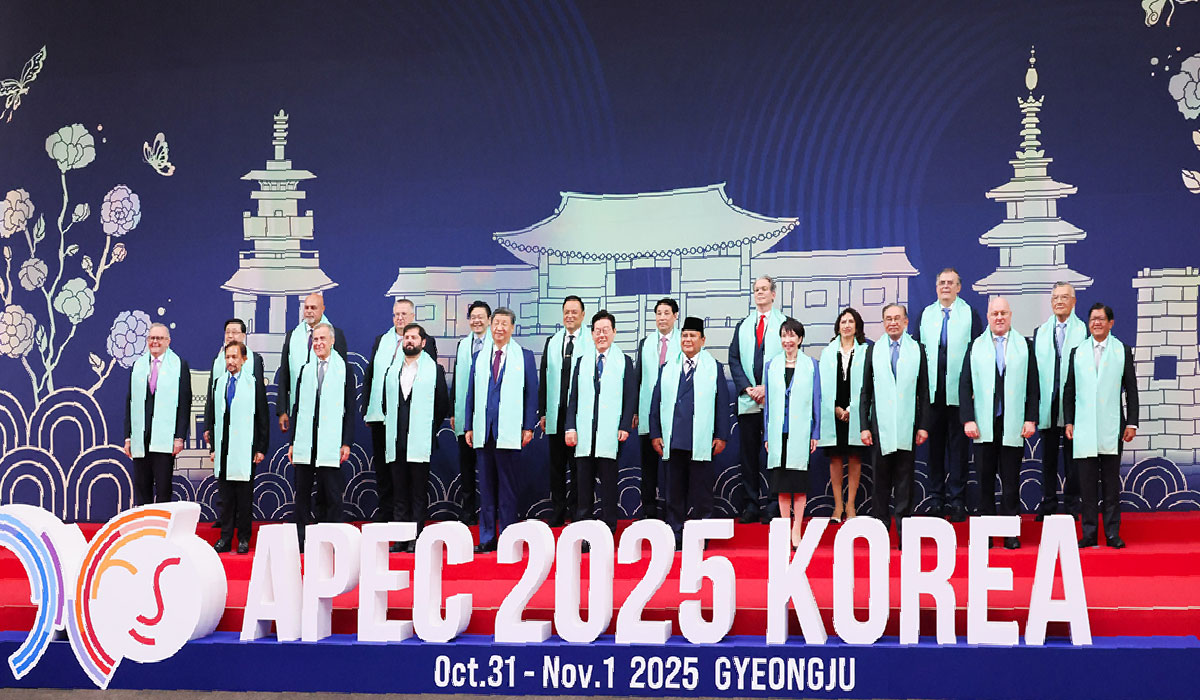
As cracks deepen in the global trade order, leaders of the Asia-Pacific Economic Cooperation (APEC) struck a tone of cautious unity at their annual summit in Seoul, South Korea, adopting a joint declaration that underscored the need for resilience, inclusivity, and shared benefits in trade.
A Summit in the Shadow of Tensions
The 2025 APEC summit unfolded against an uneasy backdrop — escalating geopolitical rivalries, aggressive economic measures, and a global trading system increasingly marked by fragmentation. From U.S. tariffs and China’s export controls to the rise of protectionist policies worldwide, member economies faced mounting pressure to find common ground.
While U.S. President Donald Trump announced a series of bilateral trade deals ahead of the meeting — including agreements with China and South Korea — he departed before the summit officially began. Yet, his influence lingered in the final communiqué, which notably omitted any reference to multilateralism or the World Trade Organization (WTO) for the first time in years.
A Shift in the Global Trade Dialogue
Analysts viewed the omission as symbolic of a shifting era.
“It is a result of member countries acknowledging, at least to some degree, that it will be difficult to restore a free trade order based on multilateralism and the WTO,” said Heo Yoon, professor of international trade at Sogang University in Seoul.
Instead, the declaration focused on “resilient supply chains,” “inclusive growth,” and “regional cooperation,” reflecting a pragmatic turn toward regional self-reliance rather than global liberalization.
The New Trade Reality
This year’s APEC meeting underscored how Asia-Pacific economies are recalibrating — balancing between competing powers while seeking stability amid uncertainty. For many, the priority now lies in strengthening intra-regional partnerships, fostering digital trade, and building supply chain security in critical sectors like semiconductors and green energy.
As global trade governance drifts away from its traditional multilateral anchors, APEC’s message was clear: the future of trade will be built on adaptability, cooperation, and regional resilience — not on the return to a bygone free-trade ideal.