




Bridging the Divide: India and Canada Chart a New Course in Strategic Diplomacy
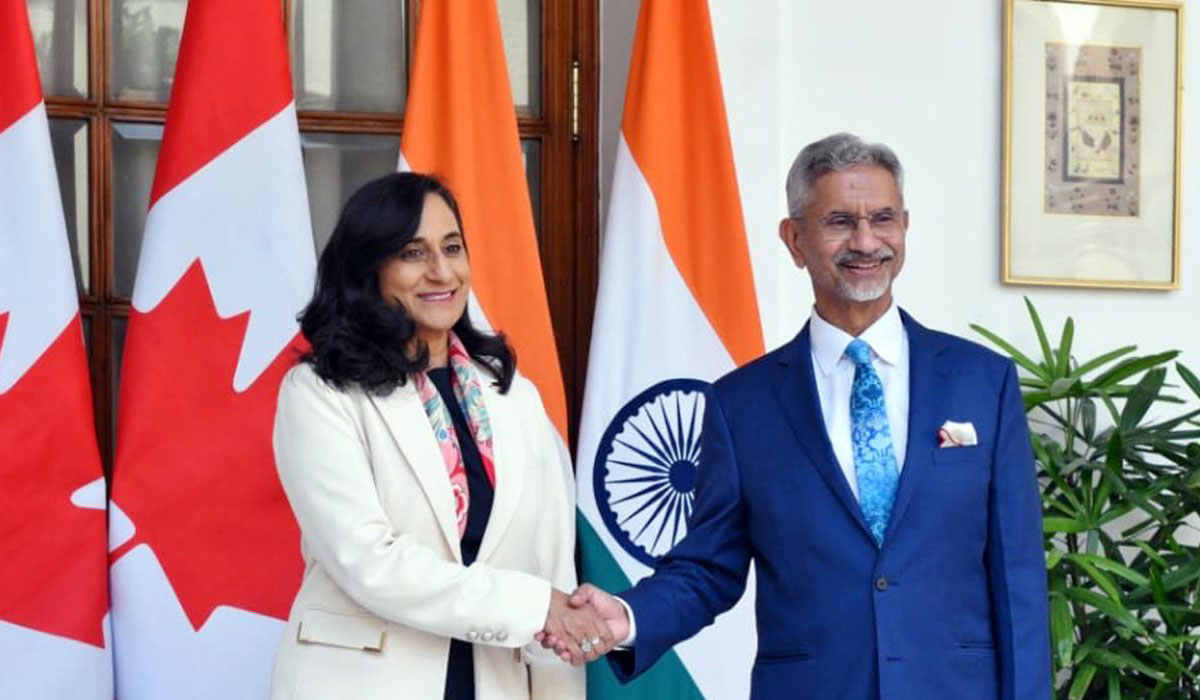
In a significant diplomatic development, External Affairs Minister S. Jaishankar welcomed Canadian Foreign Affairs Minister Anita Anand to New Delhi on Monday, marking her first official visit to India in her current role. The high-level talks signal a deliberate shift toward rebuilding and reshaping the India–Canada relationship after months of diplomatic tension and cautious recalibration.
This visit follows up on the groundwork laid by Prime Ministers Narendra Modi and Mark Carney during their bilateral meeting on the sidelines of the G7 Summit in Kananaskis, Canada, earlier this year. That dialogue set the tone for a gradual thaw in relations, culminating in key milestones such as the reinstatement of High Commissioners on August 28 and joint security and diplomatic consultations in September.
A Strategic Reset
At the heart of the renewed engagement lies a comprehensive bilateral roadmap focused on expanding cooperation across strategic, economic, technological, and security domains. Anchored in shared democratic principles and mutual respect for sovereignty, the new framework reflects a maturing partnership that seeks long-term resilience.
In the face of rising global economic headwinds and volatile geopolitical currents, both ministers underlined the urgency of building a dependable bilateral relationship. Priorities include enhancing trade, safeguarding critical supply chains, and advancing regional stability.
Trade as a Pillar of Progress
Bilateral trade between India and Canada surged to $23.66 billion in 2024, showcasing a strong foundation of economic complementarity. Looking to build on this momentum, both governments have agreed to initiate ministerial-level trade and investment dialogues and reconvene the Canada–India CEO Forum in early 2026.
Key focus sectors will include clean technology, infrastructure development, agri-food innovation, and digital transformation—areas that reflect shared ambitions in sustainable development and economic modernization.
Shared Values, Shared Vision
Minister Jaishankar emphasized that Canada’s economic strengths align well with India’s growth trajectory, citing “complementary economies” and “pluralistic values” as key pillars of the bilateral relationship.
Minister Anand echoed this sentiment, describing the joint statement as “comprehensive and all-encompassing.” She highlighted priority areas for collaboration such as critical minerals, renewable energy, artificial intelligence, climate resilience, and defense cooperation.
A Path Forward
While past disagreements have tested the resilience of India–Canada ties, the current engagement signals a pivot toward pragmatism and partnership. With clear political intent and a broadened strategic lens, both nations are laying the groundwork for a relationship that is not only more balanced but also future-ready.
As they step into this new chapter, India and Canada appear poised to transform shared values into shared successes—building bridges where divisions once stood.