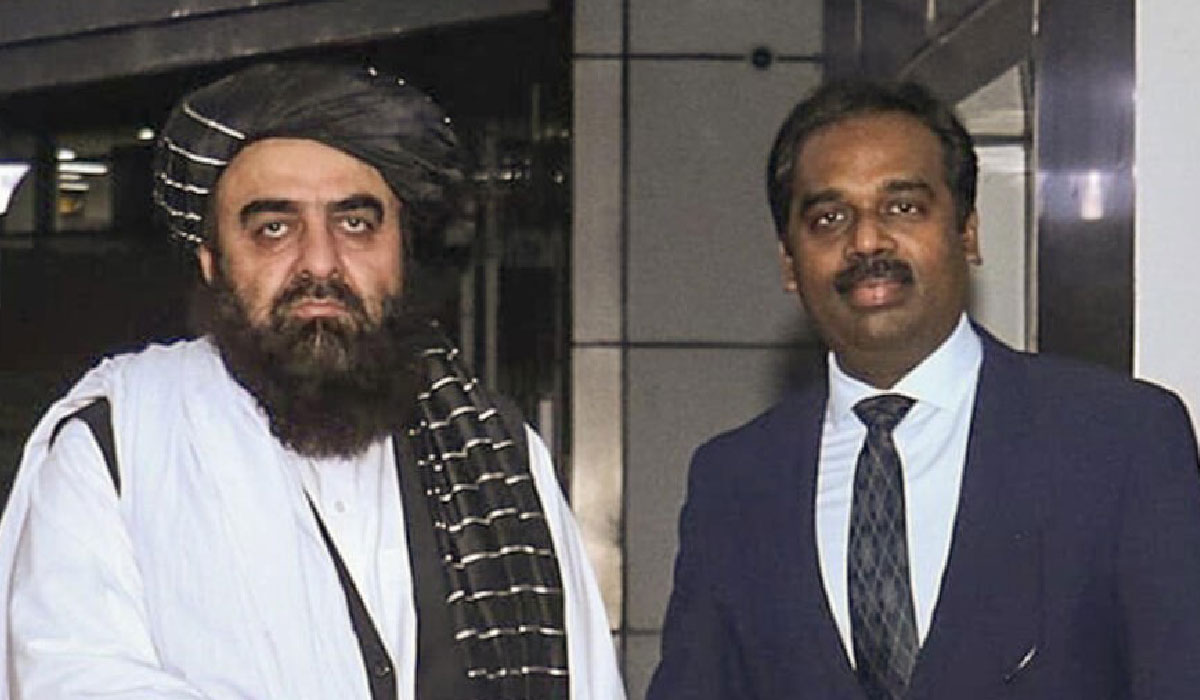
Bridging the Gap: Afghan Foreign Minister Muttaqi Visits India to Deepen Ties
In a development that marks a new chapter in regional diplomacy, Afghanistan’s Foreign Minister Amir Khan Muttaqi arrived in New Delhi on Thursday for an official visit aimed at enhancing bilateral relations and engaging in talks on regional stability.
The visit, which will continue until October 16, signals renewed dialogue between India and the Taliban-led interim government in Kabul. It is seen as a step towards normalizing ties following years of uncertainty since the Taliban’s return to power in 2021.
India’s Ministry of External Affairs (MEA) welcomed Muttaqi’s arrival with optimism. MEA spokesperson Randhir Jaiswal posted on X (formerly Twitter):
“We look forward to engaging discussions with him on bilateral relations and regional issues.”
Delayed But Significant
Muttaqi’s visit had been in the works for several weeks but was postponed due to procedural hurdles. He was initially unable to travel because of United Nations Security Council (UNSC) sanctions requiring a special exemption. That exemption was finally granted last week, clearing the way for his travel to India.
During his stay, Muttaqi is expected to hold key meetings with India’s External Affairs Minister Dr. S. Jaishankar and National Security Advisor Ajit Doval, two of India’s top strategic policymakers.
Focus on Humanitarian Aid and Development
India’s engagement with Afghanistan has primarily focused on humanitarian support and infrastructure assistance in recent years. One of the expected priorities of this visit is to discuss continued aid to the Afghan people, especially in light of the recent earthquake in eastern Afghanistan.
“On the day of the earthquake, we delivered relief material to Kunar province. More aid followed through Chabahar,” said MEA spokesperson Jaiswal in a briefing earlier this month. He added that India’s communication with the interim Afghan authorities has remained consistent, with both sides engaging at various diplomatic levels.
India has long supported Afghanistan’s development, contributing to projects such as the construction of roads, dams, schools, and hospitals. However, its relationship with the Taliban-led administration remains cautious, as the international community continues to grapple with the issue of formal recognition.
A Diplomatic Balancing Act
While New Delhi has not formally recognized the Taliban government, it has maintained back-channel engagement and humanitarian outreach, especially in times of crisis. India reopened its embassy in Kabul with a limited diplomatic presence in 2022 to facilitate aid distribution and monitor developments.
The ongoing talks reflect India’s strategic interest in maintaining regional stability and ensuring that Afghan soil is not used for terrorism—a concern India has repeatedly voiced in global forums.
Looking Ahead
Muttaqi’s visit represents a delicate but important effort to maintain constructive dialogue between India and Afghanistan. While no major announcements are expected, the visit underscores India’s commitment to supporting the Afghan people and navigating a complex geopolitical landscape with pragmatism and humanitarian concern.
As regional dynamics continue to evolve, all eyes will be on New Delhi’s approach to Kabul—striking a balance between strategic caution and humanitarian engagement.