


European Union and India Partnership – A model of Multilateralism
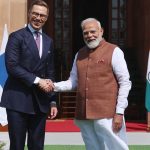
The world caught a rare glimpse of Ursula von der Leyen, taking a centre stage at Kartavya Path while European Military marched in New Delhi, the capital of India amidst the grandeurs of the Republic Day celebration on January 26, 2026. India warmly welcomed its chief guests António Luís Santos da Costa the President of the European Council and Ursula von der Leyen, European Commission Chief on the occasion of 77th Republic Day in 2026. The presence of the European Commission President and Chief speaks volumes on India’s strategic approach towards multilateralism in the geopolitics of the world so fractured! Strategically, the EU’s presence in India cannot be just termed as ceremonial when the Republic Day Chief guests happen to co-chairs the upcoming India-EU Summit on January 27th. The gravity of this moment is highlighted by the optics of EU leaders standing with Prime Minister Narendra Modi at India's most important national festival. This plainly cannot be categorised ‘serendipitous’ rather a symmetry of purpose that brings the two together.
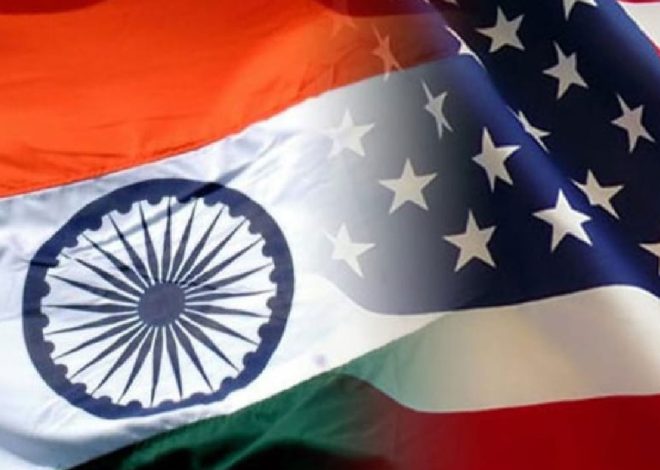
India's relationship with the United States has deteriorated from that of a close ally to that of a tariff gambler, and Europe, too, recognises it. Now, taking into consideration the absence of clarity in geopolitics, the EU-India alignment underscores India’s exemplary stand towards multilateralism over single alliance and long wait for a good outcome. And it is through this partnership India-EU shows the world the path to multilateralism and strategic independence.
EU–India: A Relationship with Great Potential
Over two-decades the EU-India relations have been steady but without outcomes. Assessing pragmatically, EU-India relation remains largely economic as Europe-India did not then see immediate merging of their strategic involvement with each other. However, India being a non-aligned nation and Europe a US-centric kept the two from aligning. The IEC (India European Community), established in 1962, focused exclusively on its economic agenda to drive strategic enhancements. Thirty-two years later in 1994 with the establishment of ‘Cooperation Agreement’, and subsequently the ‘2004 Strategic Partnership’ institutionalized broad-based political, economic, and security cooperation between Europe and India. Today, the European Union and India together are the two biggest economies of the world that represent almost one-fifth of the global trade. The EU is the second-largest trading partner for India, accounting for 11.5% of overall trade though not surpassing China which still maintains a top position. These trade numbers (EU-India) outdo the US-India total trade volume. With €71.4 billion in EU imports and €48.8 billion in EU exports, commerce between the EU and India was last valued at over €120 billion in 2024. The bilateral commerce between has reportedly surged with a growth rate of 58% in EU and 11.5% of India’s total trade in products in the last decade. At the moment, the EU supersedes the US in terms of India’s trading partner being the second after China.
EU’s Significance for India
India views the European Union as a safe zone devoid of sharp competition or alignments where chances of expected cooperation are higher than other Asian alignments. The EU’s interests do not conflict with India’s current needs; rather, they align with Europe’s own demands for economic security, technological flexibility, and supply-chain diversification. Additionally, the EU seeks a stability that adheres to established rules, in contrast to its American counterpart.
This mutual understanding paves the way for enhanced diplomatic engagement and trade partnerships, fostering a relationship that promises to be beneficial for both parties. As both India and the EU navigate the complexities of a rapidly changing global landscape, their collaboration could serve as a model for other regions seeking to harmonise interests while maintaining their autonomy.
Europe's perspective also addresses a similar outlook for a partner in need and deed, where India blends in perfectly with its pragmatism. For Europe, the prolonged security crisis in its eastern neighbourhood, along with over- reliance on the United States and the unpredictability of EU-China in critical economic sectors, makes India a valuable partner. What India offers Europe is what it lacks with its other counterparts: skilled manpower, market depth, and strategic autonomy, all within a compatible structure without hierarchy and adversarial relationships. Additionally, what enhance the India-EU relationship are India's high-yielding bilateral relationships with individual European nations like France, Spain, and the Netherlands, apart from its relationship with the EU as an entity. India and the EU seek a common purpose of commitment to outcomes without compromising institutional credibility. This readily paves the way for economic convergence in the form of an FTA.
EU-India FTA
A long-pending deal since 2007, the EU-India FTA is a mutually beneficial agreement where India could largely benefit from lower tariff rates to boost export to Europe while Europe gains a wider reach into India’s exponentially growing market. Sectors such as pharmaceutical, chemicals, automobiles and machinery can receive immense advantages from the deal. Climate equality is another aspect of the FTA for India. The EU's Carbon Border Adjustment Mechanism (CBAM), which imposes a 20%–35% effective carbon fee on goods like steel, aluminium, cement, and fertilizers from India, is still a topic of contention. India views it as a non-tariff barrier that could undo the benefits of an FTA. While maintaining climate policy as a major priority, Europe should be able to provide India with some relief on this front in the interests of both parties. Besides, Ms. Von der Leyen has asked for maximum cooperation in issues like Security and Defence partnership with India, at par with Japan and Korea.
India-EU: Setting an Example for the World
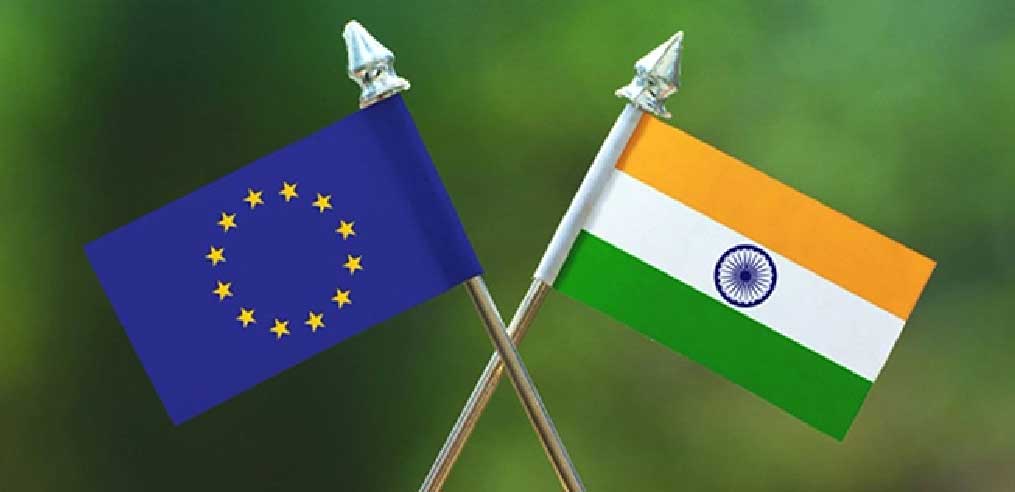
In times of America's arbitrary judgments and China's distant aggressiveness that pushes the globe toward polarization, the EU-India partnership serves as an example for other countries seeking a partner. Beyond Moscow, Beijing, and Washington, India and Europe provide each other with opportunities. The alliance acknowledges the necessity for shared values and flexibility in contrast to inflexible blocs and binary decisions. The India-EU free trade agreement serves as a model for the rest of the world, highlighting the significance of sovereign decisions limiting excessive reliance on any one nation.
The presence of top European Union (EU) leaders as joint chief guests for India’s 77th Republic Day in 2026—European Commission President Ursula von der Leyen and European Council President António Costa—signals a major, strategic elevation of the India-EU partnership. A convergence with cooperation and without coercion is what singles out the EU-India partnership.
About Author