

Fifty years of India Portugal Relations – A flashback in time
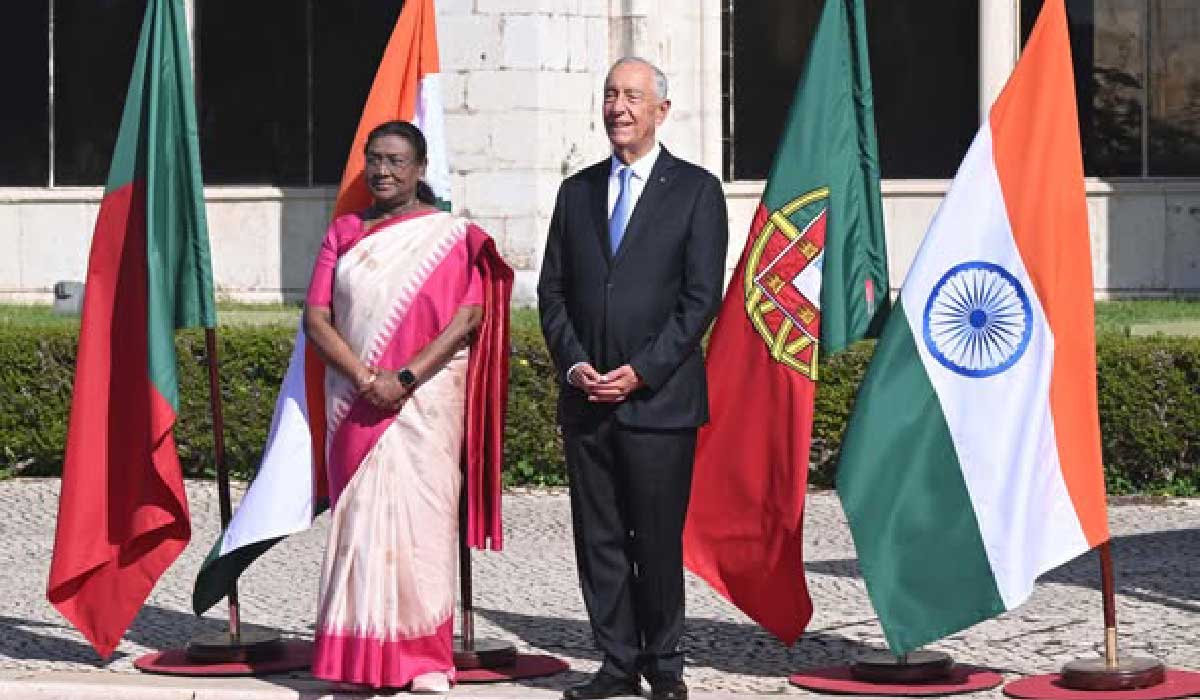
On April 7, 2025, Indian President Droupadi Murmu paid a 27-year state visit to Portugal in observance of the 50th anniversary of India-Portugal ties. Restoring diplomatic relations between Portugal and India and introducing stamps that highlighted their respective artistic and cultural legacies were two highlights of the visit. As they are ready to collaborate to revive their fifty-year partnership, the two nations commemorate one of the deepest and
longest links in European history, marking yet another significant milestone in their bilateral ties.
The relationship between India and Portugal accounts to be as old as 15th century, well before the British arrived, marked by the serendipitous discovery by the renowned voyager Vasco da Gama. In 1498, Vasco da Gama reached Calicut in India, thus connecting the Indian subcontinent to the world via maritime routes. This discovery demonstrated a blend of commerce, conflict, and cultural impact that endured for four hundred years. The Portuguese were seen as both a danger and a chance by the Indians, who were recently exposed to new weapons and combat methods introduced by the Portuguese spice traders. Conversely, the Portuguese saw a chance in local alliances and utilized them
as tools to enhance their profitable spice trade, thereby establishing trading posts in Cochin, Goa, Daman, and Diu.
From trade to conquest to settlement
For the Portuguese invaders, Afonso de Albuquerque's conquest of Goa in 1510 marked a transformation, and the city quickly evolved into a focus of Portuguese power from a trading centre. During the 16th and 17th centuries, the city flourished under Portuguese administration and was given the title “Rome of the East’ imbibing a mixture of Eastern and Western traditions. A large number of religious edifices such as churches and cathedrals were erected, standing as a symbol of new faith. Nevertheless, this new religious and cultural regime was not readily acceptable to prevalent locals and gave birth to conflict as well as local resistance from the people. Notwithstanding, the Portuguese rule was marked authoritarian and evangelist which persecuted all who rose against them.
The mix and match of trade and culture
Eventually, what began as a spice trade between two nations evolved into a fierce cultural, linguistic, and architectural interchange that continues to this day. While curry, an Indian dish, became a staple of Portuguese cuisine, Indian spices and dry fruits gradually made their way into Lusitanian cuisine, making it even more delicious. Even today, churches and colonial buildings in Goa exhibit some of the most striking architectural effects of Portuguese control. Portuguese is the primary source of vocabulary in Konkani, the Goan dialect.
The Decline of Portuguese Rule
An important turning point in the region's history was the liberation of Goa, which made it possible for the area to be seamlessly incorporated into the Indian nation-state. In contrast to the 16th and 17th centuries, the Portuguese dominance began to decline as the 18th century drew near. During this time, the Portuguese empire began to experience a change in its strategic and economic significance as the British and Dutch began to view India as a developing trading colony. But in the post-war period, this prompted the populace to rebel against Portuguese administration, and in December 1961, India started a military campaign that ultimately succeeded in capturing Daman and Diu from Portuguese control. Salazar's Portuguese government first opposed Indian control over these
lands, but they soon came to terms with the fact that it was unavoidable.
Goa: A living testament of Portuguese past.
Portuguese reign in Goa had a profound sociocultural impact that continues to shape Goan society today, affecting its social dynamics and cultural fabric. Once considered the hot seat of the Portuguese Empire, Goa was declared to be the free territory in the year 1987 but never without traces of its colonial past. This led a majority of the population to adopt Christianity, henceforth making Goa a distinguished Goan Catholic identification marked by Portuguese and Indian elements today. The long-lasting effects of centuries of colonial rule are shown in the Portuguese influence in Goa. It draws attention to the vibrant character of Goan society, which is marked by syncretism, cultural variety, and a rich legacy influenced by past interactions between many civilisations.
About the Author