Fijian Prime Minister Sitiveni Rabuka Concludes First Official Visit to India, Marking a New Era in Bilateral Ties
Fijian Prime Minister Sitiveni Rabuka concluded his first official visit to India on Monday, wrapping up a three-day diplomatic mission that marked a renewed commitment to strengthening cooperation between the two nations. The visit, which took place from August 24 to 26, was a significant step forward in deepening India’s engagement with Pacific Island countries and enhancing South-South cooperation.
PM Rabuka’s visit was marked by high-level meetings with Prime Minister Narendra Modi, President Droupadi Murmu, and External Affairs Minister Dr. S. Jaishankar, along with the signing of several important agreements aimed at broadening the scope of bilateral ties.
Strategic Talks with PM Modi
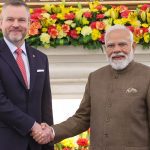
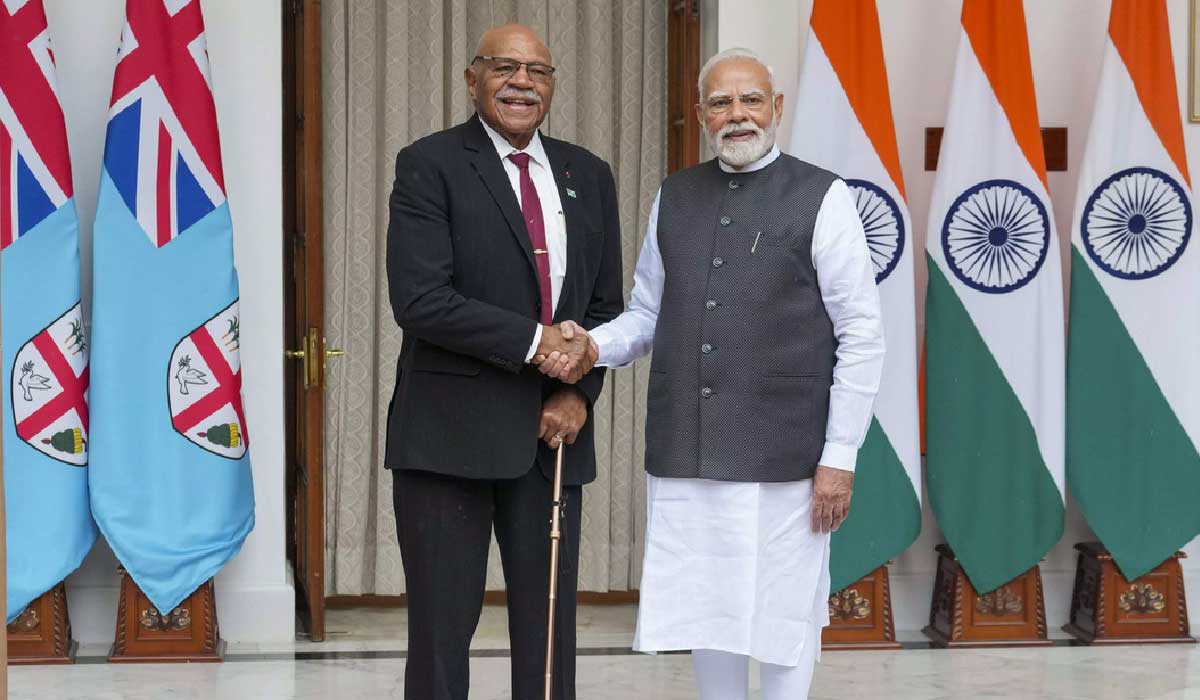
 The centerpiece of Rabuka’s visit was a formal meeting and delegation-level discussions with Indian Prime Minister Narendra Modi on August 25 at Hyderabad House in New Delhi. Both leaders reaffirmed their shared vision for a peaceful, inclusive, and rules-based Indo-Pacific region.
A wide range of bilateral issues were discussed, with special emphasis on defense cooperation, development assistance, healthcare, climate resilience, and digital transformation. The two sides signed seven key agreements, including MoUs in maritime and cybersecurity cooperation, defense training, and strategic infrastructure development.
One of the major highlights of the talks was India’s commitment to supporting Fiji’s healthcare infrastructure, including the announcement of a 100-bed super-speciality hospital in Suva. The hospital project, formalized through a new MoU, is expected to provide advanced medical care not only to Fijians but also to neighboring Pacific Island communities.
In addition, Prime Minister Modi unveiled a 13-point development assistance plan, which includes the provision of sea ambulances, dialysis units, mobile soil-testing laboratories, and agricultural drones. India also pledged to set up Jan Aushadhi (affordable medicine) centres in Fiji to improve access to essential drugs.
“Our countries may be separated by oceans, but our aspirations and values are closely aligned,” Prime Minister Modi said, noting that India and Fiji are natural partners in promoting inclusive growth and sustainable development.
Focus on the Global South and Multilateralism
The leaders also held discussions on global governance reforms. PM Rabuka reaffirmed Fiji’s support for India’s bid for a permanent seat on the United Nations Security Council and its non-permanent candidacy for 2028–29. Both sides emphasized the need for stronger representation of developing nations, especially those from the Global South, in international decision-making.
Engagement with President Murmu
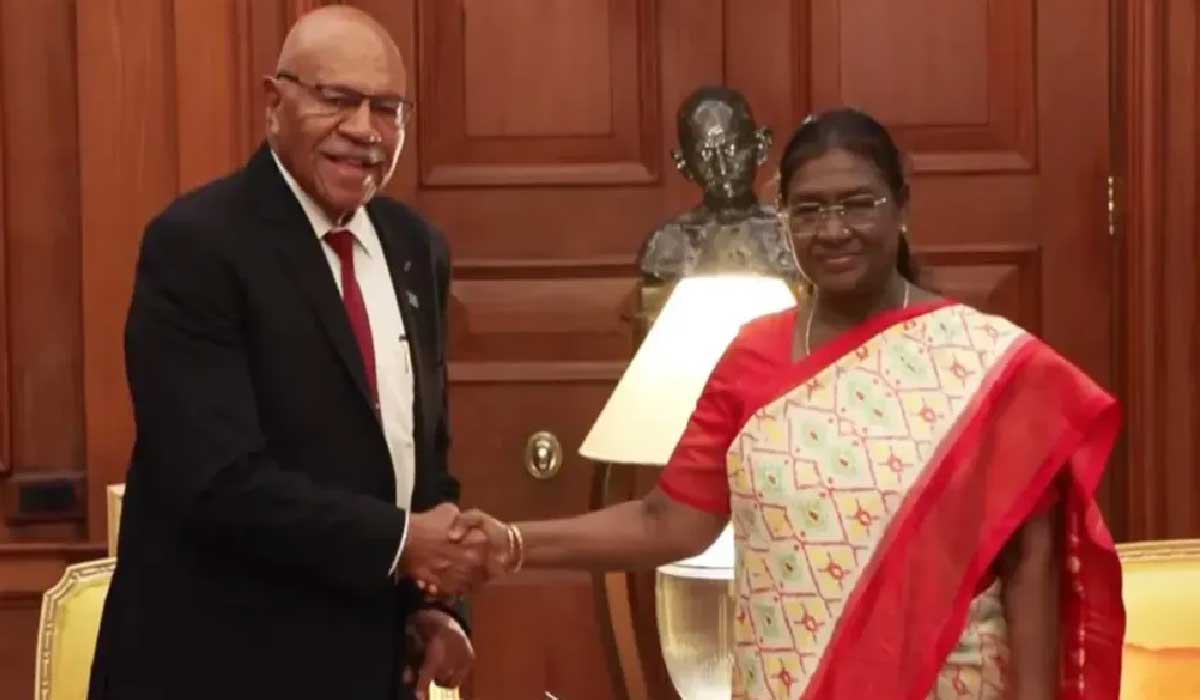 On August 26, PM Rabuka paid a courtesy call on President Droupadi Murmu at Rashtrapati Bhavan. The meeting was marked by mutual goodwill and reaffirmed the cultural and historical links between the two nations—particularly through the Indian diaspora in Fiji, which makes up over 30% of the population.
President Murmu expressed India’s enduring commitment to supporting Pacific Island nations through tailored development initiatives. She welcomed deeper collaboration in areas such as capacity building, health services, climate change mitigation, and digital governance.
She also encouraged Fiji to explore India’s public digital infrastructure platforms like UPI (Unified Payments Interface) and Aadhaar for advancing financial inclusion and citizen services. The President applauded Rabuka’s leadership and emphasized the importance of people-to-people connections in building lasting bilateral relations.
Meeting with External Affairs Minister Dr. S. Jaishankar
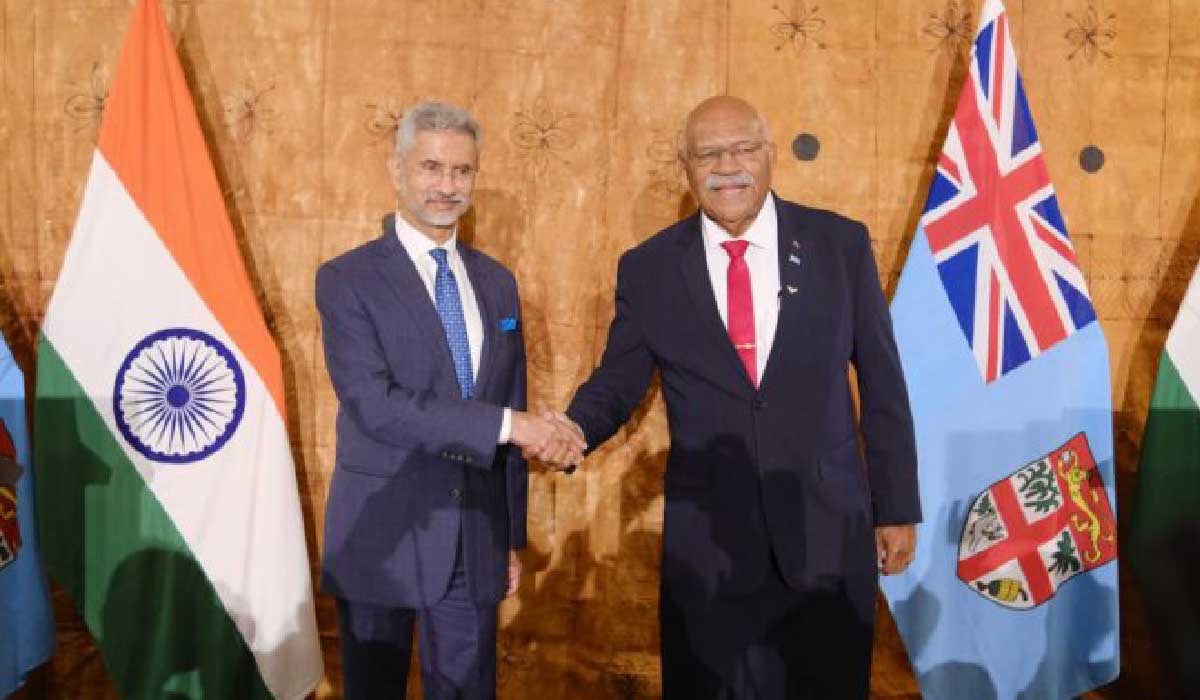 During his visit, PM Rabuka also held discussions with External Affairs Minister Dr. S. Jaishankar, where both leaders reviewed ongoing development projects and explored new areas of cooperation. Minister Jaishankar reiterated India’s commitment to being a reliable partner in Fiji’s growth journey.
They discussed expanding technical training through India’s Indian Technical and Economic Cooperation (ITEC) program, enhancing digital and educational exchanges, and fostering stronger institutional partnerships between Indian and Fijian organizations.
Context: A Relationship Rooted in History
India and Fiji share deep-rooted ties, dating back to the 19th century when Indian indentured laborers were brought to the island by the British. Today, the Indo-Fijian community continues to serve as a vital cultural and social bridge between the two nations.
Prime Minister Modi highlighted the significance of this shared legacy and praised the institution of Girmit Day in Fiji, which honors the contribution of early Indian migrants. He described it as a powerful symbol of resilience and shared heritage.
Regional and Strategic Significance
Rabuka’s visit comes at a time when India is intensifying its outreach to the Pacific Island nations under its Act East and Indo-Pacific strategies. Fiji, as one of the largest and most strategically located Pacific Island countries, plays a key role in India’s regional vision.
This visit also follows the momentum generated at the Forum for India–Pacific Islands Cooperation (FIPIC) summit held in Papua New Guinea in 2023, where Prime Minister Modi met several Pacific leaders to discuss climate resilience, development finance, and digital transformation.
Conclusion: A Forward-Looking Partnership
Prime Minister Rabuka’s three-day visit has helped inject new energy into the India–Fiji partnership. From defense and digital cooperation to healthcare and climate action, the two countries have charted a path of deeper collaboration that reflects both their historical bonds and their shared goals for the future.
As PM Rabuka concluded his visit, both governments reaffirmed their commitment to building a more resilient, inclusive, and mutually beneficial relationship—one that will serve as a model for cooperation between India and the wider Pacific region.