

From Dialogue to Delivery: Jaishankar’s Brussels Visit Signals a New Momentum in India–EU Relations
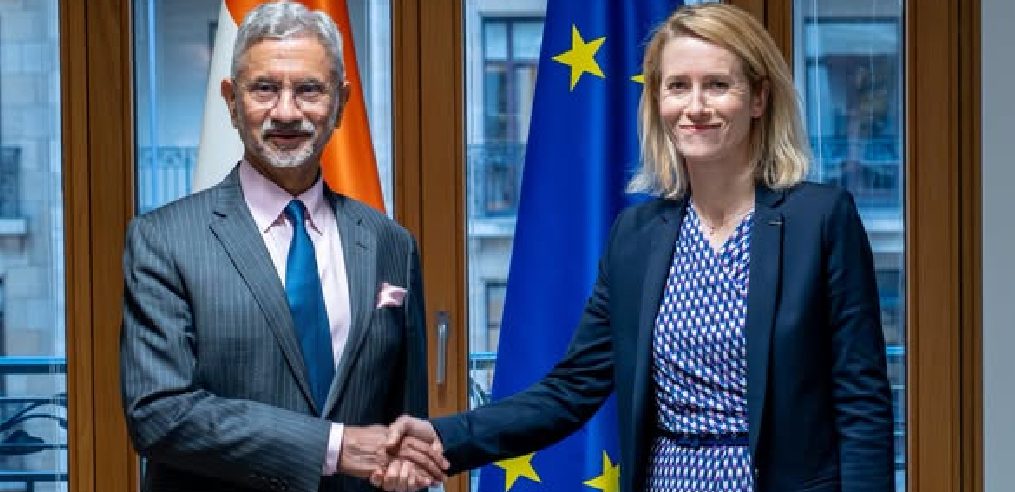
The visit of S. Jaishankar to Brussels on March 15–16 reflects a renewed push to elevate ties between India and the European Union. Coming soon after the recent India–EU Summit, the visit signals continuity in high-level engagement and a shared intent to translate dialogue into tangible outcomes.
Invited by Kaja Kallas, Jaishankar engaged with senior EU leadership and foreign ministers, holding discussions that spanned strategic, economic, and global issues. His participation in key diplomatic interactions in Brussels highlighted India’s growing importance in European strategic thinking, particularly as both sides navigate an evolving geopolitical landscape.
A major focus of the visit was strengthening political coordination and expanding cooperation in areas such as connectivity, clean energy, digital innovation, and resilient supply chains. Both sides also exchanged views on global developments, including regional conflicts, economic uncertainty, and the need for a stable international order. The discussions reflected a clear convergence of interests, especially in promoting rules-based cooperation and diversified partnerships.
Key Activities and Engagements
During the visit, S. Jaishankar held a series of structured engagements with EU counterparts, including participation in ministerial-level consultations. These interactions focused on enhancing institutional dialogue mechanisms and ensuring regular high-level exchanges between India and the EU.
He also engaged with policymakers and strategic experts, emphasizing India’s role as a key partner in addressing global challenges. Conversations touched upon strengthening maritime cooperation, enhancing connectivity initiatives, and fostering innovation-driven partnerships in emerging technologies.
The visit further underscored the importance of people-to-people ties, academic collaboration, and business engagement as essential pillars of the broader relationship.
Trade and Agreement Frameworks
Economic cooperation remained central to the discussions, particularly the progress of the long-negotiated India–EU Free Trade Agreement. Both sides reiterated their commitment to expediting the process and addressing outstanding issues to unlock the full potential of bilateral trade.
Beyond the FTA, the talks also explored broader agreement frameworks, including investment protection, digital trade standards, and sustainable development commitments. These frameworks are expected to complement the trade agreement and create a more comprehensive economic partnership.
Additionally, cooperation in critical sectors such as green technology, climate action, and infrastructure development was highlighted as a key area for future agreements. The emphasis was on building long-term, mutually beneficial economic ties that go beyond traditional trade.
Strategic Significance
The Brussels visit highlights a steady transformation in India–EU relations—from a largely economic partnership to a more comprehensive strategic alignment. Both sides are increasingly recognizing the importance of working together in an uncertain global environment marked by shifting alliances and emerging challenges.
For India, deeper engagement with Europe supports its broader foreign policy objective of diversifying partnerships and strengthening its global presence. For the EU, India represents a reliable partner in the Indo-Pacific, offering opportunities for cooperation in security, trade, and technology.
Toward a Stronger Partnership
The outcomes of S. Jaishankar’s Brussels visit point to a relationship that is gaining both depth and direction. By focusing on concrete initiatives, expanding cooperation, and accelerating agreements, India and the European Union are laying the groundwork for a more dynamic and resilient partnership.
As both sides move forward, the emphasis will likely remain on delivering practical results—ensuring that diplomatic engagement translates into sustained strategic and economic gains.