



From Islands to Indo-Pacific: Saint Kitts and Nevis Plants Its Flag in New Delhi
Historic diplomatic opening signals a new chapter in India-Caribbean engagement and Global South cooperation
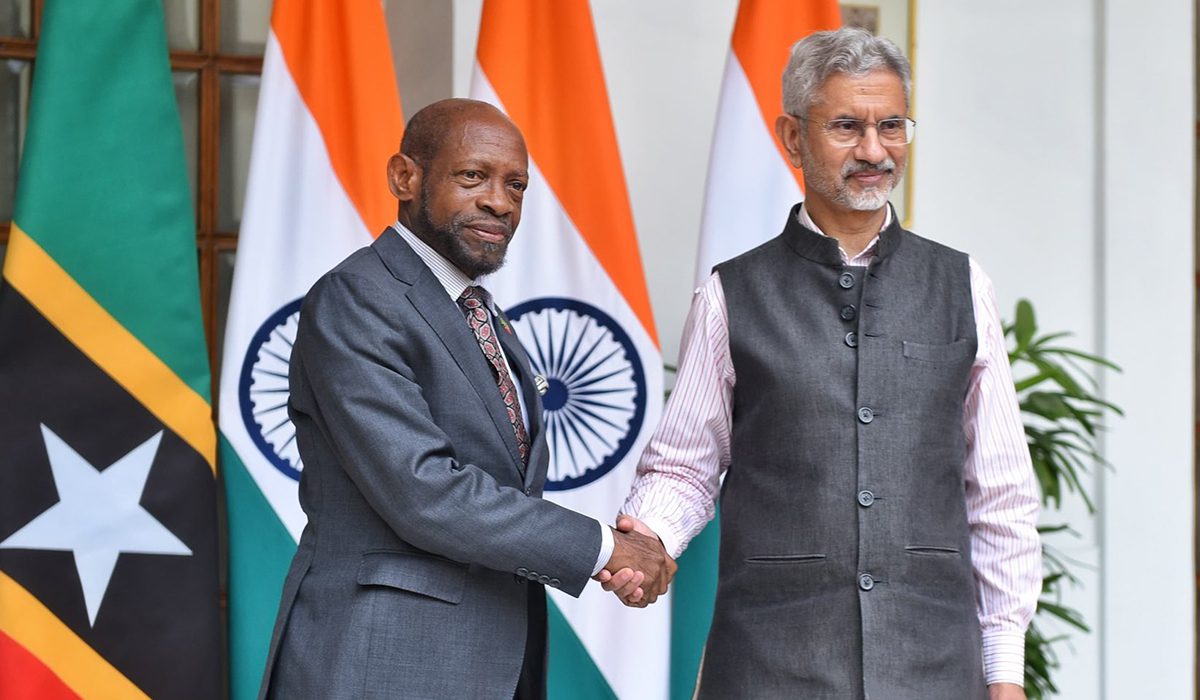
The arrival of Denzil L. Douglas in New Delhi on 6 April 2026 may appear modest in scale, but its implications are anything but. In a defining moment for bilateral relations, the Caribbean nation formally established its first resident diplomatic mission in India – marking a strategic leap in engagement between the two countries and underscoring the growing importance of South-South cooperation in an evolving global order.
At the heart of the visit was the inauguration of the High Commission of Saint Kitts and Nevis in New Delhi, jointly conducted by Dr. Douglas and India’s External Affairs Minister S. Jaishankar on 7 April. This milestone not only symbolizes a diplomatic upgrade but also reflects a shared commitment to deepening ties across political, economic, and developmental domains.
The establishment of a permanent diplomatic presence is more than a ceremonial gesture. It provides a critical institutional framework for sustained dialogue, faster coordination, and expanded cooperation. For India, it reinforces its strategic outreach to the Caribbean and the wider CARICOM region; for Saint Kitts and Nevis, it opens new avenues for partnerships with one of the world’s fastest-growing major economies.
Discussions during the visit highlighted a broad and forward-looking agenda. Development cooperation featured prominently, with India reiterating its willingness to support capacity-building initiatives, technology transfer, and quick-impact projects tailored to the needs of small island developing states. These efforts align with India’s broader vision of acting as a development partner to the Global South, offering scalable and sustainable solutions.
Healthcare collaboration emerged as another key pillar. With Saint Kitts and Nevis seeking to strengthen its medical infrastructure, India’s expertise in affordable healthcare and pharmaceuticals presents a natural avenue for partnership. The dialogue also extended to emergency response mechanisms and public health resilience—areas that have gained urgency in the post-pandemic world.
Equally significant was the emphasis on digital governance. India’s experience in building inclusive digital public infrastructure has become a model for many developing nations, and its potential application in Saint Kitts and Nevis could help transform public service delivery and administrative efficiency. This digital dimension signals a shift toward modern, technology-driven cooperation.
Economic engagement, particularly in tourism and infrastructure, also featured on the agenda. As a tourism-dependent economy, Saint Kitts and Nevis is keen to attract investment and diversify its economic base. India, with its expanding global business footprint, stands as a promising partner in this regard.
Perhaps most crucially, the visit underscored shared concerns around climate change and resilience. As a small island state, Saint Kitts and Nevis remains highly vulnerable to climate impacts. India’s advocacy for climate justice and its support for sustainable development initiatives resonate strongly in this context, offering a platform for deeper collaboration on environmental challenges.
In strategic terms, the visit reflects a broader recalibration of international partnerships. As global power dynamics shift, smaller nations are increasingly seeking diversified alliances, while countries like India are expanding their diplomatic and developmental footprint across regions. The strengthening of India – Saint Kitts and Nevis relations fits squarely within this trend.
Ultimately, Dr. Douglas’s April 2026 visit is not merely about inaugurating a building – it is about building bridges. It signals intent, ambition, and a shared vision for cooperation that transcends geography. As New Delhi and Basseterre deepen their engagement, this partnership could well become a model for how countries of vastly different sizes and regions can collaborate meaningfully in the 21st century.