
Global Biosecurity Experts Convene in New Delhi as MEA Opens Conference Marking 50 Years of the BWC
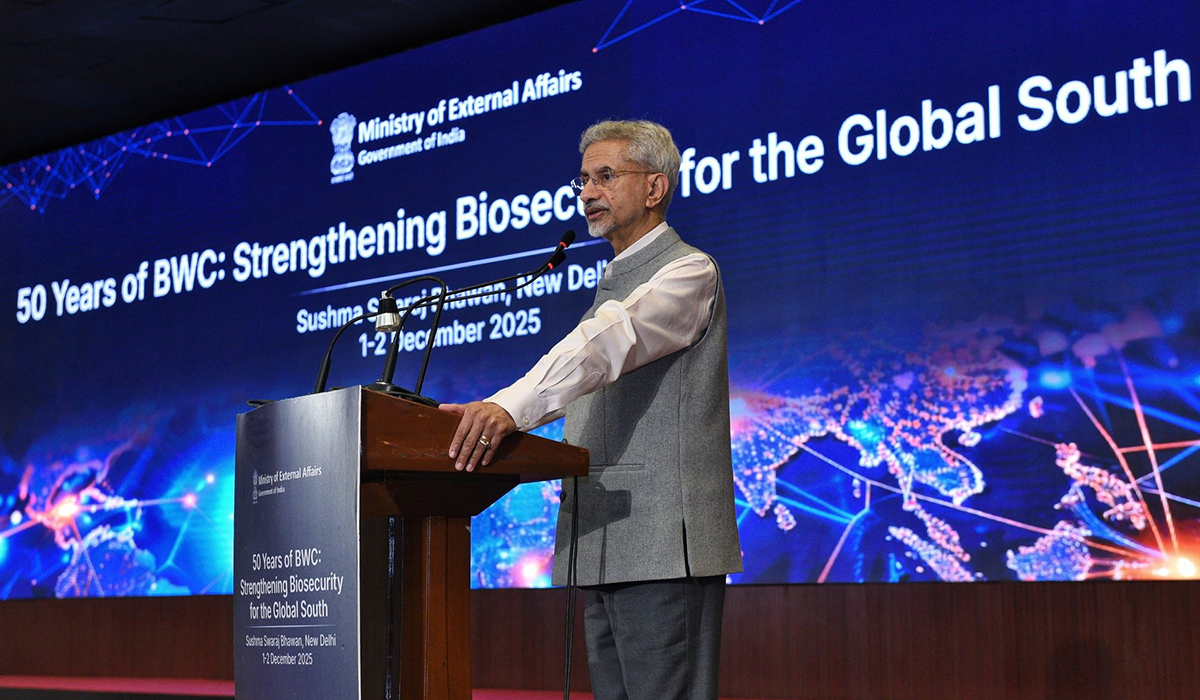
The Ministry of External Affairs today inaugurated the international conference titled “50 Years of BWC: Strengthening Biosecurity for the Global South”, organised to commemorate the 50th anniversary of the entry into force of the Biological Weapons Convention (BWC). The two-day event, taking place on 1–2 December 2025, aims to reflect on the Convention’s legacy while addressing the rapidly evolving biosecurity challenges faced by developing nations.
Delivering the inaugural address, External Affairs Minister Dr. S. Jaishankar welcomed scientific experts, policymakers, and diplomats from over 80 countries, as well as representatives of major international and regional organisations. Participants from Indian academia, research institutions, and industry were also present, underscoring the country’s growing leadership in global biosecurity and biotechnology governance.
The conference seeks to emphasise the specific biosecurity concerns of the Global South, particularly the implications of expanding access to dual-use biological technologies and the growing need for comprehensive preparedness, early-warning systems, and strong regulatory frameworks. Discussions over the two days will explore ways to deepen international cooperation in biosafety, surveillance, detection, and emergency response, while also identifying strategies to bridge capacity gaps in research, regulation, and crisis management.
In his remarks, Dr. Jaishankar reaffirmed India’s strong commitment to multilateralism and responsible biological research. He highlighted India’s scientific strengths and its extensive experience in public health management, calling for enhanced cooperation among developing nations and greater support for capacity-building under the BWC. Stressing that the Convention remains a central pillar of global non-proliferation, he noted that it must continually adapt to new technologies, emerging risks, and rapid scientific advances. Strengthening transparency, trust-building, and equitable technology sharing, he stated, will be essential to ensuring a more resilient global biosecurity architecture.
The high-level gathering brings together government officials, virologists, biosafety experts, legal scholars, arms-control analysts, and global health specialists. Over the course of the conference, participants will deliberate on topics such as advances in biotechnology and their implications for the BWC, the future of verification and confidence-building measures, regional models for preparedness and surveillance, and the role of academia and industry in promoting safe and responsible innovation.
With its diverse participation and forward-looking agenda, the conference marks an important diplomatic moment for India. By creating a platform for dialogue across scientific, policy, and international domains, the event aims to strengthen global biosecurity norms and ensure that biological research and innovation continue to advance peaceful, inclusive, and sustainable development for the decades ahead.