



Hungary Commemorates State Foundation Day: India’s Amrita Sher-Gil Cultural Centre Marks the Occasion with a Special Message
Hungary observed its annual State Foundation Day on August 20, a day marking the establishment of the Hungarian state and the founding of the Hungarian Christian Kingdom in the year 1000. This significant day is celebrated with both solemnity and festivity across the country, as it honors the legacy of King Saint Stephen, the first Christian King of Hungary, who played a crucial role in uniting the various tribes of Hungary and laying the foundations for the Hungarian nation.
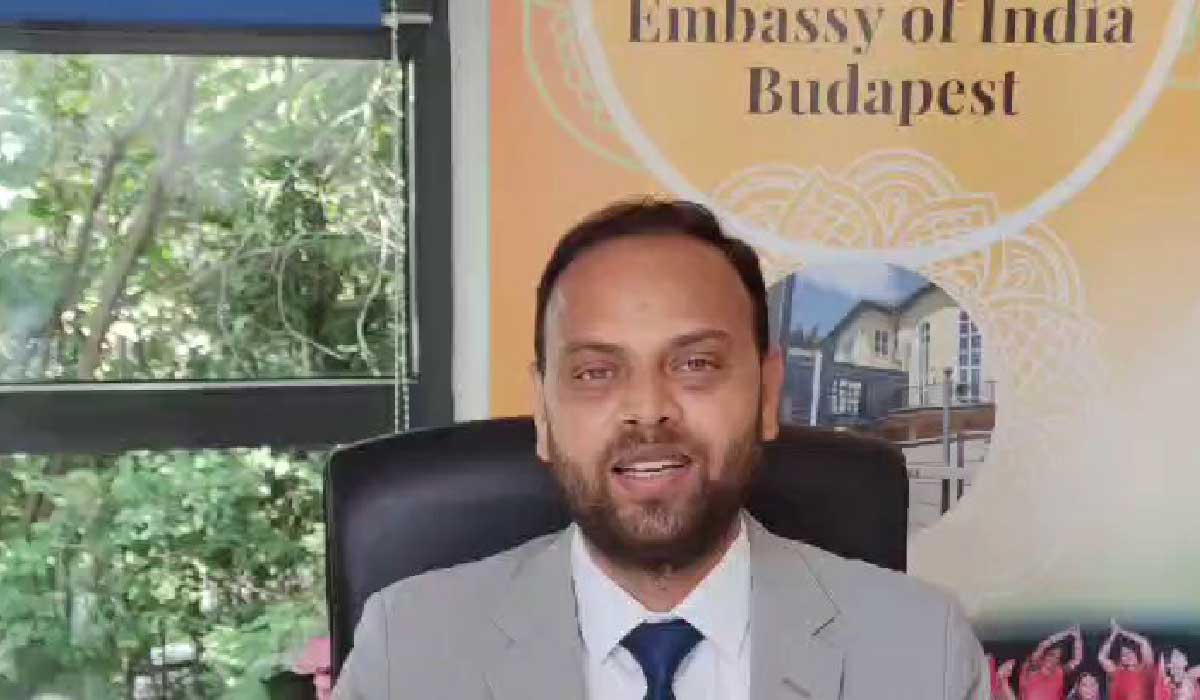
To commemorate this occasion, Dr. Mukesh Kumar Srivastava, the Director of the Amrita Sher-Gil Cultural Centre (ASCC) at the Embassy of India in Budapest, delivered a special message that emphasized the importance of fostering deeper people-to-people connections between India and Hungary.
In his message, Dr. Srivastava highlighted the longstanding ties between the two nations, noting the shared values of democracy, cultural exchange, and mutual respect. He stressed that the celebration of Hungary’s statehood was an ideal moment to reaffirm the close ties that India has with Hungary—especially through cultural diplomacy and collaboration.
Celebrating Hungary’s Historic Day
Hungary’s State Foundation Day is not just a reflection of historical events but also a time for the country to honor its modern identity. The celebrations take place throughout the country, with parades, ceremonial services, and public speeches that pay tribute to Hungary’s heritage and national pride. The Hungarian capital, Budapest, serves as the focal point for these celebrations, where the Hungarian President, Katalin Novák, along with other dignitaries, leads the nation in paying homage to King Stephen.
This year’s celebration also coincided with Hungary’s ongoing initiatives to strengthen its position in the European Union and foster greater global partnerships, including with countries like India, which is becoming an increasingly important partner for Hungary in terms of trade, technology, and culture.
Dr. Srivastava’s Message on Strengthening Bilateral Ties
In his address, Dr. Srivastava emphasized that India and Hungary have a rich tradition of cultural exchange, especially in areas such as art, education, and heritage preservation. The Amrita Sher-Gil Cultural Centre in Budapest plays a crucial role in nurturing these exchanges by hosting events that bring Indian culture to Hungarian audiences and by offering a space for discussions on the rich historical ties between both nations.
Dr. Srivastava noted that the cultural center had been instrumental in fostering dialogue and understanding, contributing to the promotion of Indian culture in Hungary. With events such as Indian classical music and dance performances, film screenings, and art exhibitions, the center has become a hub for cultural engagement between Hungary and India.
He further mentioned that people-to-people connections were the backbone of fostering strong international relations, and the cultural center’s mission aligns with this vision. Educational exchange programs, in particular, have opened doors for Hungarian students to learn about India’s ancient traditions, spiritual practices, and modern innovations, while also encouraging Indian students to explore Hungary’s rich history and dynamic contemporary culture.
Looking Ahead: Strengthening Ties Through Cultural Diplomacy
As Hungary looks forward to another year of State Foundation Day celebrations, the Embassy of India, through the Amrita Sher-Gil Cultural Centre, remains committed to enhancing bilateral relations. The cultural diplomacy efforts serve as an effective channel to build deeper bonds between the people of Hungary and India. Dr. Srivastava concluded his message by underscoring the importance of continued collaboration, saying that the growth of cultural ties will contribute significantly to the prosperity and understanding of both nations in the years to come.
The State Foundation Day thus serves as a reminder of Hungary’s enduring legacy and its future potential, while also highlighting the significant role that countries like India can play in promoting a multicultural dialogue that benefits all.
Conclusion:
As Hungary celebrates the founding of its state, India’s message from the Amrita Sher-Gil Cultural Centre in Budapest is a testament to the growing bilateral ties, particularly through cultural exchange and people-to-people connections. By reinforcing these links, both nations can continue to build a strong, prosperous future based on shared understanding, mutual respect, and collaboration.