



India and Philippines Deepen Scientific Cooperation Through New Partnership Programme
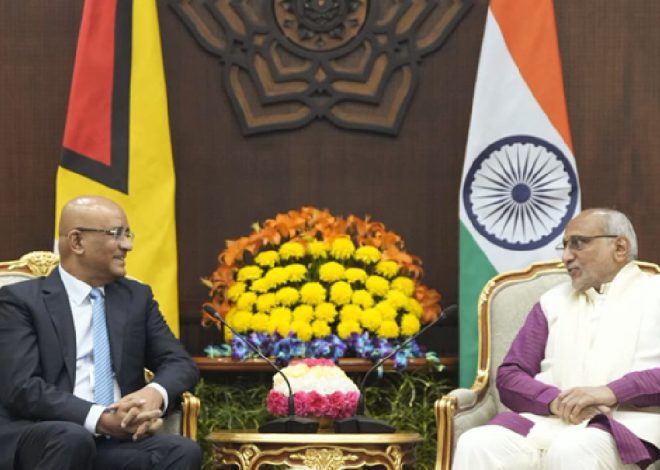
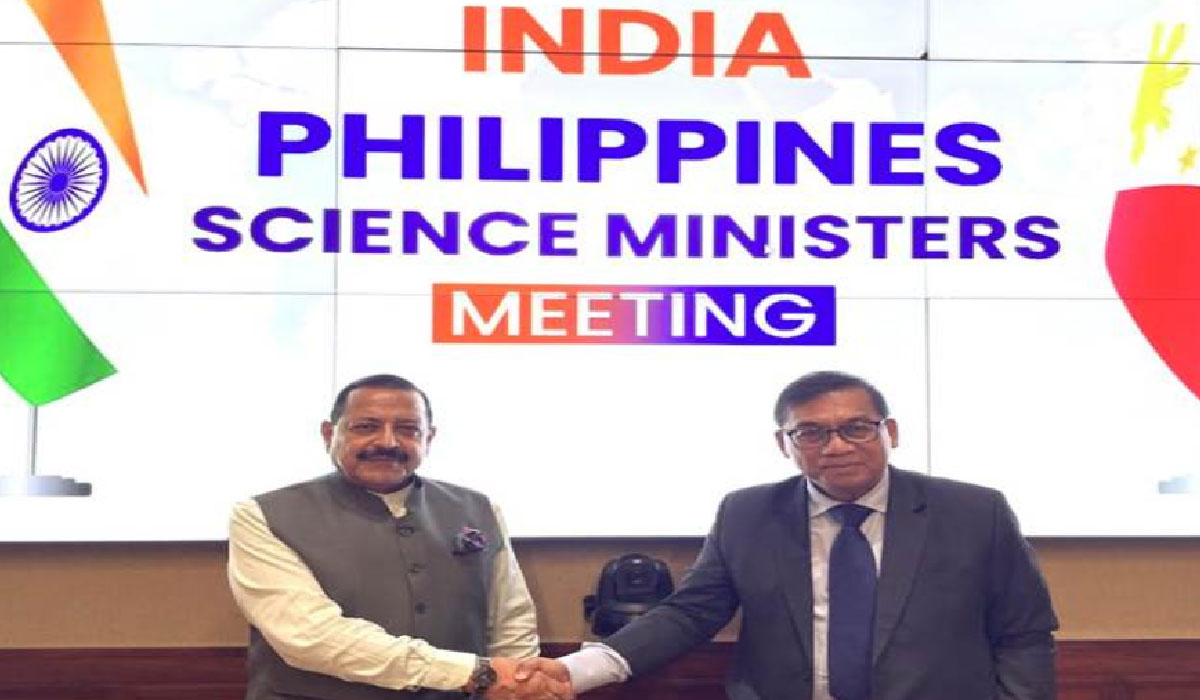
In a significant step toward enhancing bilateral scientific collaboration, Philippines Secretary of Science and Technology Dr. Renato U. Solidum Jr. called on India’s Union Minister of State (Independent Charge) for Science and Technology, Dr. Jitendra Singh, in New Delhi on Monday, August 4. The high-level meeting marked the launch of a renewed India–Philippines Science and Technology Cooperation Programme aimed at advancing joint research, innovation, and knowledge exchange.
During their discussions, the two leaders emphasized the central role of science, technology, and innovation (STI) in addressing shared developmental challenges, including climate change, disaster resilience, digital health, and food security. The meeting reaffirmed both countries’ commitment to leveraging scientific cooperation as a driver for inclusive and sustainable growth.
Launch of New Cooperation Programme
The highlight of the engagement was the formalization of a new bilateral cooperation framework focused on joint research projects, academic exchanges, technology transfer, and capacity building. This structured programme will facilitate greater collaboration between Indian and Filipino scientific institutions, promote knowledge sharing, and open avenues for innovation-driven development.
“This partnership reflects our shared commitment to harnessing science for societal benefit,” said Dr. Jitendra Singh. “India looks forward to working closely with the Philippines to explore synergies in emerging technologies and strengthen our collective scientific capabilities.”
Dr. Renato Solidum echoed the sentiment, noting that “collaboration with India opens new frontiers in scientific advancement, particularly in disaster management, health technology, and sustainable development.” He expressed optimism that the partnership would contribute meaningfully to the region’s long-term resilience and innovation ecosystem.
Key Areas of Collaboration
The leaders identified several priority sectors where joint initiatives are expected to yield substantial benefits:
- Disaster Risk Reduction and Climate Resilience: Both countries are prone to natural disasters such as typhoons, earthquakes, and floods. India’s expertise in geospatial technologies and early warning systems was of particular interest to the Philippines, which is looking to strengthen its disaster risk management capabilities.
- Biotechnology and Agricultural Research: Collaboration in agri-biotech and crop improvement technologies was emphasized as a way to boost food security and climate-smart agriculture in both countries.
- Health and Biomedical Innovation: Building on lessons from the COVID-19 pandemic, the ministers agreed to explore joint research in vaccines, diagnostics, and digital health technologies. India’s biotech sector presents opportunities for innovation partnerships in affordable health solutions.
- Renewable Energy and Sustainability: With India’s leadership in solar energy and green hydrogen, and the Philippines’ expanding focus on renewable power, clean energy R&D and technology deployment are set to become a shared priority.
- Space Technology and Applications: Dr. Solidum expressed keen interest in collaborating with ISRO on satellite-based remote sensing, weather forecasting, and educational outreach in space science.
Academic Exchanges and Institutional Cooperation
The meeting also underscored the importance of academic partnerships and capacity building. India offered to expand access for Filipino scientists and scholars to training programmes under the Indian Technical and Economic Cooperation (ITEC) scheme, the CV Raman International Fellowship, and other ASEAN-India STI initiatives.
Dr. Singh invited Philippine institutions to partner with Indian universities, national laboratories, and start-up incubators to promote collaborative innovation. Special emphasis was placed on encouraging student exchanges, research internships, and joint publications to foster long-term academic engagement.
Strengthening People-to-People Scientific Diplomacy
The visit comes as part of India’s ongoing effort to expand science diplomacy under its Act East Policy. By building stronger STI ties with ASEAN member states like the Philippines, India aims to create a collaborative knowledge ecosystem in the Indo-Pacific.
Dr. Singh noted that this cooperation would not only serve national development goals but also enhance regional preparedness for global challenges such as pandemics, environmental degradation, and energy transitions.
Reinforcing Regional Science Diplomacy
This visit by Dr. Solidum comes at a time when India is actively pursuing science diplomacy as part of its broader Act East Policy. Strengthening STI partnerships with ASEAN countries, including the Philippines, is seen as a strategic move to foster regional integration, sustainable growth, and people-centric cooperation.
Dr. Singh highlighted India’s commitment to being a trusted development partner in Southeast Asia, not just in infrastructure and trade, but also in knowledge-sharing and innovation.
A Future-Ready Scientific Partnership
The new cooperation programme marks a significant milestone in India–Philippines relations, placing science and technology at the center of their bilateral agenda. As both countries navigate complex global challenges—from climate change to health crises—their scientific collaboration offers a promising path toward shared solutions and inclusive progress.
With the launch of this initiative, India and the Philippines reaffirm their belief that innovation, guided by shared values and mutual respect, can be a cornerstone of 21st-century diplomacy.
The launch of this bilateral science and technology programme signals a maturing partnership between India and the Philippines—one based not just on strategic alignment, but on shared values and mutual capacity building. As both nations continue to invest in innovation-led growth, their partnership offers a blueprint for using science as a catalyst for peace, progress, and prosperity.