



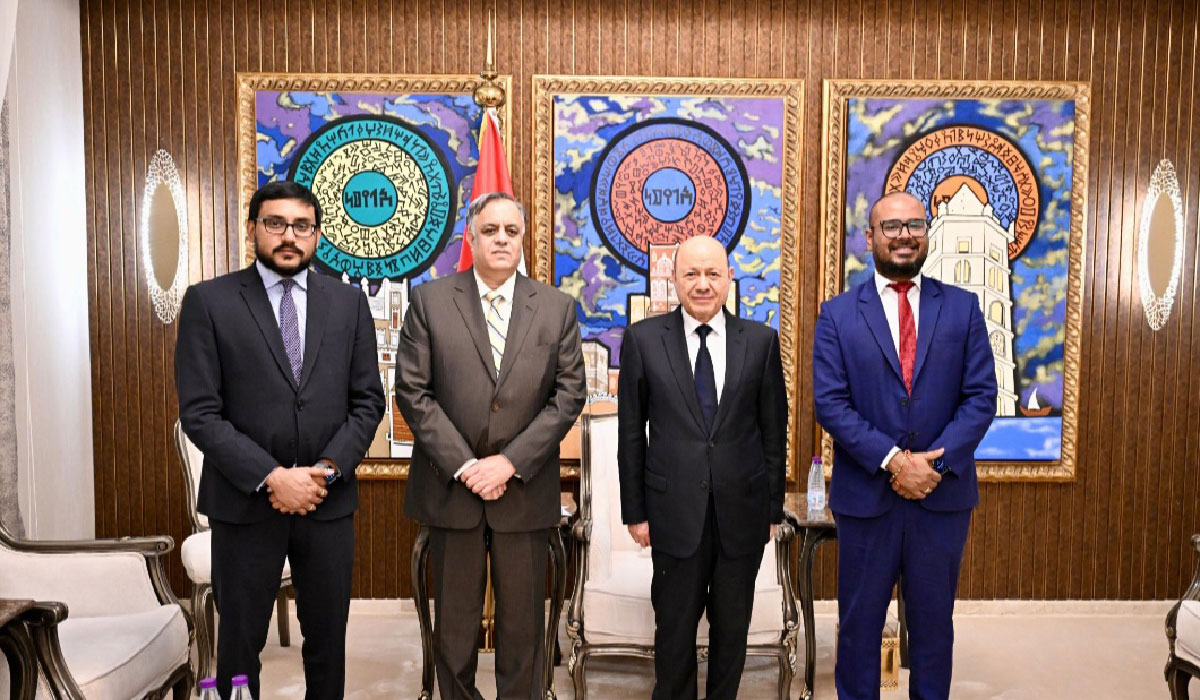
India and Yemen Discuss Bilateral Ties in Senior-Level Meeting in Riyadh
In a significant diplomatic engagement reaffirming India’s commitment to peace and development in the region, Dr. Suhel Ajaz Khan, India’s Ambassador to the Kingdom of Saudi Arabia and concurrently accredited to Yemen, met with Dr. Rashad Mohammed al-Alimi, Chairman of Yemen’s Presidential Leadership Council (PLC), in Riyadh this week.
The high-level meeting underlined New Delhi’s continued outreach and partnership with Yemen amid the country’s prolonged humanitarian and political crisis. Ambassador Khan was accompanied by Shri Abu Mathen, Deputy Chief of Mission at the Indian Embassy in Riyadh, and Shri Rishi Tripathi, First Secretary.
A Diplomatic Gesture Amid Turbulence
The meeting, held in the Saudi capital, reflects India’s ongoing diplomatic engagement with Yemen, a nation still grappling with internal conflict and instability. India’s active role, despite these complexities, signals its intention to remain a reliable partner for Yemen and to contribute constructively to regional peacebuilding efforts.
Ambassador Khan conveyed India’s unwavering support for Yemen’s sovereignty, unity, and stability, reiterating that India views the people of Yemen as close partners with shared historical and cultural bonds. Discussions between the two delegations covered a range of bilateral and regional topics, including development cooperation, humanitarian assistance, capacity building, and India’s diplomatic presence in the region.
Strengthening Bilateral Relations
The meeting also provided a platform to evaluate and strengthen India-Yemen bilateral relations, which have endured through decades of political and social change. Historically, India and Yemen have shared strong ties in trade, culture, education, and healthcare. Thousands of Yemenis have studied in Indian institutions under government scholarships, and India has consistently offered humanitarian assistance to the war-affected country in times of need.
India has also maintained a longstanding diplomatic presence in Yemen, with its embassy temporarily relocated to Djibouti due to security concerns following the escalation of conflict in 2015. Nevertheless, India has continued to engage closely with Yemen’s legitimate leadership through accredited diplomatic channels and multilateral platforms.
India’s Balanced Role in the Region
India’s approach to Yemen reflects its “Neighbourhood First” and “Extended Neighbourhood” foreign policy doctrines, which promote stability and development in West Asia as vital to India’s strategic interests. The meeting with the PLC Chairman is part of a broader effort to remain diplomatically active in the Arabian Peninsula, even in the face of adversity.
India has taken a balanced stance in the Yemeni conflict, advocating for peaceful negotiations and supporting UN-led initiatives while simultaneously maintaining humanitarian outreach. In recent years, India has sent medical aid, essential supplies, and food grains to Yemen through various relief initiatives coordinated by the Ministry of External Affairs and Indian NGOs.
Humanitarian Focus and People-to-People Ties
Ambassador Khan highlighted India’s ongoing humanitarian support for Yemen, particularly during the COVID-19 pandemic and the subsequent humanitarian downturn. India has provided vital supplies of medicines and vaccines, in addition to facilitating travel and evacuation efforts for Yemeni nationals in distress.
India has also consistently extended scholarships and training programs to Yemeni students and professionals under the Indian Technical and Economic Cooperation (ITEC) programme. In addition, India remains one of the preferred destinations for Yemenis seeking medical treatment, further deepening the people-to-people dimension of bilateral ties.
Dr. Al-Alimi expressed appreciation for India’s continued engagement with Yemen during these challenging times and welcomed India’s contributions in education, healthcare, and capacity building. He affirmed Yemen’s desire to further strengthen cooperation with India across sectors and noted the historical friendship that binds the two nations.
Looking Ahead: Hope for Stability and Collaboration
While the Yemeni conflict remains unresolved, with intermittent peace talks and fragile ceasefires, the engagement between India and Yemen’s leadership offers a note of continuity in diplomacy. India’s willingness to engage Yemen’s leadership in dialogue amid ongoing instability sets a constructive example of quiet diplomacy aimed at long-term regional peace and development.
India’s broader strategic outreach to the Gulf and West Asia has seen momentum in recent years, with increased trade, energy cooperation, and defense partnerships with GCC countries. As part of this strategy, New Delhi has worked to maintain strong relations with conflict-affected states like Yemen, emphasizing development and diplomacy over militarization or partisanship.
Conclusion
The meeting between Ambassador Dr. Suhel Khan and Chairman Dr. Rashad al-Alimi marks a reaffirmation of India’s steadfast diplomatic presence and moral commitment to supporting Yemen in its time of need. It sends a strong message that India stands not only with powerful regional players but also with nations striving for peace and recovery amid hardship.
As the region looks to a future shaped by diplomacy, cooperation, and development, India’s engagement with Yemen remains rooted in mutual respect, shared history, and a vision for stability in the extended neighborhood.