



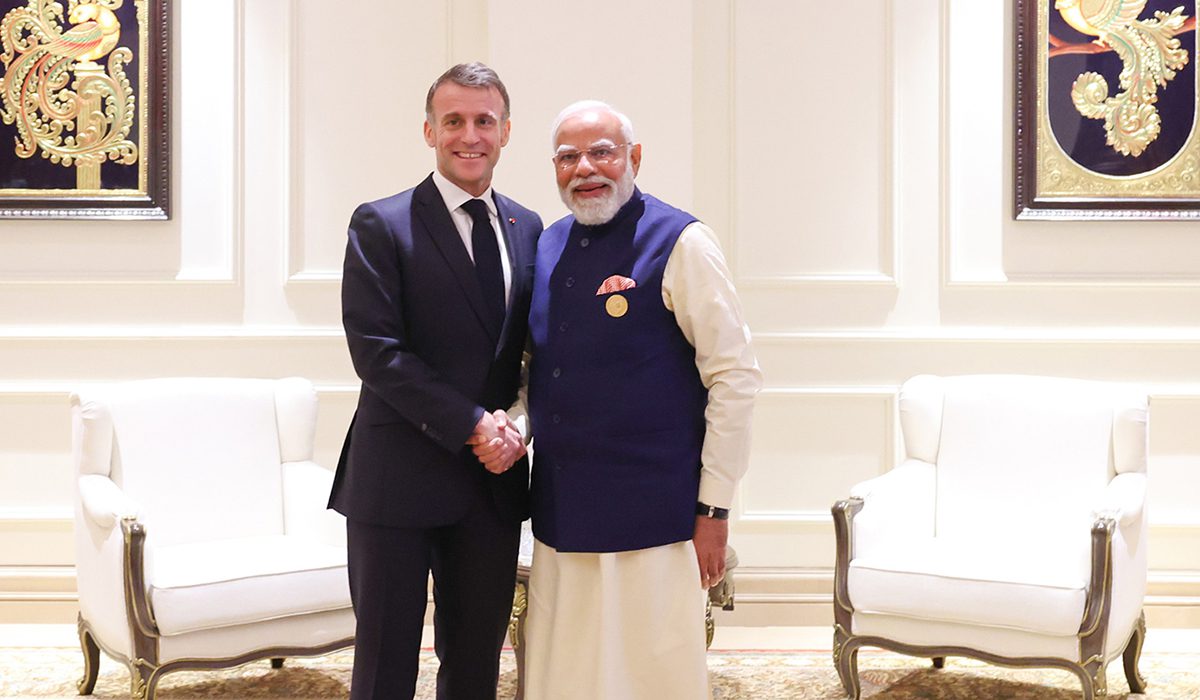
India-France Special Global Strategic Partnership: A Strategic Leap in 2026
In February 2026, President Emmanuel Macron visited India and attended the Artificial Intelligence Impact Summit 2026, where India and France elevated their bilateral relationship to a historic “Special Global Strategic Partnership.” The elevation marks a qualitative transformation of ties that have steadily deepened since the launch of the Strategic Partnership in 1998. At a time of geopolitical fragmentation and technological disruption, both countries signaled their intention to act as trusted, autonomous, and globally engaged partners.
Outcomes of the Visit
The visit delivered substantive outcomes across defence, energy, technology, climate, and multilateral cooperation.
In defence and strategic cooperation, the contract to procure 26 Rafale-Marine fighter jets for the Indian Navy was finalized, significantly strengthening India’s carrier-based maritime capability. This agreement reinforces France’s role as one of India’s most reliable defence partners and reflects the transition from a traditional buyer–seller relationship toward deeper industrial collaboration and strategic coordination.
Civil nuclear energy cooperation also received renewed momentum. Both sides reaffirmed collaboration across the entire nuclear value chain, with particular emphasis on advancing the Jaitapur Nuclear Power Plant Project in Maharashtra. The project remains central to India’s clean energy ambitions and represents one of the most significant pillars of bilateral strategic trust.
Technology emerged as a defining theme of the visit. The expansion of the India–France Innovation Network aims to deepen cooperation in artificial intelligence, quantum technologies, cybersecurity, and advanced research. The AI Summit provided a platform for both countries to highlight their shared commitment to shaping responsible and inclusive governance frameworks for emerging technologies.
In the Indo-Pacific, India and France reiterated their commitment to a free, open, inclusive, and rules-based regional order. As a resident Indo-Pacific power, France brings added strategic depth to maritime cooperation with India, including naval exercises, maritime domain awareness, and coordination in island territories and littoral regions.
Climate change and environmental protection remain foundational elements of the partnership. Both countries emphasized cooperation in renewable energy, green hydrogen, climate finance, and biodiversity conservation, reinforcing their shared commitments under global climate frameworks.
On multilateral issues, France reiterated its firm support for India’s permanent membership in a reformed United Nations Security Council. The two sides also coordinated on the responsible regulation of veto use in situations involving mass atrocities, underscoring their shared commitment to strengthening global governance mechanisms.
Highlights of the India–France Strategic Partnership
The India–France partnership stands out for its strategic autonomy, political trust, and consistency across changing global circumstances. Defence cooperation, civil nuclear engagement, technological innovation, maritime coordination in the Indo-Pacific, and climate leadership collectively define the breadth of the relationship. Unlike many transactional partnerships, India–France ties are anchored in long-term strategic convergence and shared global responsibilities.
Areas of Concern
Despite its strength, the partnership faces certain structural challenges. Implementation delays in large-scale projects such as Jaitapur have slowed progress. Sensitivities around advanced defence technology transfer and industrial cooperation require careful management. Additionally, bilateral trade levels remain below potential relative to the depth of political and strategic ties. Addressing regulatory bottlenecks and expanding economic engagement will be necessary to unlock the full scope of the partnership.
Strategic Outlook and Future Trajectory
To consolidate the Special Global Strategic Partnership, both countries must prioritize timely implementation of flagship projects, expand co-development in defence manufacturing, institutionalize the Innovation Network with sustained funding, and enhance private-sector and academic linkages. Deeper cooperation in Africa and the Indo-Pacific can further globalize the partnership and demonstrate its practical impact.
In recognition of India’s expanding global role, President Macron invited Prime Minister Narendra Modi to attend the 2026 G7 Summit in France and extended an invitation to the Africa Forward Summit in Nairobi in May 2026. These invitations signal France’s intent to position India as a key partner in shaping global economic governance and strengthening collaborative engagement in Africa.
Conclusion
The elevation of ties to a Special Global Strategic Partnership in February 2026 marks a significant milestone in India–France relations. Grounded in strategic trust, technological cooperation, climate responsibility, and shared commitment to multilateral reform, the partnership is increasingly global in scope. Its long-term success will depend not only on political declarations but on sustained implementation and strategic clarity in an evolving multipolar order.
About The Author