



India – Guatemala Trade & Investment: An Evolving Comprehensive Partnership
Background & Bilateral Equation
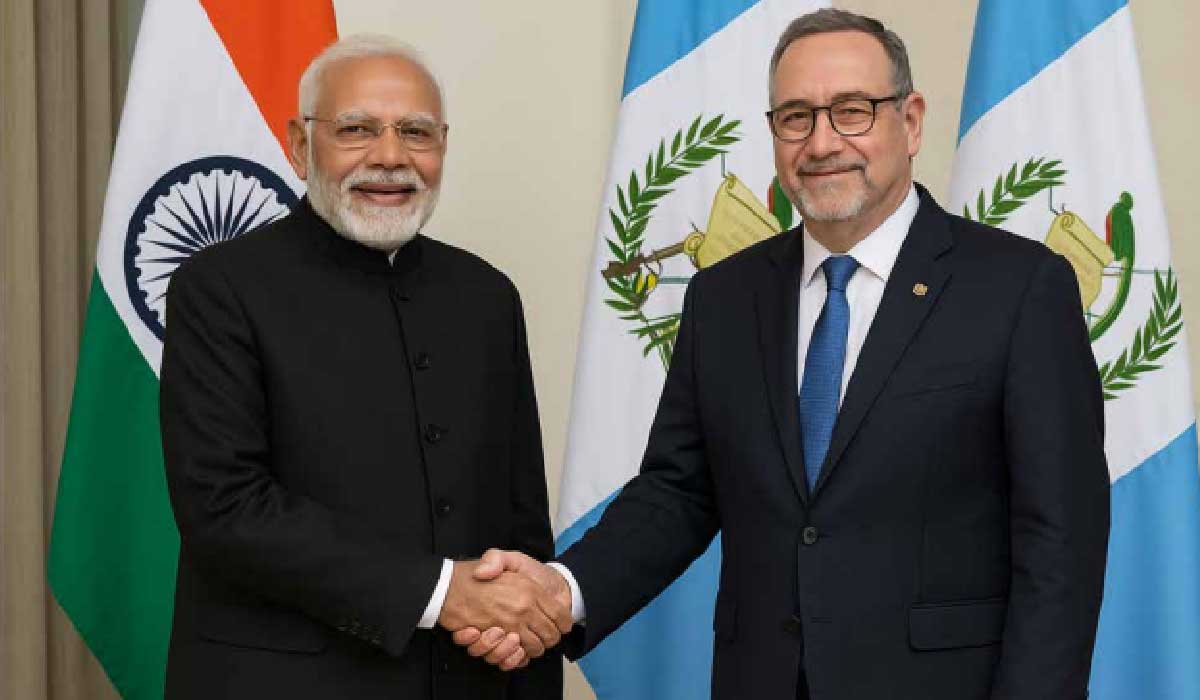
Both India & Guatemala (A country located in Central America), embedded their relationship in 1972, India started to evolve & nourish this tie with Guatemala by formulating an embassy in Guatemala City in May 2011 and on the other hand Guatemala established its mission in New Delhi in April 2013.
Since the inception of their tie, both nations have been working collectively to foster & strengthen their relationship by making a combined presence on the forums like Non-Aligned Movement. Moreover, they work together in arenas like trade, education, investment, etc.
Exchange of Trade: Evolution & Quantitative
The trade between India & Guatemala has always been rising with prosperity since the time (2009-10) when the bilateral trade between them was $92 million & during that time, India had a larger portion of contribution in the trade level because this trade figure constitutes 95% Indian exports. In 2021-22, the bilateral trade was $573 million with a sharp growth of 63%, in comparison of a year prior.
In 2023-24, the exchange of trade between the nations was $522 million, growing 5% annually. Indian imports were just $44 million including spices, coffee, wood products, etc.
Major Sectors & Exports Bifurcation
India exporting to Guatemala: There are many commodities from diverse sectors India exports to its partner but some of the major commodities are pharmaceuticals, automative component from TVS, Suzuki, Bajaj & Mahindra, textiles, gems & jewellery, engineering products, Information & Technology, Ceramics, etc.
Guatemala exporting to India: Although Indian exports are dominating between the bilateral trade but Guatemala has also got its share of exports in the form of tea, oil, coffee, spices ($14 million), iron, steel, aluminium ($4 million), oil seeds, etc. In the spices domain, both nations are competitive with each other, which often resulted in some cold dissents.
India’s footprints & Investment in Guatemala
The time when you are reading the article, there are around 20-30 Indian companies in Guatemala in sectors like information & technology, automobile, BPO & KPO, pharmaceuticals, textiles, etc.
Key Investments:
- Lakshmi Capital (part of SRAM & MRAM group), has developed & initiated an urban development & infrastructure project worth $1.2 billion in the Municipality of Quetzaltenango
- Many prominent & lucrative Indian BPO firms like HCL, TCS, Genpact, 24x7, etc., have been running in Guatemala & created job opportunities for around 5000 people
Governments of both nations have acknowledged the growth of respective sectors of each other during their bilateral trade & business exchange, leading to a more deepen mutual understanding for offshoring activities.
Incentivization Policy & Benefits
Guatemala has gained a lot from Indian sectors like automobile, textile, pharmaceuticals, etc., that’s why it offers a free-trade zone leading to ease of business, relaxation in taxes, etc., for Indian enterprises. Moreover, Indian businessmen always find Guatemala quite secure & democratically governed for commercial purposes.
Sectors seeking collaboration:
- Guatemala’s environment consciousness has given opportunity to renewable energy sector of India, like solar, wind, etc., to develop future projects there
- Project for metro train development is being proposed by India along with the development of various housing & infrastructure projects
- Moreover, Indian agriculture, handicrafts & organic products have so much trust & demand in Guatemala, resulting in increasing collaboration between the nations
Sharing Cultural Values & Sweet Diplomacy
Both nations have actual respect towards each other’s culture, that’s why yoga has been celebrated & recognized by Guatemala for a long period of time. Both nations, especially India recognized 2024 as the year of Miguel Ángel Asturias (A novelist & a former member of Congress of Guatemala), in Guatemala to mark the 125th anniversary of his birth and the 50th anniversary of his death.
Future Prospects Bilaterally
The current bilateral trade revolves around $500 million but both parties have a vivid intent to augment trade & business, thus each party has decided to thrust on increasing the trade supply of their respective commodities to increase overall trade. Moreover, ease of doing business is considered as a key instrument for it.
Conclusion
This bilateral partnership is based on trust & obviously on commercial needs they fulfil for each other. Moreover, there is mutual respect & sweet diplomacy in between along with a far way to go.
About the Author