
India–Japan 15th Annual Summit 2025: Modi and Ishiba Chart a Bold New Era of Strategic Partnership
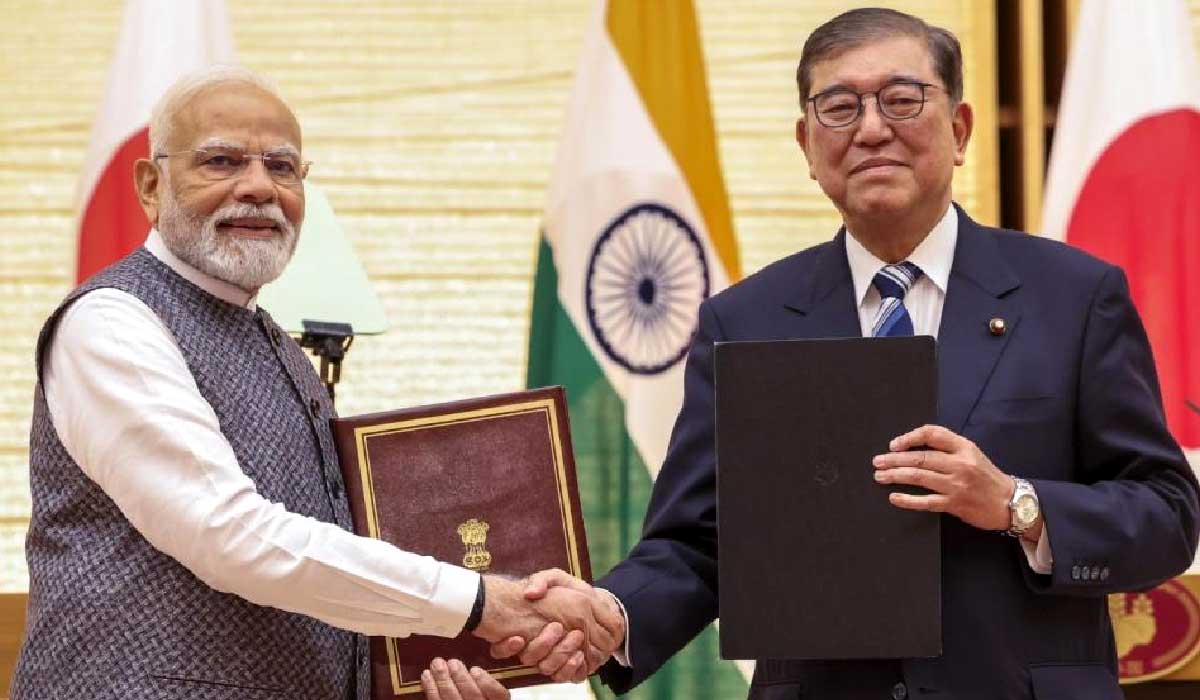
The 15th Annual Summit between India and Japan, held on August 29–30, 2025, in Tokyo, marked a significant evolution in the long-standing and strategic relationship between the two nations. At the heart of this momentous event were Indian Prime Minister Narendra Modi and Japanese Prime Minister Shigeru Ishiba, whose joint leadership and personal diplomacy shaped the direction of the bilateral relationship for the coming decade.
From economic security and high-tech collaboration to defense cooperation, clean energy, and cultural exchange, the summit was a comprehensive effort to elevate India–Japan relations to unprecedented levels. The two leaders not only exchanged views on regional and global developments but also forged over 100 agreements and memoranda of understanding (MoUs) that lay the groundwork for deeper collaboration in a multipolar world.
A Relationship Rooted in Shared Values and Mutual Respect
Prime Ministers Modi and Ishiba brought unique strengths and visions to the table. Modi, known for his assertive foreign policy and focus on economic transformation, sees Japan as a vital partner in India’s journey toward becoming a global economic powerhouse. Ishiba, a seasoned Japanese leader with a strong defense background, shares Modi’s commitment to a free, open, and rules-based Indo-Pacific and recognizes India as a key strategic ally in maintaining regional stability.
During their joint press conference, both leaders repeatedly emphasized their shared values: democracy, pluralism, rule of law, and the commitment to peace. Their personal rapport was evident, with PM Modi calling Ishiba a “visionary leader of Asia” and Ishiba referring to Modi as a “steadfast friend of Japan.”
A Decade of Vision: Strategic Roadmap Unveiled
The centerpiece of the summit was the unveiling of the India–Japan Joint Vision Statement for the Next Decade. This strategic document outlines cooperation across a wide range of sectors:
- Strategic and defense partnerships
- Economic security and resilient supply chains
- High-tech collaboration, including artificial intelligence and semiconductors
- Energy transition and climate action
- Human resource development and mobility
- Cultural and academic exchanges
Modi stated, “Japan has always been a trusted friend of India. Together, we are shaping the future of Asia and contributing to global peace and prosperity.” Ishiba echoed the sentiment, calling the partnership with India “essential for Japan’s long-term stability and growth.”
Economic Pillars: Doubling Down on Investment and Innovation
One of the most significant outcomes was Japan’s commitment to mobilize 10 trillion yen (approximately USD 68 billion) in public and private investments in India over the next ten years. This doubles Japan’s earlier target and signals a deep level of trust in India’s economic potential.
Modi highlighted this development by saying, “This is a vote of confidence in India’s Make in India mission, our Start-up ecosystem, and the Atmanirbhar Bharat (self-reliant India) vision.”
- The investments will span across:
- Infrastructure and smart cities
- High-speed rail projects
- Clean energy
- Digital technology and startups
The two leaders also launched the India–Japan Economic Security Initiative, aimed at strengthening supply chain resilience, particularly in critical sectors such as semiconductors, rare earth minerals, and advanced manufacturing. The goal is to reduce dependency on single-source supply chains and promote self-reliance for both nations.
Digital Partnership 2.0: A Tech-Driven Future
Under Modi and Ishiba’s leadership, the summit also ushered in the Digital Partnership 2.0, with an emphasis on cutting-edge technologies. Both leaders understand the transformative power of digitalization and AI and committed to co-develop technologies that align with ethical standards and democratic governance.
Areas of cooperation include:
- Artificial Intelligence and Large Language Models (LLMs)
- Data center infrastructure
- Cybersecurity frameworks
- Digital public infrastructure
- Quantum computing and 6G research
This initiative is expected to drive talent exchange, co-innovation between Indian and Japanese start-ups, and greater regulatory harmonization.
Defense and Strategic Alignment: An Expanding Security Horizon
With rising tensions in the Indo-Pacific region, the summit placed significant importance on defense cooperation and security alignment. Modi and Ishiba revised and expanded the India–Japan Joint Declaration on Security Cooperation, which now includes cyber defense, intelligence sharing, counter-terrorism cooperation, and defense industry collaboration.
Joint military exercises will increase in scale and frequency, and Japan will provide technical support to India’s defense manufacturing sector under the Make in India program.
Modi stated: “Peace and stability in the Indo-Pacific is a shared responsibility. India and Japan will act as anchors of this vision.” Ishiba added that the two nations must work together “to prevent coercion and protect sovereignty, especially in maritime domains.”
Both leaders also reaffirmed their strong support for the Quad alliance, with the United States and Australia, seeing it as a pillar of peace, technology cooperation, and disaster response in the Indo-Pacific.
Space and Climate: Joint Missions Beyond Earth
An important milestone of the summit was the agreement between India’s ISRO and Japan’s JAXA to jointly work on the Chandrayaan-5 mission, a lunar polar exploration mission that symbolizes the growing space cooperation between the two countries.
In addition, both leaders signed several clean energy agreements:
- Development and usage of green hydrogen and ammonia fuels
- Deployment of decentralized wastewater management systems
- Implementation of a Joint Crediting Mechanism for emission reduction and carbon trading
These efforts align with Modi’s focus on “One Earth, One Future” and Ishiba’s push for carbon neutrality by 2050.
Human Connections: Culture, Education, and Mobility
A new action plan was launched to facilitate the exchange of 500,000 students and skilled professionals between India and Japan over the next five years. Modi noted that this was not just about economic opportunity but also about “creating a bridge of hearts and minds between our young people.”
Educational institutions, think tanks, museums, and diplomatic academies from both countries signed partnership agreements to promote:
- Joint research
- Language learning
- Cultural heritage preservation
- Technology transfer in academia
To reinforce cultural diplomacy, Modi visited the Shorinzan Daruma-ji Temple, where he presented a traditional Daruma doll, symbolizing perseverance and success. In return, Tokyo’s iconic Sky Tree tower was illuminated in the colors of the Indian flag—a symbolic gesture of deep friendship.
Modi, in his address to the Indian community in Tokyo, said: “The soul of India lives in our diaspora. You have been the living link between our two nations.”
Modi–Ishiba Chemistry: Leadership That Inspires Confidence
Perhaps what stood out most during the summit was the strong personal equation between Modi and Ishiba. Unlike transactional diplomacy, their partnership appeared rooted in shared ideology, trust, and strategic foresight.
While Modi brought his experience from engaging with former Japanese prime ministers like Shinzo Abe and Fumio Kishida, Ishiba brought a fresh approach, prioritizing defense, innovation, and inclusive diplomacy. Their discussions were candid, future-looking, and covered not just bilateral ties but also global challenges—from supply chain disruptions to climate change and digital ethics.
Ishiba remarked, “Prime Minister Modi represents a new India that is bold, confident, and visionary. Japan is proud to partner with such a nation.”
 Looking Ahead: A Strategic Global Partnership
The 15th Annual Summit was more than a diplomatic engagement—it was a strategic reset. By reinforcing a wide range of cooperative areas and institutional mechanisms, Modi and Ishiba have placed the India–Japan partnership at the center of regional and global geopolitics.
This partnership is no longer limited to trade or infrastructure but now extends to cutting-edge technology, space exploration, strategic security, and people-to-people connections.
As the world faces complex challenges and new power dynamics, the leadership of Modi and Ishiba offers a model of principled diplomacy, guided by mutual respect, democratic values, and a shared vision for peace and prosperity.
Conclusion
The 15th India–Japan Annual Summit, led by Prime Ministers Narendra Modi and Shigeru Ishiba, stands as a landmark in the growing maturity of the India–Japan relationship. Their leadership has transformed the partnership into a multi-dimensional strategic alliance that will not only benefit their respective nations but also contribute meaningfully to regional stability and global progress.
As the world’s largest democracy and the world’s third-largest economy unite under a shared vision, the Modi–Ishiba era may well define the future of Asia in the coming decades.