



India – Malaysia Relations 2026: A Renewed Strategic Compact in a Shifting Indo-Pacific
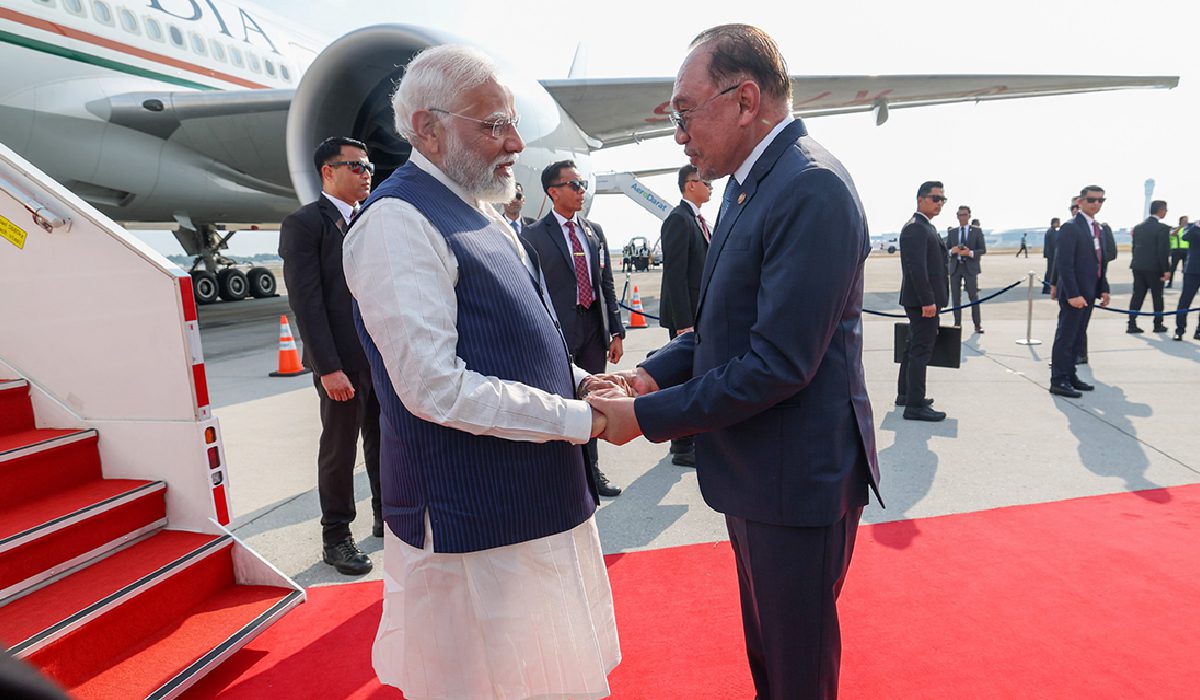
In 2026, the official visit of the Prime Minister of India to Malaysia marks a defining moment in the evolving partnership between India and Malaysia. At a time when the Indo-Pacific is undergoing profound geopolitical shifts, the visit signals both continuity and renewal in bilateral ties rooted in history yet driven by strategic foresight.
A highlight of the visit was the Prime Minister’s address to the vibrant Indian diaspora at a community event in Kuala Lumpur. Speaking partly in Malay, the Prime Minister underlined shared civilisational bonds and contemporary aspirations:
“Malaysia dan India berkongsi hubungan sejarah yang mendalam. Komuniti India di Malaysia adalah jambatan persahabatan antara dua negara kita. Bersama-sama, kita membina masa depan Indo-Pasifik yang aman dan makmur.”
(“Malaysia and India share deep historical ties. The Indian community in Malaysia is a bridge of friendship between our two nations. Together, we are building a peaceful and prosperous Indo-Pacific future.”)
The symbolic use of Malay underscored respect for Malaysia’s multicultural identity and reaffirmed India’s commitment to ASEAN centrality.
Historical Ties: Civilisational Bridges Across the Bay of Bengal
India–Malaysia relations are anchored in over two millennia of civilisational exchange. From early Hindu-Buddhist influences visible in the Bujang Valley in Kedah to the maritime trade networks of the Chola dynasty, the Bay of Bengal has historically connected rather than divided.
Under British colonial rule, large numbers of Indians migrated to Malaya, contributing significantly to plantation agriculture, railways, administration, education and commerce. Today, Malaysia’s Indian-origin community-one of the largest in Southeast Asia-remains a living testament to this shared past.
Diplomatic relations were formally established in 1957 following Malaya’s independence. Since then, ties have expanded across political, economic, cultural and strategic domains.
Economic Partnership: Trade, Investment and AITIGA Reform
Economic cooperation forms a central pillar of India-Malaysia engagement.
Trade Dynamics
Malaysia is among India’s key trading partners within ASEAN. Bilateral trade has diversified beyond traditional commodities such as palm oil and petroleum products to include electronics, chemicals, machinery, pharmaceuticals, and services.
Investment Flows
Malaysian companies have invested in Indian infrastructure, highways, real estate, and renewable energy. Conversely, Indian firms have expanded into Malaysia’s IT services, healthcare, manufacturing and education sectors.
ASEAN–India Trade in Goods Agreement (AITIGA)
Both countries are active stakeholders in the review of the ASEAN-India Trade in Goods Agreement (AITIGA), which came into force in 2010. The ongoing review aims to address implementation challenges, improve market access, rationalise tariff structures and strengthen supply chain resilience.
For India and Malaysia alike, a rebalanced and modernised AITIGA framework is essential for enhancing competitiveness and ensuring fair trade within the broader ASEAN-India economic architecture.
Defence & Security: From Bilateral Engagement to Strategic Convergence
Security cooperation has steadily deepened in recent years.
Defence Cooperation
India and Malaysia have institutionalised defence dialogues and service-level exchanges. Cooperation includes training, maintenance support (notably for Malaysia’s Su-30 fleet), and joint military exercises between the Indian Navy and the Royal Malaysian Navy.
Maritime Domain Awareness (MDA)
Given their shared interest in the security of sea lanes-particularly the Strait of Malacca-Maritime Domain Awareness has emerged as a priority area. Enhanced information-sharing, coordinated patrols and technological collaboration strengthen maritime safety and counter threats such as piracy, trafficking and illegal fishing.
India’s Indo-Pacific Oceans Initiative (IPOI) and Malaysia’s maritime security priorities offer natural complementarities in ensuring open and secure sea lanes.
The “China Factor” and Indo-Pacific Geopolitics
No discussion of India–Malaysia relations in 2026 can ignore the broader geopolitical context.
China remains Malaysia’s largest trading partner and a major investor, particularly through infrastructure and Belt and Road Initiative (BRI) projects. At the same time, Malaysia maintains a nuanced foreign policy-balancing economic engagement with strategic autonomy, especially concerning the South China Sea.
India’s growing presence in the Indo-Pacific, its advocacy of a rules-based order, and its emphasis on ASEAN centrality create space for constructive India-Malaysia engagement without forcing binary alignments.
Rather than rivalry, the so-called “China factor” has encouraged both India and Malaysia to diversify partnerships, enhance strategic hedging, and reinforce multilateralism.
Strategic Convergence: ASEAN Centrality and a Free Indo-Pacific
Both India and Malaysia share:
- Support for ASEAN centrality in regional architecture.
- Commitment to freedom of navigation and overflight.
- Interest in resilient supply chains.
- A preference for multipolarity and strategic autonomy.
India’s Act East Policy and Malaysia’s active ASEAN diplomacy converge on maintaining stability in the Indo-Pacific while resisting great-power coercion.
Enhancing India-Malaysia Relations: The Road Ahead
As India and Malaysia navigate an increasingly complex Indo-Pacific landscape, elevating their partnership into a comprehensive strategic framework requires sustained political commitment and practical cooperation across multiple domains. The ongoing review of the ASEAN-India Trade in Goods Agreement (AITIGA) offers a crucial opportunity to modernise trade architecture, improve market access, and address long-standing tariff and non-tariff barriers. Both countries would benefit from expanding cooperation in high-growth sectors such as digital trade, fintech innovation, renewable energy, semiconductor supply chains, and advanced manufacturing. Strengthening supply chain resilience, particularly in electronics and critical technologies, can help reduce vulnerabilities while enhancing competitiveness in regional markets.
Maritime cooperation must also move from coordination to deeper institutionalisation. Given their shared reliance on secure sea lanes-especially around the Strait of Malacca-India and Malaysia can enhance real-time Maritime Domain Awareness through structured information-sharing mechanisms, greater coast guard interoperability, and expanded naval exercises focused on humanitarian assistance, disaster relief, and search-and-rescue operations. Such collaboration reinforces a rules-based maritime order without being directed against any single country, reflecting both nations’ preference for strategic autonomy and ASEAN centrality.
Defence industrial collaboration presents another promising frontier. Beyond training and maintenance support, both sides could explore joint ventures in maintenance, repair and overhaul (MRO) services, technology partnerships, and capacity-building initiatives that support Malaysia’s defence modernisation while strengthening India’s defence manufacturing ecosystem. Parallel to these strategic initiatives, people-to-people ties remain the most enduring foundation of bilateral relations. Expanding academic exchanges, research partnerships, start-up linkages, and cultural diplomacy initiatives will ensure that the Indian diaspora in Malaysia continues to serve as a bridge of trust, innovation and shared prosperity.
Ultimately, enhancing India-Malaysia relations requires aligning economic ambition with strategic prudence. In doing so, both nations can transform historical affinity into a forward-looking partnership capable of contributing meaningfully to stability, growth, and multipolar balance in the Indo-Pacific.
Conclusion: A Partnership for a New Indo-Pacific Era
The Prime Minister’s 2026 visit to Malaysia is more than ceremonial diplomacy-it reflects a recalibration of bilateral ties for a complex strategic era.
India and Malaysia stand at the intersection of the Indian Ocean and the South China Sea-geographically distinct yet strategically intertwined. Their relationship, grounded in history and strengthened by economic interdependence, is increasingly shaped by shared concerns over maritime security, regional stability and equitable trade.
In a time of geopolitical flux, India-Malaysia relations exemplify pragmatic partnership: respectful of sovereignty, mindful of regional sensitivities, and oriented toward a stable, inclusive Indo-Pacific order.
As the Prime Minister affirmed in Kuala Lumpur, the bridge between India and Malaysia is not merely historical—it is forward-looking, resilient and strategically indispensable.