


India – Sri Lanka Reset: A Future-Focused Partnership Takes Center Stage
From Strategic Proximity to Technological Synergy – A Defining Moment in South Asian Diplomacy
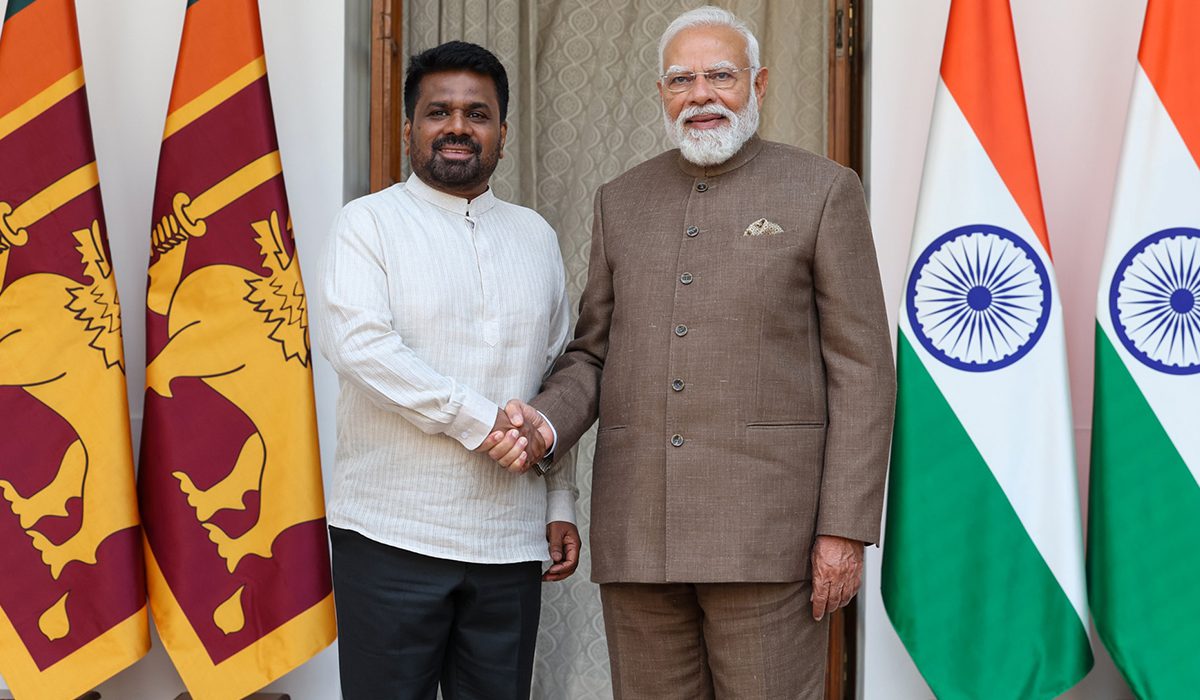
The recent meeting between Narendra Modi and Anura Kumara Dissanayake in New Delhi marks a defining moment in contemporary South Asian diplomacy. Convened on the sidelines of the India AI Impact Summit 2026, the engagement was not merely ceremonial; it reflected a deliberate recalibration of bilateral ties between India and Sri Lanka toward a future anchored in technological collaboration and strategic resilience. In a region increasingly shaped by maritime competition, economic realignments, and digital transformation, this interaction carried both symbolic and substantive importance.
At the heart of the dialogue was a reaffirmation that India–Sri Lanka relations are entering a technology-driven strategic phase. Artificial intelligence, digital public infrastructure, and skills development emerged as central themes, underscoring the recognition that innovation is no longer peripheral to diplomacy but integral to national development strategies. For Sri Lanka, navigating post-economic crisis stabilization, digital governance offers efficiency, transparency, and growth potential. For India, sharing its digital architecture and technological expertise strengthens its regional leadership role while reinforcing neighborhood-first diplomacy. Technology, in this context, becomes both a developmental bridge and a strategic instrument.
Beyond technological cooperation, the leaders reviewed the broader architecture of bilateral engagement, including trade, energy connectivity, maritime security, and infrastructure collaboration. The Indian Ocean’s rising geopolitical salience lends added weight to these discussions. Energy integration and connectivity projects are no longer viewed solely through a commercial lens; they are instruments of strategic interdependence and regional stability. As Colombo continues to balance external partnerships while safeguarding sovereignty, New Delhi’s sustained engagement signals predictability and long-term commitment.
A particularly significant dimension of the meeting was the acknowledgment of India’s assistance to Sri Lanka during recent natural disasters, including the impact of Cyclone Ditwah. Such humanitarian cooperation reinforces a pattern that has defined the relationship in recent years: solidarity during times of crisis. Diplomatic credibility is often built not in conference halls but in moments of vulnerability, and India’s rapid response mechanisms have strengthened trust at both governmental and public levels within Sri Lanka.
The political timing of the engagement also deserves attention. As President Dissanayake consolidates his leadership following his electoral mandate, his outreach reflects a calibrated foreign policy approach aimed at balanced partnerships and economic revival. India’s proactive engagement ensures strategic clarity in a region where external powers maintain active interests. Early and consistent diplomatic dialogue reduces strategic ambiguity and strengthens mutual confidence.
In the broader Indo-Pacific context, the meeting highlights a shared understanding that maritime security, digital sovereignty, climate vulnerability, and supply chain resilience are interconnected challenges. Sri Lanka’s geographic position in the Indian Ocean makes it indispensable to regional frameworks, while India’s expanding global profile necessitates stable and cooperative neighborhood relations. The convergence of geography and technology now defines the new grammar of bilateral diplomacy.
Ultimately, this engagement illustrates continuity with evolution. Cultural ties, historical affinities, and economic cooperation remain foundational, yet the emphasis is shifting toward co-creation in technology, sustainable energy collaboration, and coordinated regional positioning. Rather than dramatic announcements, the meeting delivered something more enduring — strategic alignment.
In an era characterized by geopolitical flux and digital acceleration, the dialogue between Prime Minister Modi and President Dissanayake signals that India and Sri Lanka are choosing structured partnership over reactive diplomacy, innovation over inertia, and strategic depth over transactional engagement. For observers of South Asian affairs, this meeting stands as a clear indicator that the bilateral relationship is not only stable but entering a more sophisticated and future-oriented phase.