


It is oil and not Democracy
In the wee hours of January 3rd, 2026, the United States of America launched huge military strike under the operation named “Absolute Resolve” against Venezuela successfully capturing President Nicholas Maduro and his wife Cilia Flores. The so-called “successful operation’’ involves months of military deployment in the Venezuelan sea for what the US terms as “counter narcotics” operations. The anti-drug operation has killed 80 Venezuelan and Cuban nationals whereas there were no US fatalities involved. After being captured the Venezuelan President and his wife were produced in the New York court facing the charges for drug trafficking.
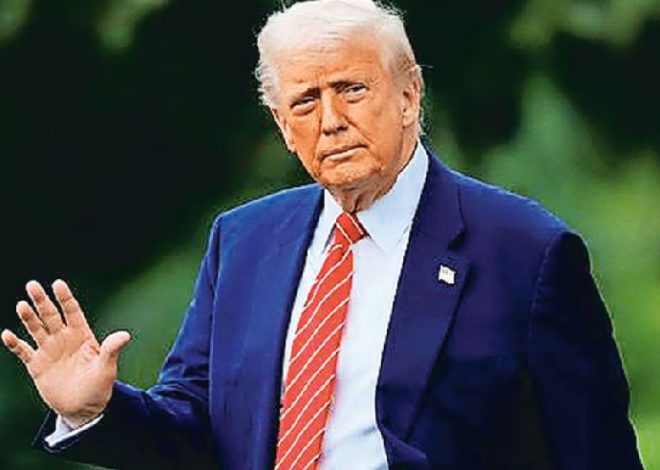
Following the attacking and capturing of Venezuelan President, the US authorities compelled Delcy Rodriguez, Vice president of Venezuela, to conform to President Trump’s strict demand for privileged access for country’s oil reserve and a crackdown on anti-US forces like Iran and Cuba. The US administration proposes direct undertaking of Venezuela’s management.
The apparent reason behind Trump’s decision to launch the offensive on Venezuela remains covered in ambiguity and seems complex. Apart from seeking regime change and freeing Venezuelans from the Maduro’s chaotic regime and battling drug cartels or curbing immigration a secret motive was to blow-off the Chinese ambition in Latin America.
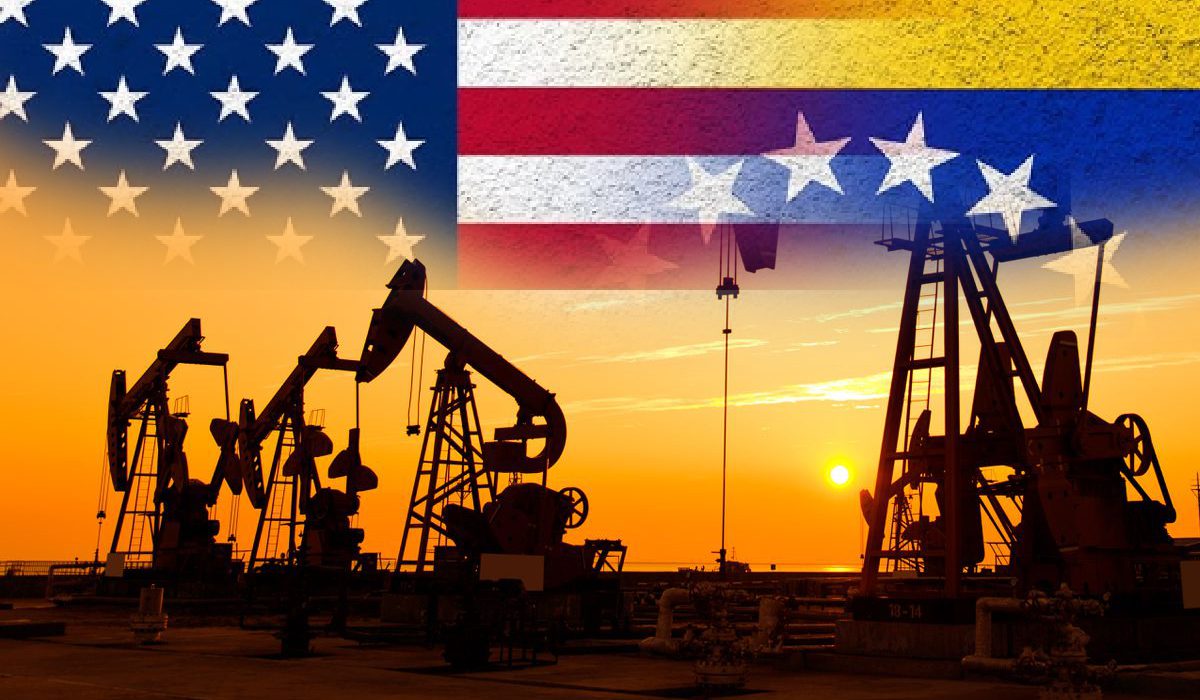
While the operation “Absolute Resolve” was just a fill in, the real motive behind the attack is far more lucrative, now not unknown to the world. Venezuela has the world’s largest crude oil reserves – estimated to be 303 billion barrels- ranking it to be the fifth largest crude reserves in the world. Though the untapped crude oil reserves have been too tempting for America, Trump’s annexation of the Venezuelan oil opens up on his motive of “America First”. He has shown the world that he will take care of America by every means including force.
The story Venezuelan Oil
Once counted among the top 10 oil producers in the world for its crude oil reserves the story of Venezuela oil went through boom-and–bust cycle from whole hogging the top export position in 1920 to slowly creeping down to fifth position in early 2000s. Along with Saudi Arabia, Iran, Iraq, and Kuwait, Venezuela was one of the five nations that founded the Organization of the Petroleum Exporting Countries, or OPEC, in 1960. The reason to the decline is majorly accredited to be political instability, mismanagement and US sanction that played a crucial role. In 2017 the crumbling of moribund Venezuelan oil companies which were already affected by gasoline shortages and social deterioration deepened with imposition of US financial sanctions that restricted the country’s access to international markets. The situation worsened in 2019 with United States’ further intervention which had put a sanction on the entire energy sector and Petróleos de Venezuela. During the years that followed Venezuelan oil companies experienced a sharp decline in production and export which was already exhausted by years of non-investment.
The United States of America has a long registered monopolistic presence in Venezuela operating for 102 years, in fact, producing a quarter of country’s oil. According to the data shared by EIA in the year 2023, China emerged as a major player having the two third of the Venezuela’s oil in its share and almost 23% of Venezuelan oil was being exported to America which clearly states that China remains the largest buyer.
After the United States’ dramatic military intervention and capture of Nicholas Maduro, the Trump administration proposed to run Venezuela from afar, all through interim President Delcy Rodriguez, or to be more precise, with his signature style of ‘America First’ policy. Trump’s latest style of working through Delcy Rodrigues, Maduro’s former Deputy, to revamp the Venezuelan oil sector casts many doubts. The question is: Will Caracas regain control of Venezuela's foreign oil assets and interests as a result of its new agreement with the Rodriguez regime? Will other nations follow if the latter is the case? Regardless of all the cover-up framed, hitherto, Trump’s announcement is clear that oil will be at the centre for Venezuela’s recovery plan under Washington’s supervision.
The world questions limit of sovereignty
The United States military intrusion in Venezuela does not only dent the political state of the country but also causes international reverberations on the national sovereignty, security to a time period that is unknown. Trump’s audacious Venezuela act has now left power- ethic balance in a lurch. International reactions right from Colombia to Mexico to Chile have echoed concerned threat to security and sovereignty to the region. This was followed by South Africa and the African Union who also emphasized the international law to restore global security concerns and stabilize peace. Many of the critics and peacekeepers have been reminiscing the U.S. involvement in Latin America to that of the cold war era where military intrusions and regime changes were all part of its tactics that challenged the boundaries of American power. And amidst all this what further aggravates the geopolitical unrest is unilateral military intervention than economic sanctions or diplomatic boycott for a nation.
China, United States and Venezuela
China’s response to the US capture was in favor of Venezuela, condemning the US for acting like a “world judge," but Beijing weighs the US raid on Venezuela even more carefully. In the last few years, China has assumed a more assertive and active role on the global platform, fostering its international relations with nations like Latin America. China and Latin America share an economic and mutually beneficial relationship where China exchanges rich natural resources like lithium and copper from Latin America in lieu of infrastructural development. China, now, ascended to the position of second largest trading partner across Latin America behind America. From 2000 to 2013, China acquired a lead role as an energy financier in Venezuela, continuing with its lending even when the country gradually slid into autocracy. Currently, gauging China’s vested interest in Venezuela, it will continue with its economic engagement. Regardless of all the facts, how the United States addresses Venezuela’s oil handling poses a stark reality against the Chinese interest. Trump’s intention to redirect the oil away from China would only escalate tensions when it is unlikely to alter Beijing’s Latin America policy.
Assessing the present and predicting Venezuela’s future
More than a month after the attack on Venezuela, US Energy Secretary Chris Wright states “enormous progress” for Venezuela’s decrepit oil industry in an open move to look for more foreign oil investment, once again reinstating the “America First” policy. This, however, is not inclusive of the existentialist crisis the Venezuelans are facing. The people of the country are still living in the fear of uncertainty and further attack. Venezuela’s prevalent situation hints of no inkling of impending change as citizens continue to live under the doubt of whether the acting president, Delcy Rodriguez, is capitulating to the White House or is in submission to the citizens' needs. As silent opposition leaders emerge to speak in favor of Maduro, the ruling party has organized demonstrations to abide by their loyalty to Maduro. The crowd, however, does not see Rodriguez not acting but has some trust in him as someone who can carry the next diplomatic battle forward. As far as Delcy Rodriguez’s ruling of the South American nation is concerned, she has often voiced that Venezuela has a mutual agenda with the US and that the country’s oil sector is open to privatization to revitalize the dying industry by inviting foreign investment, although all this would be under US administration. Washington has already concluded that Rodriguez is more reliable than Machado for aligning with the USA's oil demands.
That said, the forced exit of Maduro has left the people of Venezuela divided over Maduro’s inability to maintain a balance between the rivals, and ruling was crucial to Chavismo’s potential to remain in power, raising many questions about Rodriguez's leadership stability. Post Maduro capture, Venezuelans are learning to balance hope and fear. The fear that the US could plan a second attack and a hope that potential changes that Rodriguez has promised would soon be seen in its oil boom.
About Author