

Multilateralism & Current Geopolitical Scenario
In 1980s John Gerard Ruggie explains multilateralism is coordination among three or more than three nations on the basis of generalized principle of conduct. Today when countries participates in various international forum (WTO U.N) we understand that how much important is coordination between the countries when countries strive to raise their voices for more stringent rule based world order and more respect for internal law. We are witnessing Russia Ukraine war completed its four year (24 Feb 2022-24 Feb 2026), Israel-Hamas war take the lives of more than 75,5226(according to UNRWA). Washington now claiming for buying Greenland "the sovereign territory of Denmark" and boiling the water between USA and Greenland administration. Doland Trump also expresses his ambition for full control on Panama Canal for strategic reason (Same reason he put for the Greenland). Other than that we are also witnessing the protectionist mechanism of USA and eroding the WTO norms which promotes more reciprocal trade between countries. Brazil and Indian are the countries who are facing the highest tariffs from the Trump Administration (50 percent). The weaponization of trade and currency have strong setback to multilateralism and is a tool of protectionism (Threatening those countries who are ready to in favor of de-dollarization).
Now the Question has to be arising that is really multilateralism facing strong hold back? Or its really working efficient in current geopolitical scenario.
Evolution of Multilateralism
Since the incident of World War I (1914-1918) we had seen the idealistic multilateralism or internationalism. In which idealist explains State behaviors in the international relations on the basis on human nature, they said human are peaceful and country believed in solidarity and cooperation. They believed that countries can protect themselves through collective security and they can promote diplomacy rather than power politics. Their believe collapses after the failure of league of nation they witnessed how cruel the human can be after witnessed the atrocities of WW-I. When powerful nation hold back their hands from league of nation (USA and Britain).than the realistic perspective emerged.
Treaty of Versailles did not hold back the WW-II than realist theorist established the core nature if state which is brutal and concluded that the very nature of the world order is anarchic. Countries only needs Power maximization and pursuit of security.
After the WW-II Multilateralism comes with his second version which is Institutional Multilateralism which basically talk about forming a supranational organization which takes care of the needs of countries engage dialogue and deliberation between the countries. The formation of the United Nation IMF, GATT (later on WTO etc.) are the immediate product of institutional multilateralism. Their basic goals were prevent global war stabilizing the world economy primarily post war recovery by promotion of trade cooperation. USA provides key role in the post war recovery through structuring international institutions for greater cooperation among the nation.
Later multilateralism slapped when two big countries get indulge in cold war and limit the possibility of cooperation (US and Soviet Union pushes countries to join the ideological block and economic weaponization and International freebies taking place). Now Multilateralism exist but in limited bipolarity spectrum.1990s to the first decade of twenty first century liberal multilateralism taking place we have seen the foundation of more liberal Institutionalism ( formation of WTO, enlargement of UN institutions, regional integration and formation of regional blocks like ASEAN SAARC BIMSTAC SCO).Regional integration become more evident in institutional multilateralism. In this particular time world needs more resilient trade with countries and dollar gives essential leverage for smoothening trade. Hence dollar become the reserve currency for all the majority trade between countries.
This gives Washington an unprecedented leverage to streamline International trade according his agenda. Dollari-zation may use for economic hegemony and somewhere Unipolar trade system after the collapse of Soviet Union it Dollar strengthen more because more countries use dollar for international trade.
Since 2008 2015 world economy impacted by the crisis in which we saw multilateral institution find rigorous obstacle to re balance by recession (later Global financial crisis of 2008). After the first decade of the twenty first century we have seen the crisis & reform in the world order. Various countries started engagement and more representation in International platform. From very long time Indian, South, Africa, and Brazil strengthening their voices for the UNSC (United Nation Security Council). Developing countries ask for greater excess in WTO and more equitable representation in WTO trade negotiation.
Present dynamics with Multilateralism
When countries engaging for more cooperation and representation in the multilateral platform than we witnessed their demands are being sideline by the developed economies like USA who targeting countries over De-dollarization and threatening with tariffs. The North-South divide which is systematically visible (concept was formalized during the 1950s on how developed countries exploited the resources of developing countries) it is very evident that today when Asian countries and Developing countries of Latin America asking for greater access and representation their voices comparatively sidelined. One important aspect of multilateralism is that they did not only want greater cooperation and representation in the international platform but also more independent decision making which make them more sovereign. But current situations did not bring fruit. Doland Trump in his second term working on his political Agenda Make America Great Again (MAGA) and trying to impress his voters by imposing sanction to the countries who are non-willing to trade in Dollar and countries who continuing trade with Russia and Iran.
Strong setback on institutional multilateralism
United Nation who was initially a great mobilizer of the world institutionalism (In 1986 US Started Uruguay Round of conference for trade negation with countries later). Today his policy take 360 degree turned changes his behaviour in a typical hegemonic power. According to the @Washington House US first back off his hand from the key International forum and Treaties (withdrew from UNESCO, UN Human Right Council on Feb 2025, IPCC 2018 etc.) also US stop its funding to UN key peace mission in which UN mission have been compromised. Another is Russia on 24 February Russia Ukraine war completed is four year (24 February2022 - 24 February 2026) we have seen that after UN deliberation did not stop Russia to wage war against an democratic country like Ukraine( According to UN press Six resolutions from the 11th emergency session (ES-11/1 to ES-11/6), convened after the 2022 invasion, focusing on condemning aggression, reaffirming Ukraine's sovereignty, and calling for peace and four resolutions from ordinary UNGA sessions (77/229, 78/221, 78/316, 79/184) addressing similar issues, including humanitarian concerns and territorial integrity The analysis of confrontation of UN against the two big powers (US and Russia)it has been evident that institutional power of UN is nominal, it lacks de facto power. (The UN Article says all UN member states from using or threatening force against the territorial integrity or political independence of any state, forming a cornerstone of modern international law). Russia and US outlawed the law in from of UN when Russia wage war against Ukraine and US recently blockade Venezuela oil tankers (UN experts today denounced the partial maritime blockade imposed by the United States on Venezuela as violating fundamental rules of international law. In December, the United States announced a "blockade of all sanctioned oil tankers going into, and out of, Venezuela," and deployed a large military force in the Caribbean near Venezuela). According to @thehindu Washington withdrew from 31 UN institutions.
Multilateralism in ‘Anarchic Protectionism
USA State debt surpassed $37Trillion and it is the challenge for the Mr. Trump to burden it off little bit. (White House deputy press secretary Kush Desai told Fortune the debt-to-GDP ratio has fallen under Trump and will keep improving with pro-growth policies and record tariff revenues). Now if we assess its policies its clearly showcased the he just want to protect the interest of his nation and behaving anarchic because he has the Dollar policy (Dollar Diplomacy) hackling countries to trade in Dollar. Washington also reduced its funding from key federal department in US under Trump Administration(according to the US Today news „An executive order signed by the president on Friday March 14 slashes funding to seven federal agencies: the Federal Mediation and Conciliation Service, U.S. Agency for Global Media, Woodrow Wilson International Center for Scholars in the Smithsonian Institution, Institute of Museum and Library Services, U.S. Interagency Council on Homelessness, Community Development Financial Institutions Fund and Minority Business Development Agency.) Donald trump in his first term gave its first blow when he rejected the dispute settlement mechanism of WTO and trying to make WTO Dysfunctional.
Another blow comes when he announced new tariffs regime (On April 2025) on countries (who are not as per US trade preferences laws) where Brazil and Indian sanctioned by him with fifty present tariff which is highest to any other developing countries. It clearly violation of WTO G.A.T.T norm (Principles of non-discrimination: Most-Favored Nation and National Treatment). WTO Norms said all WTO countries product should treated equally irrespective of the origin of the product.
Strategic threats to multilateralism
Treaty of Westphalia in 1648 gives the modern notion of national-state where countries acknowledging each other as sovereign countries. With the notion of sovereignty strategic autonomy is also a key role in modern national state formation. It gives confidence to countries while negotiating their terms with another countries. In the current geopolitical scenario state's strategic autonomy have been compromised by the neoconservatist approach of states. Recently Venezuela president Maduro hijacked by US at night my coercion (it was a special force operation at night inside Venezuela territory). Another example US President Mr. Trump expressed his ambition to take control of the sovereign oversee territory of Denmark which is the biggest island of earth Greenland. (“Greenland is very important for the national security, including of Denmark,” Trump told reporters in the Oval Office. “And the problem is there's not a thing that Denmark can do about it if Russia or China wants to occupy Greenland, but there's everything we can do. You found that out last week with Venezuela,” he added). Washington aspiration has been hegemonic and protectionist. He said he needs Greenland to counter the influence of China Russia in Arctic Region. Washington undermining the territoriality of other state, its creates more escalation and using its hard power isn't good for the world right now.
Probable Solutions
The solution lies on the recent statements given by some of the statesmen first is Brazilian president Mr. L.D Silva (during bilateral trade deal visit in India march 2026 he also visited in Ai summit @Delhi) he said the “answer to the crisis of multilateralism is more multilateralism‟. His approach to current protectionist order may be fruitful in which countries need to come closer and make more ties with each other so that countries protect their interest against the arbitrary decisions of big power. If we stretch his view we can take the rationale for more multilateral institutionalism for the developing countries where they decide what is good for them (BRICS countries should make their forum more multilateral it is the best time to do it). Second statesman that has given rational path in the current geopolitical scenario is Mark Carney (current PM of Canada) his speech in Davos (World economic forum visit Switzerland, on January 20, 2026) was remarkable and solution oriented. First he elaborates the current state of anarchy in world order he said. It seems that every day we're reminded that we live in an era of great power rivalry. That the rules-based order is fading. That the strong can do what they can, and the weak must suffer what they must.
His emphasis country should take the stand for themself and stand on their ground. They should sit in the table with the countries and take stand for what is good for their countries. If they can't do it may be someone will do it for them. (Mark carney said “If We're Not at the Table, We're on the Menu”)
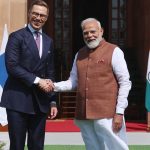
Third one is the Finniest President Alexander Stubbs on „Value Based Realism‟ in which he had given theoretical lens to the current situation and solution to it. He amalgamates the two contradictory theories Realism and Idealism. If we critically evaluate his Value based realism rationalize that it definitely possesses solution in the longer run in which first we have to check the power relation between countries second manage the power relation of countries through rules based order norms and institution. He theoretically dissects it from pure idealistic and pure realistic conception. The Formulation of the idea from his point of view is that today world is conflict prone and competitive but cooperation must still operate through rules based order.at the end we need pragmatic multilateralism under the strategic competition.
Conclusion:
It is evident that multilateralism is facing strong setbacks but there is always a solution in the crisis. Many world leaders showing the rational path to it. We have to strengthen institutional multilateralism and as far as concern of Mr. Stubbs reasoning of the current geopolitical scenario we really need the pragmatic multilateralism which is the amalgamation of rule based order while managing the power relation between the countries.
About The Author