




No makes only break- Reflecting upon the Impact of US-Israel and Iran war on Gulf Nations
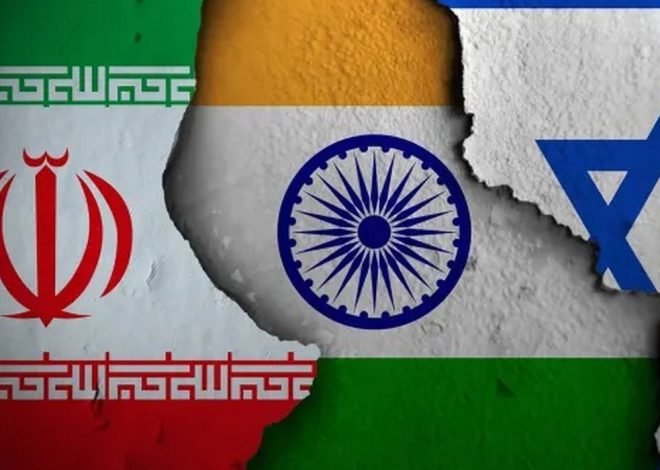
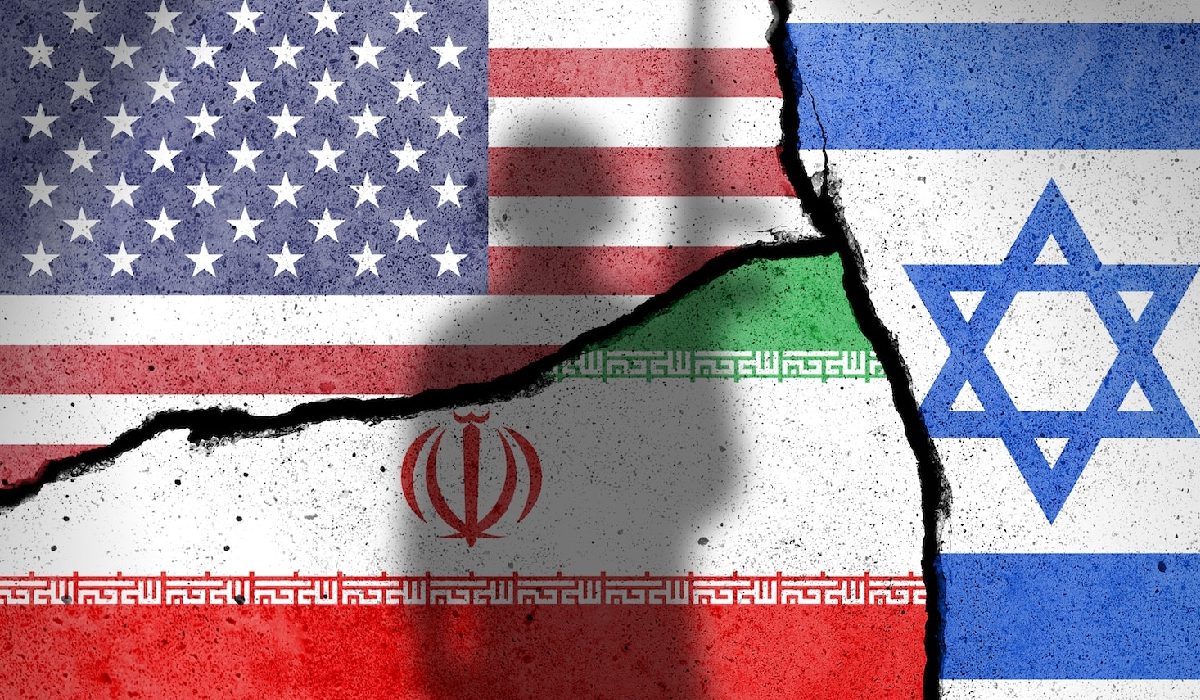
The once wealthy Gulf States with huge oil reserves have turned into nothing but a target for Iranian strikes because of the US military bases they host. The conflict in the Middle East continues to escalate and is getting worse each week after the US and Israel launched wide-ranging strikes on Iran, resulting in the assassination of Iran’s supreme leader, Ayatollah Khamenei, on 28 February. A month after the waging of the war, there is no sign of peace, and the war seems rather more intensified. As the Iran-Israel-US war continues, the Gulf countries stand at the brink of facing the heat of the war internally, the impact of which is directly felt on the security situation of the Middle Eastern countries. The Gulf officially plans action against Iran.
The situation raises a valid and stark question as to why a region backed up by US military bases is vulnerable? The United States has maintained significant military bases in the Middle East with 40-50 thousand troops spread over more than 19 locations in Qatar, Bahrain, Kuwait, the UAE, and Saudi Arabia. These military installations support air and naval bases while providing regional security against threats while serving as a logistic hub for US Central Command. That said, the regions falling under the US security umbrella should be assured and not vulnerable. But that doesn’t hold true under the prevailing situation.
The solution to this ensuing conundrums are best found in the decisions taken by the United States in the last two years. Ever since the Iran-Israel tension peaked in since 2024, US began actively re-deploying air defence systems from Gulf Nations to Israel. In October 2024, the then Biden administration started shifting missiles interceptor to Israel from Anu Dhabi and Saudi Arabia which started weakening the defence systems installations. By late 2025, the United States had already deployed six THAAD (Terminal High Altitude Area Defence) in Israel leaving its Middle East bases in a glitch. According to Saudi authorities, this was an "abandonment" on the part of the United States to protect Israel. Until March 2026 and development as of early 2026, the US have kept the Gulf bases under the illusion of security instead of really giving a strong security to the oil rich nations it has a deal with.
Saudi Arabia spends a huge amount of money on defence equipment under the mutual deal between US and Saudi Arabia where the US earns a huge number of petrodollars in lieu of selling defence weapons. But, the deal is not bereft of the sanctions; the Saudi Arabia avoids purchasing any Russian Air Defence to keep US sanctions at bay (under CAATSA).
The Gulf countries were under the delusion that the United States was giving them the proper security measures up until the US-Israel and Iran war proved them wrong, and oil-rich monarchs looked up to the United States as an insurance during difficult times. According to the recent reports from March and April 2026, Iran has engaged in a sustained campaign of drones and missile attacks targeting oil, gas and civilian infrastructure across Gulf Arab Nations (including Saudi Arabia, the UAE, Kuwait, and Qatar). Iran’s attack on the neighbouring Gulf nations has not just robbed Gulf monarchies of their oil and infra but also shreds the delusion of being secured through US army bases.
It is therefore crucial to understand what gives rise to this situation. Iran’s attack on Gulf is not because of their interpersonal relations or disputes but because of the numerous American troops that are responsible for catastrophe in Iran. Gulf countries, in this sense, are being used as a “pawn” to fight against Iran even without starting a war. Although the Gulf has projected an image of “unity”, the assessment of the situation projects a different picture. Gulf unity during the U.S.-Israel war on Iran is characterized by a fragile, evolving consensus focused on survival and defensive coordination, rather than a monolithic alliance with the U.S. strategy.
Bahrain
Bahrain’s monarchy hosts the U.S. Navy’s 5th fleet and has no option for choice as it remains heavily independent on the US. The Bahrain government aims to defend its national security denying sectarianism and response as ‘directly proportionate” to Iran’s attack.
The United Arab Emirates
The UAE has had a tense history with Iran, ideologically and territorially, ever since Islamic Revolution of 1971 in Iran. According to the latest numbers released by the UAE Ministry of Defence, UAE has been the major targets of Iranian missiles. This makes UAE choose an assertive role over opt for collective military measures. Although there has not been any direct participation but UAE government has signalled US to continue war with Iran as an indirect retaliatory response.
Oman
On one hand where UAE looks forward to counter Iran, Oman acquires an identity of a peaceful country hoping for de-escalation. This vastly comes from Oman’s geographic location of being tied to Strait of Hormuz. For Oman, which considered itself as the only nation in the region with close and cooperative connections with Iran, the United States, and even Israel, as well as the only one capable of resolving their differences, the U.S.-Israeli war on Iran represented a double betrayal. Oman had hosted and mediated negotiations between the United States and Iran's Islamic leadership just days prior to the start of the strikes. The negotiations seemed to be on the verge of resolving Tehran's nuclear program and economic sanctions. For Oman, it is a paradigm shift that is going to change everything.
Saudi Arabia
For Saudi Arabia, the Iran-US was is unsettling where it is striving hard to strike a balance between protecting, prioritizing its own economic transformation and unpredictable ally -USA. Saudi Arabia has not ruled out getting more involved in the conflict, and if the conflict continues and Iranian strikes on the country intensify, its calculations may change. Iran's strikes on energy and civilian facilities, which are blatant violations of Saudi sovereignty, went too far. Saudis are justifiably incensed since their military is capable of going up against the Iranians, and the country's leadership would have no issue rallying the populace. Furthermore, some Gulf states now believe that Iran has taken the region hostage and could do so at any time due to the ongoing rocket strikes and the blockage of the Strait of Hormuz. This might alter the Gulf governments' calculations and make them more likely to back an ongoing battle, if not actually send their own armed forces into it.
Conclusion
The whole of Gulf region is working on parallel imperatives right from avoiding direct confrontation, fortifying security coordination and opening channels to ease tensions with Iran. What binds the Gulf amidst the ongoing tension is a deep level of uneasiness. The uneasiness that erupts from the pressure to confront its own neighbours due to external pressure while confronting the possibility that the same external may not be completely reliant.
About the Author