



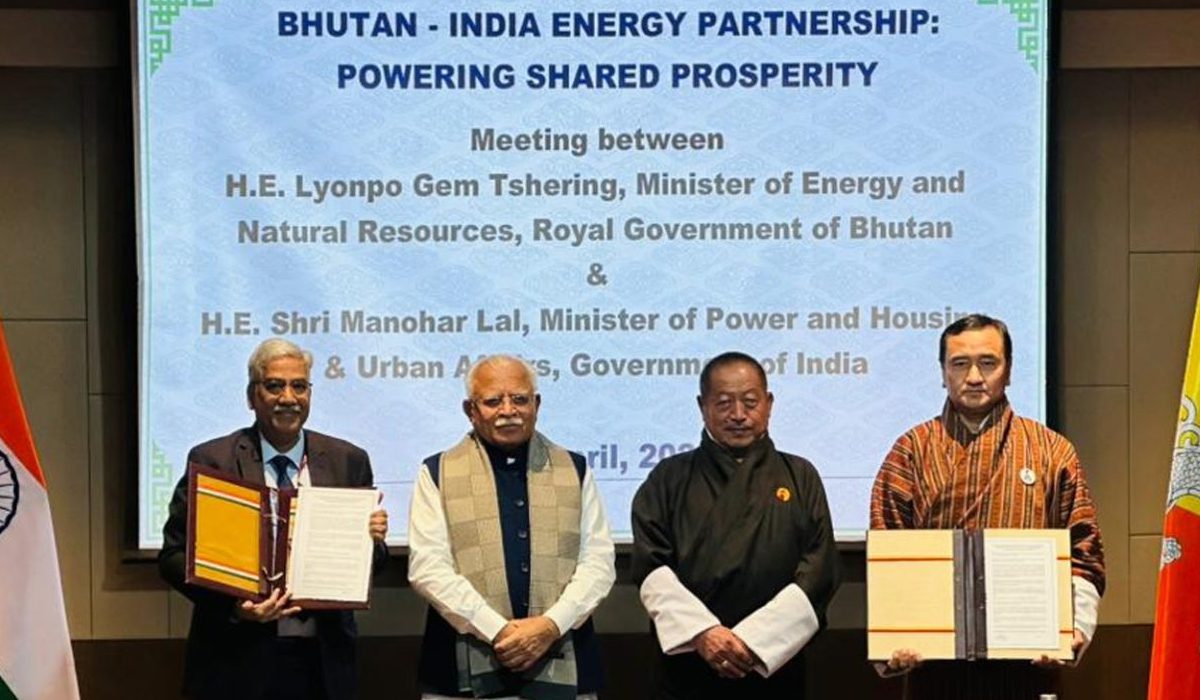
Powering Progress Together: India and Bhutan Elevate Their Energy Alliance
Landmark agreements and high-level engagement mark a new era of clean energy cooperation A Strategic Visit Strengthening Trusted Ties
In a significant step toward strengthening regional energy cooperation, Manohar Lal Khattar embarked on a four-day official visit to Bhutan beginning April 9, 2026. The visit underscored the enduring friendship between India and Bhutan, with a sharp focus on expanding collaboration in hydropower and clean energy—sectors that form the backbone of their bilateral ties.
Hydropower: The Cornerstone of Cooperation
From the outset, the visit carried both symbolic and strategic weight. Hydropower cooperation has long defined India–Bhutan relations, with Bhutan’s fast-flowing rivers powering not only its own development but also contributing significantly to India’s growing energy needs. Against this backdrop, the signing of key agreements during the visit marked a new chapter in this mutually beneficial partnership.
Key Agreement on Punatsangchhu-II Project
At the heart of the developments was the agreement on the tariff framework for the Punatsangchhu-II Hydroelectric Project, a major 1020 MW project jointly developed by the two nations. By formalizing how electricity exports are priced, the agreement brings predictability and long-term stability to cross-border power trade. It ensures that Bhutan continues to benefit from reliable revenue streams, while India gains access to clean, renewable energy—an increasingly critical component of its energy transition goals.
Strengthening Grid Efficiency and Transparency
Complementing this was another technically significant agreement on reactive power accounting, a crucial but often overlooked aspect of power systems. This framework will improve grid stability, enhance efficiency, and introduce transparency in electricity exchanges between the two countries. While less visible to the public, such mechanisms are vital for the smooth functioning of interconnected power grids, especially as energy trade volumes increase.
High-Level Engagements Reinforce Shared Vision
Beyond agreements, the visit was marked by high-level engagements. Manohar Lal held discussions with Bhutan’s Prime Minister Tshering Tobgay and also called on His Majesty Jigme Khesar Namgyel Wangchuck. These interactions reaffirmed the shared vision of both nations: to build a sustainable, clean energy future while preserving the unique trust that characterizes their relationship.
Progress on Punatsangchhu-I Project
A notable highlight of the visit was the progress on the Punatsangchhu-I Hydroelectric Project, where a key construction milestone—the first concrete pour—was initiated. This development signals momentum in one of the region’s most important hydropower ventures and reflects the long-term commitment of both countries to expanding energy infrastructure.
Broader Strategic and Environmental Significance
The broader significance of the visit extends beyond bilateral cooperation. In an era where climate change and energy security dominate global discourse, India and Bhutan are positioning themselves as partners in sustainable development. Hydropower, being a clean and renewable resource, offers a pathway to reduce carbon footprints while ensuring economic growth.
Moreover, Bhutan’s role as a reliable green energy supplier aligns seamlessly with India’s ambitions under its clean energy transition policies. The collaboration also strengthens regional energy security and sets an example of how neighboring countries can work together to harness natural resources responsibly.
A Partnership Powering the Future
In essence, Manohar Lal’s visit is not merely a diplomatic engagement—it is a reaffirmation of a time-tested partnership evolving to meet modern challenges. As new agreements take shape and projects gain momentum, India and Bhutan continue to demonstrate that cooperation rooted in trust and shared goals can power not just grids, but also lasting regional stability and prosperity.