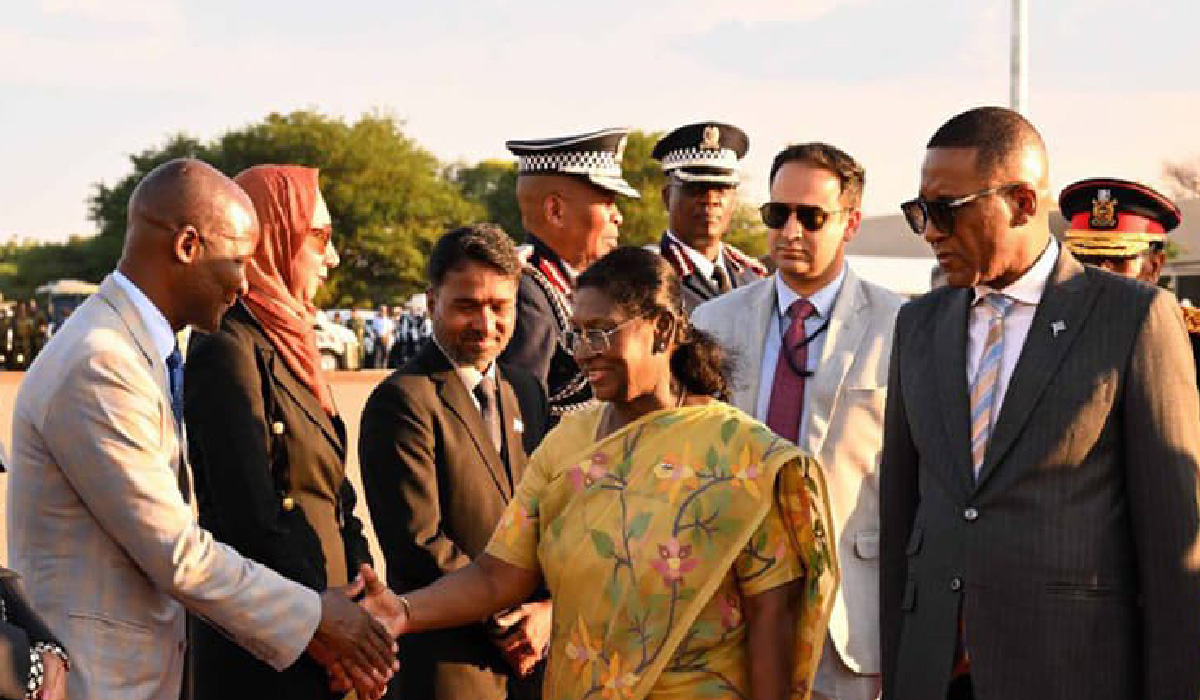
President Droupadi Murmu’s Botswana Visit Strengthens a New Era of India–Africa Cooperation
President Droupadi Murmu’s historic visit strengthens cooperation in conservation, development, and shared growth
President Droupadi Murmu’s state visit (November 11–13, 2025) to Botswana marked a defining moment in India’s engagement with Africa, bringing renewed momentum to a relationship built on trust, development partnership, and cultural goodwill. As the first Indian President to visit the country, Murmu’s arrival symbolized India’s deepening commitment to Africa’s growth story and Botswana’s role as a key partner in the region.
Strengthening Bilateral Dialogue
In Gaborone, President Murmu held comprehensive discussions with President Duma Gideon Boko, where the two leaders reaffirmed their commitment to expanding cooperation across priority sectors. From trade and investment to agriculture, renewable energy, defence, digital technology, and skill development, the meetings reflected a shared understanding that India and Botswana can jointly navigate emerging global challenges and opportunities.
Both sides emphasized capacity-building and technology-driven growth, with particular focus on education, innovation, and sustainable development—areas where India’s experience aligns closely with Botswana’s long-term national vision.
A Landmark Moment for Conservation
A major highlight of the visit was the progress made under the cheetah translocation initiative, a landmark conservation partnership between the two nations. At the Mokolodi Nature Reserve, President Murmu received a symbolic handover of eight cheetahs from Botswana, reaffirming the shared commitment to biodiversity and environmental protection.
The initiative supports India’s Project Cheetah, while also reinforcing Botswana’s leadership in wildlife conservation. The moment showcased how ecological collaboration can become a pillar of modern diplomacy.
Expanding Cooperation in Health and Governance
During the bilateral engagements, new steps were taken to advance collaboration in health, including strengthened access to essential medicines and cooperation in pharmaceutical standards. These efforts aim to boost Botswana’s healthcare infrastructure while fostering scientific exchange and technological advancement.
Parliamentary Address & People-to-People Ties
President Murmu also addressed the National Assembly of Botswana, reflecting on the values of democracy, inclusivity, and shared development that connect the two nations. She highlighted India’s readiness to partner with Botswana in digital public infrastructure, women-led development, climate resilience, and educational exchange programs. Her address underscored the importance of legislatures as anchors of democratic cooperation and as bridges that foster long-term institutional partnerships.
Murmu praised the Indian community in Botswana—entrepreneurs, professionals, teachers, and innovators—who have contributed significantly to sectors such as diamonds, construction, retail, and healthcare. She described the diaspora as a “living link” between the two nations, strengthening cultural understanding and creating pathways for deeper economic and social collaboration. Their presence, she noted, reflects the people-centered spirit of India–Botswana relations and the shared aspiration for prosperity, stability, and mutual respect.
A Renewed Vision for India–Africa Relations
President Murmu’s visit reflects India’s broader outreach to Africa—an approach rooted in partnership, shared values, and inclusive development. With the two countries approaching six decades of diplomatic relations, the visit has set the stage for new collaborations that span economic growth, cultural exchange, environmental conservation, and strategic cooperation.
Her visit not only celebrated the friendship between India and Botswana but also outlined a forward-looking agenda that promises greater connectivity, stronger development partnerships, and a more sustainable shared future.