



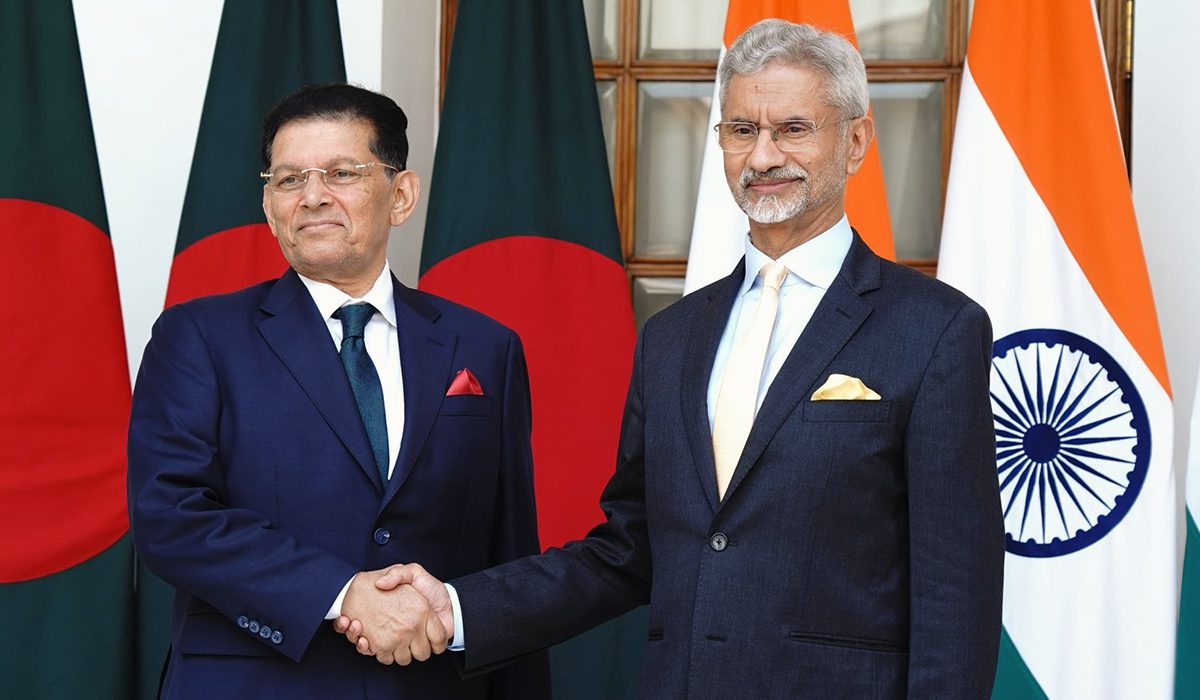
Resetting Ties: Bangladesh Foreign Minister Khalilur Rahman’s April 2026 Visit to India
The visit of Bangladesh’s Foreign Minister Khalilur Rahman to New Delhi on 7 April 2026 marks a significant step toward recalibrating India–Bangladesh relations at a moment of political transition in Dhaka. As the first high-level ministerial engagement between the two countries following the formation of the new government led by Tarique Rahman, the visit carried both symbolic and strategic weight.
Over the course of his two-day trip, Rahman engaged in a series of meetings with key Indian counterparts, including External Affairs Minister S. Jaishankar, Petroleum Minister Hardeep Singh Puri, and National Security Advisor Ajit Doval. These interactions underscored the breadth of the bilateral agenda, spanning diplomacy, energy security, and regional stability.
At the heart of the discussions was energy cooperation—arguably the most pressing concern for Bangladesh amid ongoing global supply disruptions. Dhaka sought enhanced access to Indian diesel exports and continued support for fuel and fertilizer supplies. India’s positive response reflects both pragmatic cooperation and a recognition of Bangladesh’s growing energy needs. Strengthening this pillar of engagement not only addresses immediate economic pressures but also reinforces interdependence between the two neighbors.
Beyond energy, the visit focused on improving connectivity and people-to-people exchanges. Both sides explored measures to ease visa procedures and facilitate smoother cross-border travel. Such initiatives are critical in sustaining the dense economic and cultural ties that define the relationship, particularly in border regions where daily interaction is integral to livelihoods.
Security cooperation also featured prominently. Discussions covered counter-terrorism coordination, border management, and broader regional stability—areas where India and Bangladesh have historically shared converging interests. Continued collaboration in this domain is essential, especially in light of evolving geopolitical dynamics in South Asia.
The visit comes against the backdrop of strained relations in recent years, driven by political changes in Bangladesh and sensitive bilateral issues. In this context, Rahman’s trip signals a deliberate effort by both governments to move beyond friction and focus on areas of mutual benefit. It also reflects New Delhi’s willingness to engage constructively with Dhaka’s new leadership.
Importantly, the visit may serve as a precursor to a future trip to India by Prime Minister Tarique Rahman, which would further consolidate the diplomatic thaw. While no formal agreements were announced during this visit, its real significance lies in reopening channels of dialogue and setting a cooperative tone for future engagement.
In sum, Khalilur Rahman’s April 2026 visit to India represents more than a routine diplomatic exchange. It is a calculated step toward rebuilding trust, advancing shared interests, and redefining a crucial bilateral relationship in a changing regional landscape. For both nations, the success of this renewed engagement will depend on sustained political will and the ability to translate dialogue into tangible outcomes.