Should India Take Over PoK?
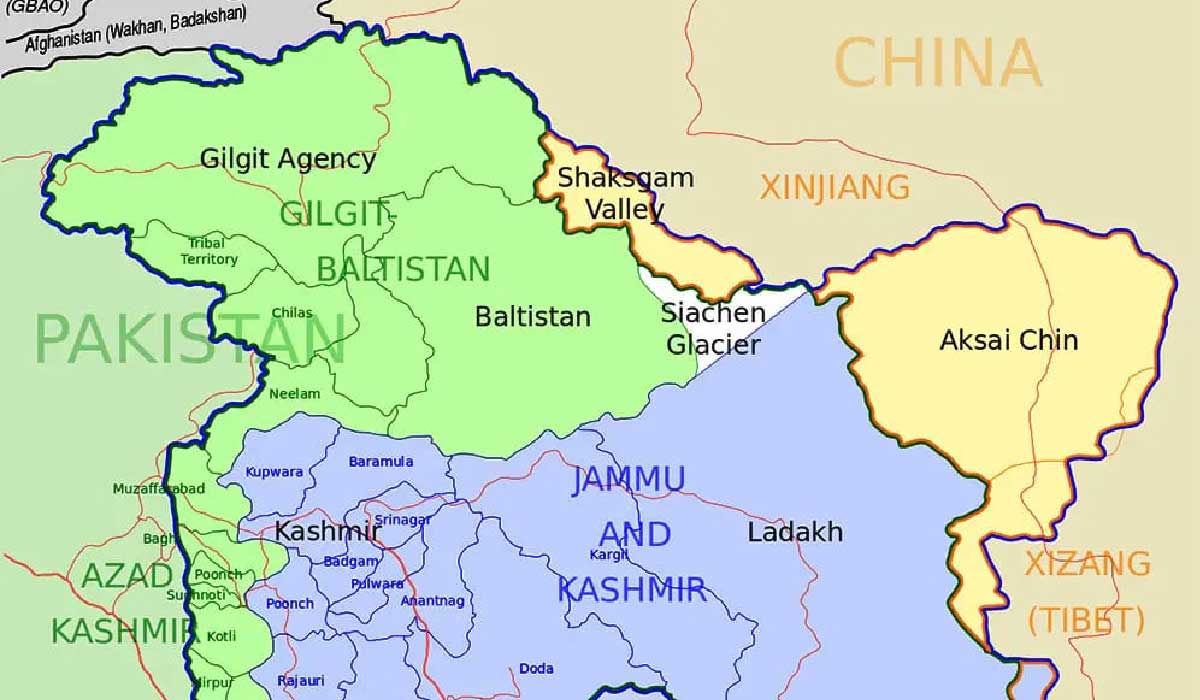
The very name of POK causes a rush of adrenaline in the population on both sides of the de-facto border––the Line of Control (LOC) between Indian and Pakistani nationals. The whole of Kashmir is partitioned into four regions: the Pakistan Occupied Kashmir (POK-area 13,297 sq.km.), the India Occupied Kashmir (IOK as per Pakistan), the China Occupied Kashmir (Aksai Chin area), and the relatively small part of Kashmir (the Shaksgam tract) handed over to the Chinese by Pakistan which has been incorporated in the Xinjiang province of China.
While there is little or almost no discussion about the Line of Actual Control (LAC) between India and China, the issue which is propped up every now and then by the media and politicians is about the advisability of India taking over POK. This issue is also a matter of public discussion in India. Before we attempt to settle this ‘popular’ issue, let us consider some background and the current situation.
The POK (or Azad Kashmir as referred to by Pakistan) is supposedly a ‘self-administered or autonomous region’ as it is not represented in the Parliament of Pakistan. The POK has a parliamentary form of government with a President as the Constitutional Head of State. There is a Prime Minister as the Chief Executive heading over a Council of Ministers. The Parliament is unicameral, i.e. there is only a Legislative Assembly. The POK has its own Supreme Court, a High Court, and an official flag. However, Pakistan’s Ministry of Kashmir Affairs and Gilgit-Baltistan oversees the region, having control over foreign affairs, defense, and currency. The POK area is divided into two entities: the small Azad Jammu and Kashmir, and the much larger Gilgit-Baltistan. In 1970, the military dictator, Yahya Khan promulgated a ‘rudimentary’ constitution through the ‘Azad Jammu and Kashmir Government Act, 1970’, allowing for most autonomy for this region so far. The former PM of Pakistan, Zulfikar Ali Bhutto, imposed the ‘Azad Jammu and Kashmir Interim Government Act 1970’. It was interim till the disputes get settled with India.
‘Azad Kashmir Day’ is celebrated on October 24 (the day when Azad Jammu and Kashmir government was created in 1947), February 5 celebrated by Pakistan, and October 27 as ‘Kashmir Accession Day’ as a Black Day to mark the accession of the kingdom of Jammu and Kashmir to India. Though the word ‘Azad’ means free, but the extent of Azadi in that region is anyone’s guess.
The term ‘Azad Kashmir’ was the title of a pamphlet issued by the Muslim Conference Party at its 13th General Session held at Poonch in 1945. Next year, the Party passed an ‘Azad Kashmir’ resolution. Hence, the seed of ‘Azad Kashmir’ was sown before the Partition of India. The idea was to have a responsible government under the Maharaja of Jammu and Kashmir without any association with either India or Pakistan. However, sometime before the Independence of India and the creation of Pakistan, the party (and the local population) wished that the Maharaja (Hari Singh) should accede to Pakistan. But the Maharaja wanted the kingdom to remain independent.
In early 1947, an uprising against the Maharaja broke out in Poonch due to the imposition of some punitive taxes. The Maharaja tried to suppress the revolt but failed. On 21 October 1947, Pashtun tribesmen from North-West Frontier Province, equipped with modern arms and led by experienced military personnel of Pakistan, poured into the kingdom. They captured Muzaffarabad (which is now the capital city of POK) and Baramulla, the latter being quite close to Srinagar. On 24 October 1947, the Maharaja requested military assistance from India. On 26 October 1947, the Maharaja signed the ‘Instrument of Accession’ to hand over the control of defense, external affairs, and communications to India in return for military aid. War then broke out between India and Pakistan. It ended with both sides controlling the territories under their effective control on their side of the LOC. India approached the UN seeking a plebiscite, but that has not transpired, because Pakistan has not fulfilled the pre-condition that the Pakistani army should withdraw from POK. Seventy year later, that withdrawal appears unlikely to take place.
Let us have a look at the general situation in POK. The economy of POK is mostly agrarian (more than 80%). The other big earners are the service sector and tourism. POK has some very scenic spots––the Neelum Valley and the Leepa Valley––unspoiled by industries or over population as also some places of historical interest. POK has some of the highest rates of school enrolment in Pakistan and a literacy rate of nearly 90%, but only 2% are university graduates. There are about 10 public and two private universities as well as four medical colleges. The economy is well supported by remittances sent by Mirpuris, many of whom went abroad (mostly UK) for a better quality of life and income. Their remittances support their families and relatives residing in POK. The annual per-capita income is about 5 lakh Indian Rupees.
The population is mostly that of Muslims, with Christians, Bahais, and Ahmadis in small numbers. Culturally, the people of POK are closer to those of Jammu than of people living in the Kashmir valley of J&K union territory. The official language is Urdu. Azad Kashmir has its own T20 tournament called the Kashmir Premier League since 2021. Azad Kashmir is home to YFK––International Kashmir Lobby Group, an NGO that seeks better Indo-Pak relations.
Both Azad Kashmir and Gilgit Baltistan are rich in mineral and natural resources, with scope for the development of industries (including mining), hydroelectricity, irrigation projects, geothermal energy, cement industry etc. The area has significant deposits of aquamarine, quartz, emerald, topaz, tourmaline, marble, coal, commercially important clays, fluorite, garnet, moonstone, ruby, corundum, sapphire, copper, alluvial and placer gold, silver, feldspar, graphite, nickel, mica, talc, mercury, alum, phosphate, petroleum, limestone, gypsum, pyrite, lead, zinc, radioactive materials, arsenic, bauxite, rare earths, and platinum. Most of deposits are a result of the tectonic movements: the Indian plate under thrusting the Eurasian plate.
Perhaps no article about the POK today is complete without the mention of the China-Pakistan Economic Corridor (CPEC), a 3,000 km Chinese infrastructure network project that is a part of the Belt and Road Initiative (BRI). The CPEC connects China’s Xinjiang Uyghur Autonomous Region with the Gwadar port in Pakistan. The BRI intends to link Southeast Asia, Central Asia, Gulf, Africa and Europe through a network of land and sea routes. The Karakoram Highway, which attracted a lot of attention being a part of the CPEC, is now in its second phase.
The CPEC has been compared to the Marshall Plan, offering major economic benefits to both China and Pakistan but mostly to China. It comprises a network of roadways (actually highways with travel speeds up to 120 kmph), railways (with trains able to travel at speeds up to 160 kmph), hydroelectric projects, space research, oil refineries, Special Economic Zones, a deep-water port facility, an international airport, desalinization plants, hospitals, bridges and tunnels, a metro, the world’s largest solar farm, LNG pipeline, agriculture and aquaculture, science and technology, banking, military bases, and fisheries. It is projected to reduce Baloch militancy. It will help China avoid the Straits of Malacca between Malaysia and Indonesia and thereby considerably reduce transportation costs and time delays, boost economic development in the Xinjiang region, etc.
The moot point here is what Pakistan stands to gain from the CPEC. Though the largesse bestowed by a very powerful neighbor (China), Pakistan should be able to obtain efficient road, rail, waterway and electricity networks to boost industrial growth and reduce employment. The CPEC also involves the United Kingdom, Turkey, Asian Development Bank, Asian Infrastructure Investment Bank, etc.
However, the benefits of CPEC have largely remain unrealized so far. Pakistan’s forex reserves are quite low hovering around USD 12 billion and unemployment rate hovering between 5 and 6%. Pakistan’s industry did make some good improvements (about 7.7% in 2020-21), probably due to better power production, but the full potential to be realized is still far away. As of 2022, China accounts for 30% of Pakistan’s foreign debt. Pakistani industries may not be able to compete with the Chinese. The political instability and the role played by the Pakistan’s military (almost as a parallel government), deep rooted corruption in Pakistan involving illegitimate bidding, breached contracts, discrimination, change in demography (especially in Baluchistan), extremism, riots, along with the fear of being ‘taken over’ by the Chinese both in economic and in the religious and cultural spheres are some of the major issues troubling the Chinese.
Concern is rife in Pakistan about the servicing and repayment of loans. Most of the China- Pakistan agreements, especially those related to the economic field, require strict confidentiality and later Pakistani governments may be faced with some unpleasant surprises. Pakistan is increasingly becoming aware of the now well-known Chinese strategy of cleverly leading developing countries to a ‘debt trap’. Losing territorial sovereignty is the last thing a country desires.
Insofar as India is concerned, we have been voicing our concern in various forums and in bilateral discussions ever since work on the Karakoram Highway (Phase-1) began, as the CPEC passes through POK which for India is its legitimate territory, taken over by Pakistan in a deceitful manner. However, India’s response so far could best be termed as a ‘muted’ one, perhaps because ground realities indicate that there is almost nothing that India could against the projects being developed in POK due to effective control of Pakistan, advantage of which is being taken by China.
What could India possibly do to diminish the gains perceived by China and Pakistan?
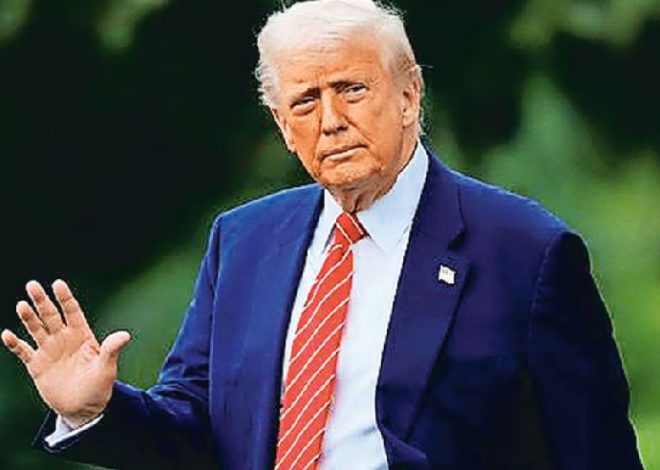
The answer lies in developing a route for India which could provide transportation to identified ‘markets’ and to counter the Chinese strategy of throttling India through the string-of-pearls strategy. Herein comes the importance of good ties with Iran and using them to develop the Chabahar port. The port will help India get direct access to the Central Asia as an alternative to the Persian Gulf. It will provide for a shorter trade route, thereby reducing reliance on the Strait of Hormuz for energy imports. The second strategy is Quadrilateral Security Dialogue (QUAD) – a strategic military alliance involving USA, Japan, India, and Australia especially for maritime security. India’s ‘Act East Policy’ involving the ASEAN nations is also another major strategy in countering the Chinese influence. In the present-day scenario, it remains to be seen how President Trump’s ‘America First’ policy and his desire to counter Chinese products with higher import duties will adversely affect the economy of China. USA may help India too in coming up with advanced military systems and technology transfers, the other members of the QUAD are techno scientifically quite competent. India needs to leverage its diplomatic acumen in getting the best deals from the US.
The question of India taking over POK remains unanswered. POK will certainly give India access to control over sizable mineral wealth and get advantage of whatever development the Chinese have been able to accomplish in that region so far. The region offers strategic advantage in terms of location to ‘oversee’ other countries in that region, especially China and Pakistan. However, the perils are far greater. Taking over the POK will bring India in contact with Afghanistan, where the Taliban government has its own ‘agenda’ rooted in fundamentalism. The other problem is that China will resist such a move––a military confrontation is a high possibility in which both sides may suffer. Militarily, while China is numerically stronger, its armed forces are not time tested. In a war, both men and materials count. In its four military engagements so far since 1947, India has emphatically won three, thus proving its military prowess. Since the adversary is a formidable one with much deeper pockets, military confrontation should be avoided. Let the status quo prevail in POK, unless some unforeseen circumstances let India get effective control over it. Any move, even though a well-calculated one, may not produce the desired results.
About the Author