

“T-Dome Rising: Taiwan Unveils New Air Defence Strategy Amid Growing Tensions with China”
In a bold declaration of national resilience and strategic preparedness, President Lai Ching-te announced on Friday that Taiwan will develop a new multi-layered air defence network dubbed “T-Dome”, a cutting-edge system designed to shield the island from escalating military threats. The initiative comes amid growing tensions with Beijing and reflects Taiwan’s broader push to strengthen its defence posture.
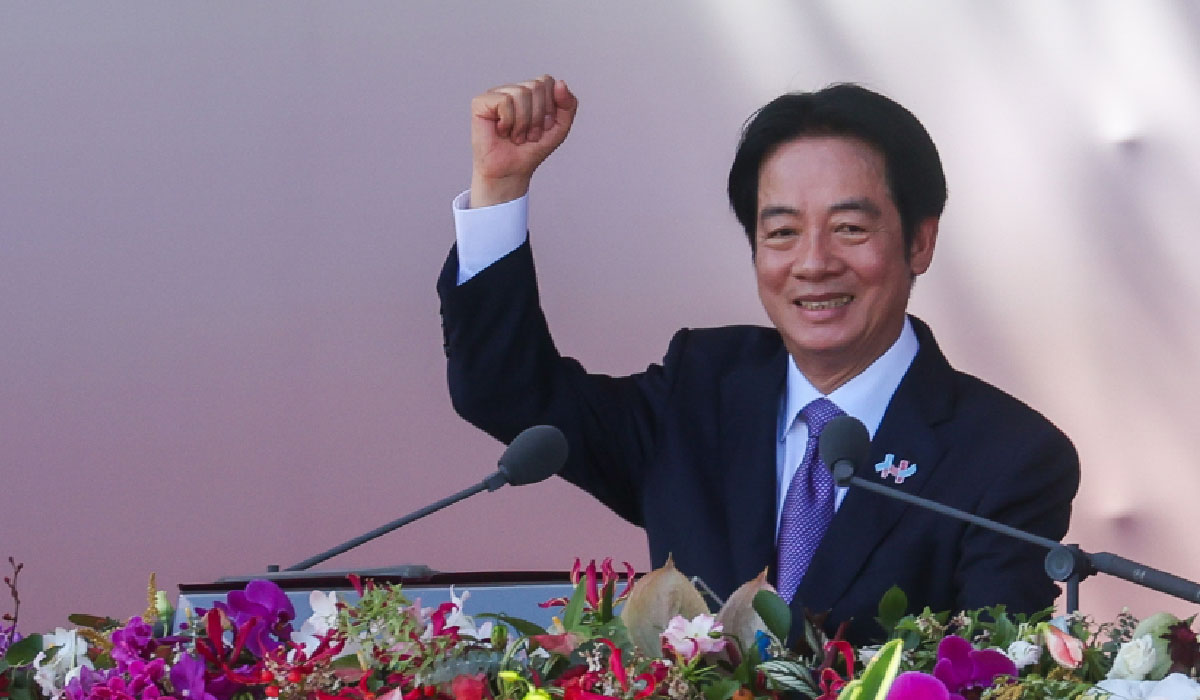
Speaking at Taiwan’s National Day celebrations, President Lai made it clear that the government is prepared to significantly boost defence investments and accelerate military modernization efforts in response to China’s increasingly aggressive stance.
“The rise in defence spending is not symbolic—it is essential,” Lai said to a supportive crowd. “It reflects our unwavering commitment to national security and the development of our defence industry.”
What Is the T-Dome?
While Lai did not disclose technical specifics, the “T-Dome” system is expected to function similarly to Israel’s Iron Dome, integrating advanced radar, interception technology, and real-time detection to form a robust shield against airborne threats. This marks the first public mention of the system by the president, although reports had hinted at its unveiling in recent days.
Lai emphasized that T-Dome will serve as a “multi-layered defence architecture“—enhancing Taiwan’s capability to detect, intercept, and neutralize incoming threats, particularly ballistic and cruise missiles. The project is part of a broader shift toward indigenous defence capabilities, positioning Taiwan to become more self-reliant in national security.
Defence on the Fast Track
Taiwan has long relied on a mix of U.S.-made systems like the Patriot missile platform and domestically produced Sky Bow interceptors to counter potential attacks. In September, the island revealed a new air defence missile called Chiang-Kong, designed to hit high-altitude targets, a step beyond existing Patriot capabilities.
The planned T-Dome will likely integrate with such systems, forming a networked defence umbrella capable of responding to a wide array of threats.
President Lai also revealed plans for a special defence budget to be proposed before the end of the year, signalling Taiwan’s determination to speed up investments in its military infrastructure.
A Message to Beijing: Renounce Force
While the speech focused heavily on defence, Lai also sent a direct message to China: abandon the use of force.
“We urge China to renounce coercion and violence as tools to alter the status quo across the Taiwan Strait,” he said. “The world has seen the devastation of war. We must learn from the past to avoid repeating the same tragedies.”
China, which claims Taiwan as part of its territory, has steadily increased military pressure on the island, conducting air and naval exercises near Taiwanese airspace. Beijing has dismissed Lai as a separatist and routinely rejects calls for dialogue from Taipei.
National Day: A Reminder of Taiwan’s Unique Identity
Taiwan’s National Day commemorates the 1911 revolution that ended imperial rule in China and led to the founding of the Republic of China. Although the ROC government relocated to Taiwan in 1949 after the Chinese Civil War, it continues to function independently of the People’s Republic of China.
Lai’s remarks were not only a reflection of present security concerns but also a reaffirmation of Taiwan’s distinct identity, history, and aspirations for peace.
Conclusion:
With the unveiling of T-Dome, Taiwan has sent a clear message: while it seeks peace, it is prepared to defend itself. As geopolitical tensions in the Indo-Pacific continue to rise, Taiwan’s move to fortify its skies may mark a turning point in how the region prepares for—and hopefully deters—future conflict.