




The Dawn of New Economic Era-INDIA UK- FREE TRADE AGREEMENT 2025
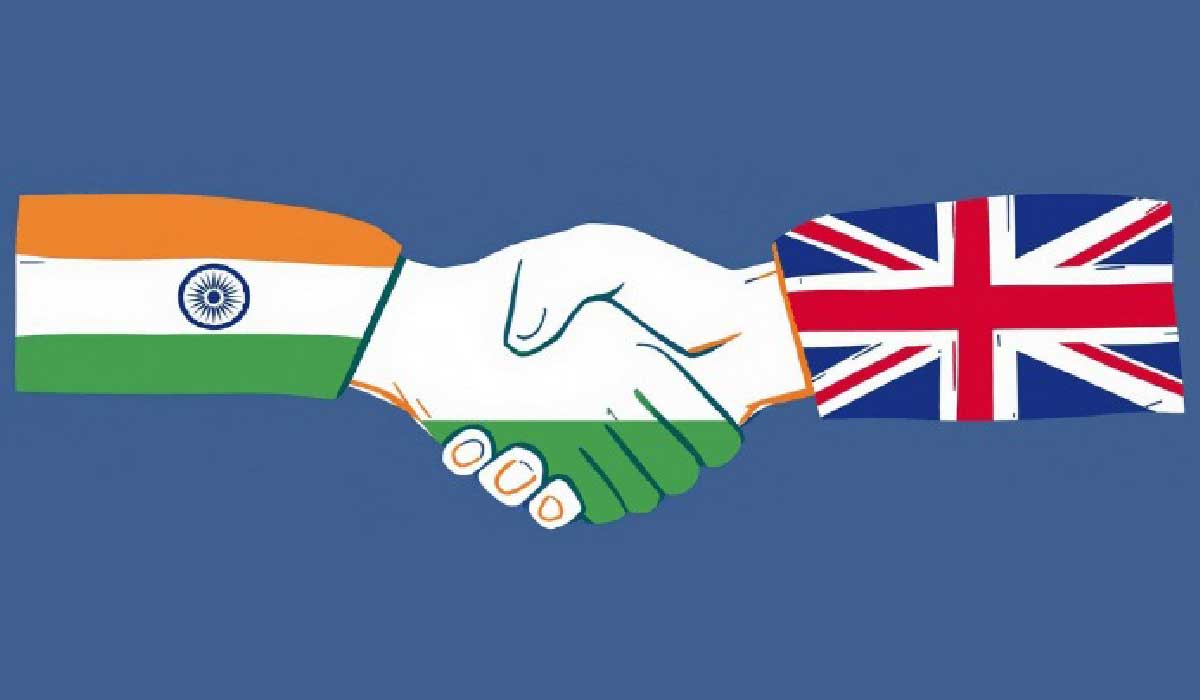
On May 6th, in a historic moment, the world's fifth and sixth largest economies signed a Free Trade Agreement (FTA), significantly enhancing the bilateral trade relationship between the United Kingdom and India. On the global stage, this is the tell-tale sign of India’s gradual foray into the leadership role gradually moving away from mere side-line participation. The UK government describes this agreement as one of the “biggest and most economically significant bilateral trade deals, three years of negotiations that began in 2022. This FTA represents the UK's most important trade agreement following its disassociation from the European Union. Extolled as an “ambitious” and “transformative” the FTA will mark India’s deeper integration into international value chains while primarily boosting jobs and exports.
The beginning of India-UK trade relations
The trade relations between India and the United Kingdom have roots that date back to the 17th century, when the East India Company established its presence in India through an exploitative colonial trade mechanism. Close to the 19th century, a huge part of India's imports originated from the UK, while India remained a raw material supplier. After India’s Independence the trade dynamics changed to better but under the clout of persisting irregularities.
In 2021, the Enhanced Trade Partnership agreement laid the very foundation for a mutually beneficial economic framework, culminating into FTA 2025 with a driven target to foster trade and double the profit. This shift in trade history can be seen as mutually beneficial trade dynamics over one-sided economic benefits. Consequently, the agreement represents a reassessment of the long-awaited imbalanced economic relationship into a partnership-based approach.
What does the FTA imply?
Since long, Indian exporters have been on the receiving end in developed countries like the United Kingdom. This is a welcome change allowing nearly 99% of Indian tariff lines, almost covering 100% of trade value. This is as an excellent example for future global trade policy for global economies around the world. This will also allow the Indian exporters to level playing with strong competitors such as Bangladesh and the European Union.
The FTA deal between the two countries epitomizes transformative economic pact that goes beyond mere diplomatic ties, offering a wealth of opportunities for businesses, investors, and professionals alike. However, it is essential for corporate leaders, policymakers, and entrepreneurs to thoroughly understand what the agreement truly means for businesses across the country.
The UK-India Free Trade Agreement (FTA) will not only provide enhanced market coverage for both countries but is noteworthy for the broad economic scope it encompasses, including sectors such as automobiles, whisky and gin, textiles, digital trade, government procurement, intellectual property, labor, gender equality, anti-corruption measures, and environmental standards.
Lower Tariff, Big Market, Professional Mobility and Digital Trade
As the trade opportunities between India and the UK have expanded significantly in recent years, India aims to double its bilateral trade from the current $60 billion (encompassing both merchandise and services) to $120 billion by 2030, largely due to this Free Trade Agreement (FTA). More importantly, the UK imports a larger volume of products than it exports, providing India with a competitive advantage in generating surplus profits. Slashed tariffs would grant UK exporters access to a market of 1.4 billion consumers in India for luxury goods and agricultural products.
The FTA 2025 will pave the way for advancements in services and digital trade, facilitating hassle-free mobility for Indian professionals. This agreement will allow Indian nationals to travel for business purposes, attend conferences, and provide contracted services, therefore strengthening ties between both nations. Under the Double Contributions Convention (DCC), Indian workers will be exempted and can stay without National Insurance for three years. The FTA adopts a forward-looking approach to digital trade and innovation. It aims to reduce obstructions to digital trade, supports the legal recognition of electronic contracts and authentication, and safeguards businesses against the forced transfer of source code. The agreement includes provisions on cross-border data flows and data localization, with opportunities for further negotiations as India establishes similar commitments with other partners.
Opportunity
India-UK Free Trade Agreement (FTA) presents diverse opportunities for the Indian IT sector to expand its operations in the UK at lower costs. It also provides substantial prospects for businesses and investors in both nations. By aligning with a shared vision for a sustainable future, the UK’s expertise in green technology and renewable energy directly supports India’s transition to a low-carbon economy. On one hand, the UK emphasizes creating an adaptive framework in a growing global environment, with London serving as a bridge for deeper economic engagement. On the other hand, India is a thriving hub for the UK’s consumer base with several industrial sectors. India views London as a crucial launching rack for innovations, and the access it gains helps maintain its economic growth trajectory. The UK-India FTA challenges traditional trade concepts and norms by embracing cooperation in research and development, as well as facilitating the exchange of knowledge and innovation exchange swap across high-impact industries.
In a world that craves stability, the UK-India strengthens their economic ties through a partnership characterized by adaptability and remunerative ambitions under the banner of a Free Trade Agreement (FTA). The newly established dynamics, driven by advanced technology, sustainable development, and robust financial collaboration, are reshaping the economic relationship between the two nations in an era of geopolitical uncertainty.
About the Author