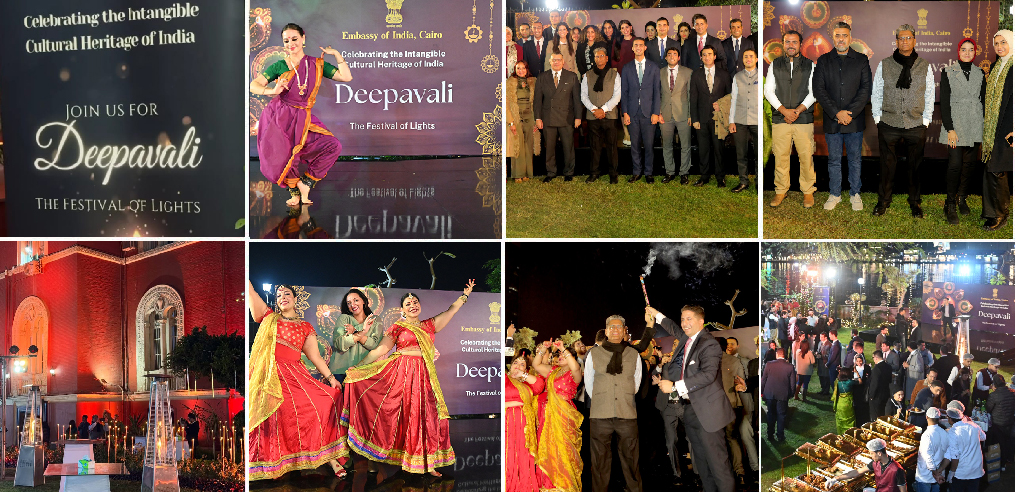
The Indian Embassy in Egypt celebrated the inscription of Diwali (the Festival of Lights) on UNESCO's Intangible Cultural Heritage List.
The celebration was attended by Egyptian diplomats, representatives from the Egyptian Diplomatic Institute, members of the Indian community, and friends of India in Egypt.
The evening was filled with spectacular cultural performances, dazzling lights, and lively music.
The Indian Embassy in Egypt expressed its delight at Diwali's inscription on UNESCO's Intangible Cultural Heritage List, noting that "Diwali is a festival where lights dance, colors speak, and traditions breathe."
UNESCO inscribed the Indian festival of Diwali on its list of Intangible Cultural Heritage in recognition of the spirit of Indian culture and the global celebration of lights.
The United Nations Educational, Scientific and Cultural Organization (UNESCO) officially inscribed Diwali, the Festival of Lights in India, on its list of Intangible Cultural Heritage last Wednesday.
The Indian government in New Delhi welcomed the inscription, considering it an official recognition of the "spirit of its civilization."
Indian Prime Minister Narendra Modi praised the inclusion, stating in a post on his official social media accounts that "People in India and around the world are thrilled that Deepavali has found a place on the UNESCO's Intangible Cultural Heritage list."
He added, "For us, Deepavali is very closely linked to our culture and ethos. It is the soul of our civilization. It personifies illumination and righteousness." He noted that "the addition of Deepavali on UNESCO's Intangible Cultural Heritage list will contribute to the festival’s global popularity even further."
Diwali is one of the most important festivals in India, celebrated by millions worldwide. It symbolizes the triumph of good over evil. The celebration lasts for five consecutive days and coincides with the full moon in October or November, during which Indian cities are adorned with colorful decorations and lights.
During the celebration, the skies of India are lit up with fireworks and firecrackers, and small lamps and candles are spread in homes and temples, decorating the atmosphere and bringing joy to the participants.