Xi Jinping Hosts Global South Leaders at SCO Summit in Tianjin: A Push for a New World Order
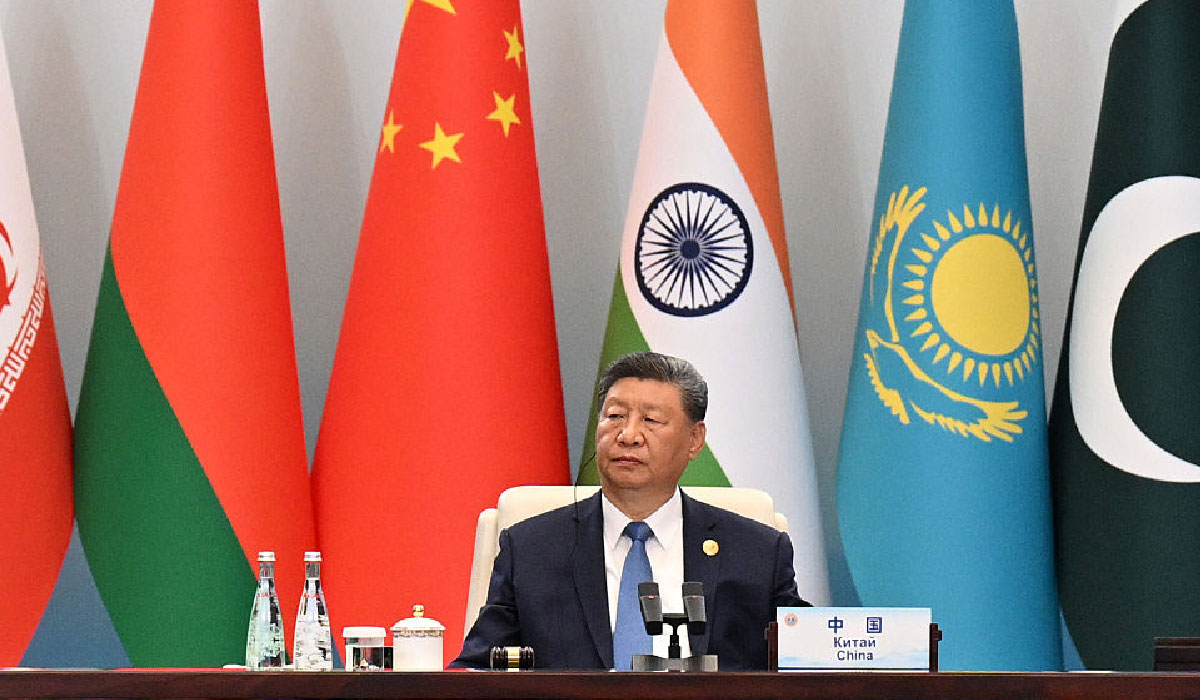
In a powerful diplomatic move, Chinese President Xi Jinping welcomed more than 20 world leaders to the port city of Tianjin for a high-profile summit of the Shanghai Cooperation Organisation (SCO) — a regional bloc originally focused on security, but now rapidly evolving into a platform for global economic, political, and technological collaboration.
This year’s summit marked a turning point in the SCO’s trajectory. What once began as a relatively modest regional grouping now appears to be at the heart of China’s vision for a new global order — one that directly challenges the dominance of Western-led institutions. The presence of major leaders like Russian President Vladimir Putin and Indian Prime Minister Narendra Modi gave the event unprecedented international visibility and strategic weight.
A Summit of Non-Western Powerhouses
The Tianjin summit was more than just a diplomatic gathering; it was a symbolic show of strength and unity among non-Western nations. Leaders from Central Asia, the Middle East, South Asia, and Eurasia gathered to discuss shared interests — from trade and energy cooperation to technology, finance, and collective security.
President Xi used the opportunity to promote a “multipolar” world, where global leadership is not concentrated in a handful of Western capitals, but instead shared across diverse nations with independent development paths. His message was clear: the SCO represents an alternative model of global cooperation — one based on mutual respect, sovereignty, and development without ideological pressure.
Strategic Collaboration: China, Russia, and India in Focus
Perhaps the most closely watched aspect of the summit was the dynamic between China, Russia, and India — three of the largest and most influential SCO members.
Xi held separate bilateral discussions with Vladimir Putin, reaffirming the strong strategic partnership between Moscow and Beijing, particularly in the face of Western sanctions and geopolitical tensions. Both leaders emphasized that the SCO should be a platform for resisting external pressure and promoting “real multilateralism” — a term increasingly used by China and Russia to criticize U.S.-led alliances.
More unexpectedly, Xi also engaged in a warm and constructive meeting with Prime Minister Narendra Modi — the first in-person dialogue between the two since border tensions escalated in recent years. Xi reportedly told Modi that the “dragon and elephant” must walk together, signaling China’s willingness to reset ties with India and focus on cooperation over competition.
Modi responded in kind, highlighting shared interests in regional peace, economic development, and the importance of stability along the disputed border. Their interaction hinted at a potential thaw in relations, with both sides appearing to prioritize pragmatic engagement over prolonged rivalry.
Economic Initiatives: From Development Funds to Digital Currencies
Beyond diplomacy, Xi outlined an ambitious economic agenda for the SCO, unveiling proposals that aim to reduce member states’ dependence on Western financial systems. One of the most notable ideas was the establishment of an SCO Development Bank, through which China has pledged billions in infrastructure and development financing to partner nations.
A key part of this economic pivot includes the promotion of the “electro-yuan” — a digital currency initiative that China hopes will eventually allow member states to trade in yuan instead of U.S. dollars, particularly in sectors like energy and technology. Early pilot projects involving Central Asian countries suggest a clear goal: rebalancing global finance in favor of non-Western currencies and institutions.
This move is not just economic — it’s political. By encouraging countries to adopt the yuan and shift away from Western-controlled financial systems, China is asserting leadership over an emerging economic bloc built on digital innovation and sovereignty.
Cooperation in Education, Technology, and Security
Xi also placed heavy emphasis on people-to-people cooperation and technology transfer. China offered thousands of scholarships and vocational training slots to SCO countries through initiatives like the “Luban Workshop,” aiming to build long-term goodwill and capacity among youth and professionals in partner nations.
In the area of technology, Xi pushed for joint ventures in artificial intelligence, green energy, and space exploration. He encouraged SCO members to share research, invest in innovation hubs, and work together on digital governance issues. China also suggested setting up an SCO-wide digital connectivity initiative to boost cross-border trade and secure communication.
On security, the summit reaffirmed the need for counter-terrorism collaboration and joint border defense, especially in light of increasing geopolitical instability in regions like Central Asia and the Middle East.
The Symbolism of Timing and Venue
Hosting the summit in Tianjin — one of China’s most strategically important coastal cities — was itself a message. Known for its historical role in trade and reform, Tianjin represents the kind of open, forward-looking China that Xi wants to project to the world.
Coinciding with a major military parade in Beijing to mark the 80th anniversary of the end of World War II, the timing of the summit added another layer of symbolism. The parade showcased China’s military modernization, while the summit presented its diplomatic and economic ambitions — together projecting an image of a rising power not only ready to lead, but ready to reshape global systems.
A Realignment in Motion
The Tianjin SCO summit may be remembered as a moment where China officially stepped into a leadership role in the Global South. Through infrastructure investments, financial initiatives, and strategic partnerships, Beijing is building a coalition that seeks more balanced global governance.
At the same time, India’s participation suggests that even countries traditionally aligned with the West are now pursuing a more flexible, multi-aligned foreign policy. For New Delhi, balancing ties with both Western democracies and Eurasian partners like China and Russia is a careful diplomatic dance — but one that reflects the complexity of the emerging world order.
Conclusion: A New Global Center of Gravity
The SCO summit in Tianjin was more than a meeting of leaders — it was a declaration that the global order is shifting. As Western institutions face criticism and challenges, platforms like the SCO are filling the vacuum with new ideas, alliances, and systems.
Led by Xi Jinping, with the support of leaders like Putin and Modi, the summit presented a unified message: the future will not be shaped by one power alone — but by a chorus of voices from across the world, each demanding respect, partnership, and a seat at the table.