
PM Modi in Central Asia: India’s Strategic Push from Tashkent to Bishkek
Prime Minister Narendra Modi’s four-day visit to Uzbekistan and Kyrgyzstan underlines India’s growing engagement with Central Asia, as the 26th SCO Summit puts security, connectivity and opportunity at the centre of regional cooperation
Prime Minister Narendra Modi concluded his four-day visit to Uzbekistan and Kyrgyzstan on Tuesday after a diplomatic journey that combined bilateral engagement with participation in the 26th Shanghai Cooperation Organisation (SCO) Summit in Bishkek.
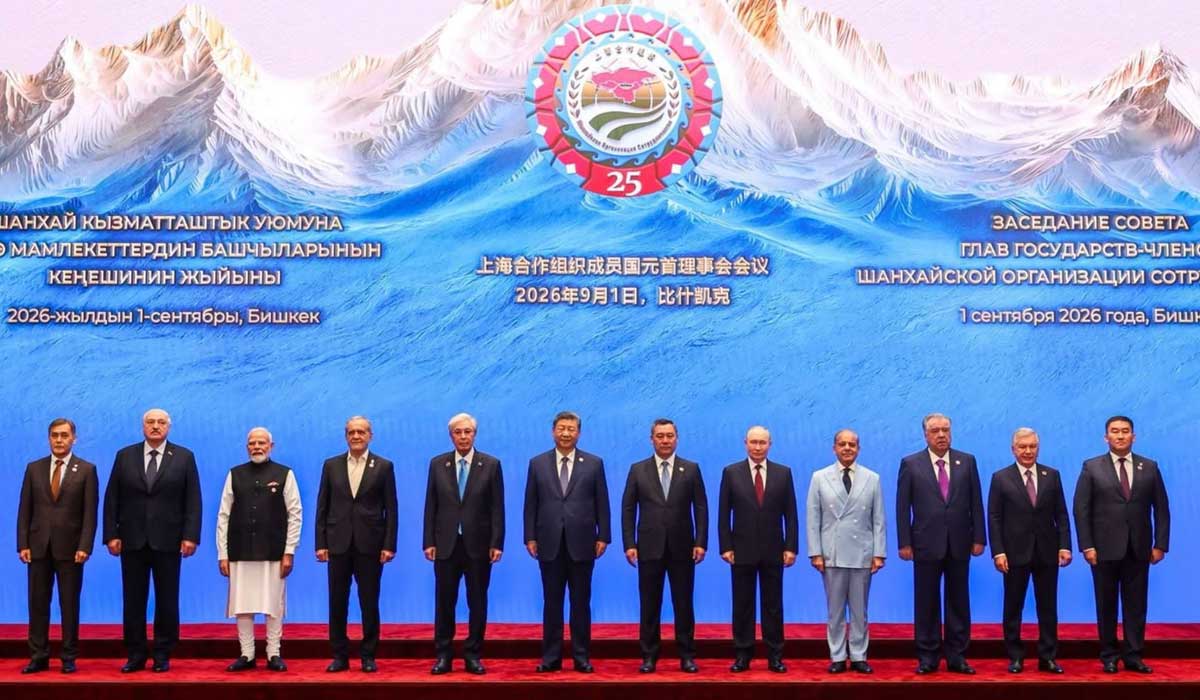
The visit came at a significant moment for the Eurasian region. The SCO is completing 25 years of its journey, while its member states are facing a rapidly changing geopolitical, economic and security environment.
At Bishkek, Modi joined Chinese President Xi Jinping, Russian President Vladimir Putin and other SCO leaders for discussions on regional security, connectivity, economic cooperation and the organisation’s future.
For India, the visit was not simply about attending a multilateral summit. It was an opportunity to strengthen relations with Central Asia and reinforce New Delhi’s role as an independent and constructive voice in Eurasian affairs.
Central Asia’s Growing Importance for India
Central Asia has become increasingly important to India’s strategic thinking.
Uzbekistan and Kyrgyzstan occupy important geographical positions connecting different parts of Eurasia. The region offers opportunities in trade, energy, critical minerals, technology, education and investment.
At the same time, developments in Central Asia have implications for India’s security interests, particularly because of the region’s proximity to Afghanistan and other areas affected by terrorism and instability.
India’s objective is therefore to build relationships that extend beyond political dialogue and create stronger economic and institutional partnerships.
Modi’s visit to Uzbekistan highlighted the importance India attaches to this bilateral relationship, while his presence in Bishkek demonstrated the wider regional dimension of New Delhi’s Central Asian policy.
Bishkek and the SCO’s Next Chapter
The 26th SCO Summit carried particular significance because the organisation was marking its 25th anniversary.
Over the past quarter-century, the SCO has developed from a regional security grouping into a broader platform for cooperation on security, trade, connectivity, technology, culture and development.
India became a full member of the SCO in 2017 and has since sought to contribute to the organisation while protecting its own strategic interests.
At Bishkek, Modi emphasised that the SCO should move beyond broad visions and work towards measurable outcomes.
His message centred on three pillars: security, connectivity and opportunity.
Security: The Foundation of Stability
Security remains a central concern for India within the SCO.
Terrorism, extremism, organised crime and other cross-border threats continue to challenge the wider region. Such problems cannot be addressed effectively by one country acting alone.
India has consistently advocated stronger international cooperation against terrorism and has argued that there should be no distinction between terrorist organisations based on political considerations.
For New Delhi, regional stability is closely linked to economic development.
A secure region is more capable of attracting investment, expanding trade, developing tourism and strengthening people-to-people relations.
The SCO can play a valuable role by improving cooperation among its members in counter-terrorism, intelligence-sharing and addressing the networks that support extremist activities.
Connectivity: A Key to Greater Trade
Connectivity was the second major element of Modi’s message.
India’s relations with Central Asia have considerable economic potential, but geography remains a major obstacle. Better transport links, logistics systems, digital networks and commercial routes are essential to increasing trade.
For India, improved connectivity can provide greater access to Central Asian markets while allowing the region to benefit from India’s large economy and capabilities in technology, pharmaceuticals, healthcare and services.
Connectivity, however, is also a matter of strategic trust.
India has emphasised that regional infrastructure cooperation should respect sovereignty and territorial integrity and should deliver benefits to all participating countries.
The aim is to create reliable economic links rather than simply build infrastructure.
Opportunity: Making Cooperation People-Centred
The third pillar—opportunity—adds a broader economic and human dimension to India’s approach.
Central Asian countries have significant potential in energy, minerals, agriculture and emerging industries. India has strengths in information technology, digital services, pharmaceuticals, healthcare, education and entrepreneurship.
These areas offer considerable scope for mutually beneficial cooperation.
Greater interaction between businesses, universities, researchers and young entrepreneurs can give regional cooperation a stronger foundation.
Diplomacy becomes more meaningful when agreements at the political level translate into opportunities for citizens.
Modi, Xi and Putin: Dialogue Amid Differences
The presence of Modi, Xi Jinping and Vladimir Putin at the Bishkek summit highlighted the complicated geopolitical environment surrounding the SCO.
India’s relationship with Russia remains strategically important, while its relationship with China combines economic engagement with significant strategic differences.
The SCO provides a platform where countries with different interests can continue dialogue.
Modi’s engagement with both Xi and Putin demonstrated India’s willingness to maintain communication with major powers while preserving its strategic autonomy.
For New Delhi, strategic autonomy means the ability to cooperate with different countries without becoming tied to a single geopolitical bloc.
Peace and Diplomacy in a Divided World
The war in Ukraine also remained part of the wider diplomatic context.
During his meeting with Putin, Modi reiterated India’s preference for peace and dialogue and called for an end to the conflict.
India has consistently supported diplomatic efforts to resolve international disputes.
Its approach reflects an attempt to maintain important strategic relationships while encouraging peaceful solutions to major global crises.
The Joint Declaration and the Test of Implementation
The SCO leaders adopted a joint declaration at the Bishkek summit, outlining areas of common understanding and cooperation.
However, the value of any declaration ultimately depends on implementation.
The SCO has the geographical reach and political weight to influence Eurasian affairs. Its credibility will increasingly depend on whether it can deliver practical progress in security, trade, connectivity, technology and economic cooperation.
This makes Modi’s call for measurable outcomes especially relevant.
The next phase of the SCO should be judged not simply by the number of declarations adopted, but by the tangible results achieved.
India’s Strategic Road Ahead
Modi’s four-day Central Asian journey has reinforced India’s commitment to deeper engagement with the region.
For New Delhi, Central Asia represents an important combination of strategic location, economic potential and security relevance.
The road ahead will require sustained diplomacy, stronger commercial links, better connectivity and deeper institutional cooperation.
India’s challenge is to convert political goodwill into lasting economic and strategic partnerships.
Conclusion
Prime Minister Modi’s visit to Uzbekistan and Kyrgyzstan has placed Central Asia firmly within the broader framework of India’s international engagement.
At the 26th SCO Summit in Bishkek, held as the organisation marked its 25th anniversary, India presented a straightforward vision for regional cooperation: security to strengthen stability, connectivity to bring economies closer and opportunity to ensure that cooperation benefits people.
The joint declaration adopted by the SCO leaders provides a framework, but implementation will determine its real significance.
For India, the message from Bishkek is clear. New Delhi wants to deepen its Central Asian partnerships, contribute to a more effective SCO and maintain an independent voice in the evolving Eurasian order.
The four-day visit has concluded, but the larger task now is to turn diplomatic commitments into stronger partnerships and measurable results.