


India and Belgium Chart a New Strategic Course, Expanding Ties from Trade to Technology and Defence
Modi–De Wever talks put defence, trade, technology, critical minerals and clean energy at the centre of a widening partnership
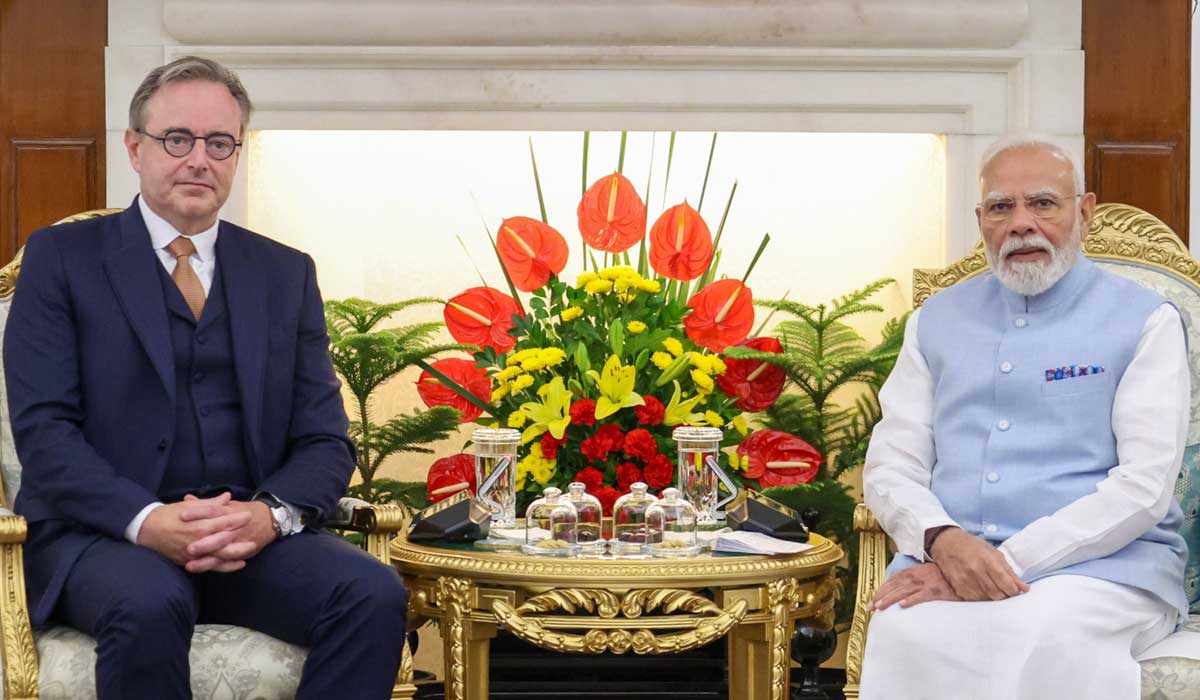
India and Belgium are opening a new chapter in their bilateral relationship, with Prime Minister Narendra Modi and Belgian Prime Minister Bart De Wever placing strategic cooperation, economic resilience and emerging technologies at the heart of their engagement.
De Wever arrived in New Delhi on Thursday for a three-day official visit to India, bringing a high-level Belgian delegation that includes Defence and Foreign Trade Minister Theo Francken. His visit marks an important step in strengthening ties between New Delhi and Brussels at a time when geopolitical uncertainty, supply-chain vulnerabilities and technological competition are reshaping international partnerships.
The discussions between Modi and De Wever covered a wide range of issues, with defence, trade, technology, semiconductors, critical minerals, renewable energy and maritime security emerging as key areas for future cooperation.
Defence becomes a growing pillar
Defence cooperation is gaining new prominence in India-Belgium relations. Both countries are seeking closer military engagement, including training, professional exchanges, research and industrial collaboration.
The presence of Belgium’s defence minister and a business delegation underlines the growing interest in creating opportunities for defence-industry partnerships. Cooperation in advanced and maritime technologies could further strengthen the security dimension of the relationship.
For India, closer engagement with European defence industries supports its ambition to expand domestic manufacturing and technological capabilities. For Belgium, India’s growing defence market presents opportunities for industrial cooperation and investment.
Trade and technology take centre stage
Economic relations remain a foundation of the partnership, but both sides are looking beyond traditional areas of commerce. India and Belgium have set an ambitious objective of doubling bilateral trade over the next five years.
Belgium’s longstanding importance to India’s diamond industry remains significant, particularly through Antwerp’s global trading hub. At the same time, the relationship is expanding into advanced manufacturing, pharmaceuticals, technology, logistics and investment.
Semiconductors and critical minerals are becoming equally important. Cooperation in these sectors could help both countries build more reliable supply chains for industries ranging from electronics and clean energy to defence.
Clean energy adds a new dimension
The green transition is another promising area of cooperation. India and Belgium are exploring opportunities in renewable energy, green hydrogen and green ammonia, linking India’s growing clean-energy ambitions with European technology, investment and markets.
Such cooperation could create new commercial opportunities while supporting both countries’ efforts to strengthen energy security and accelerate the transition towards lower-carbon economies.
A partnership with wider European significance
The importance of De Wever’s visit extends beyond bilateral relations. Belgium is an influential member of the European Union, while India is seeking deeper engagement with Europe on trade, technology, security and strategic supply chains.
The two countries’ expanding strategic dialogue can therefore serve as another bridge between India and the wider European community.
With their relationship moving beyond traditional economic cooperation towards defence, technology, clean energy and strategic resources, India and Belgium are positioning their partnership for a changing global environment.
The evolving India-Belgium partnership reflects the changing priorities of modern diplomacy, where economic opportunity increasingly intersects with security, technology and strategic resilience. De Wever’s visit signals that New Delhi and Brussels are ready to build their relationship around these shared priorities, giving bilateral ties a stronger and more forward-looking strategic foundation.