




India Connect 2026: Where Diplomacy Meets Education, Innovation and the Future of Global Collaboration
Maharishi University’s India Connect & Collaboration Summit brings diplomats, policymakers, academics and industry leaders together in Noida to shape a new architecture of international partnership
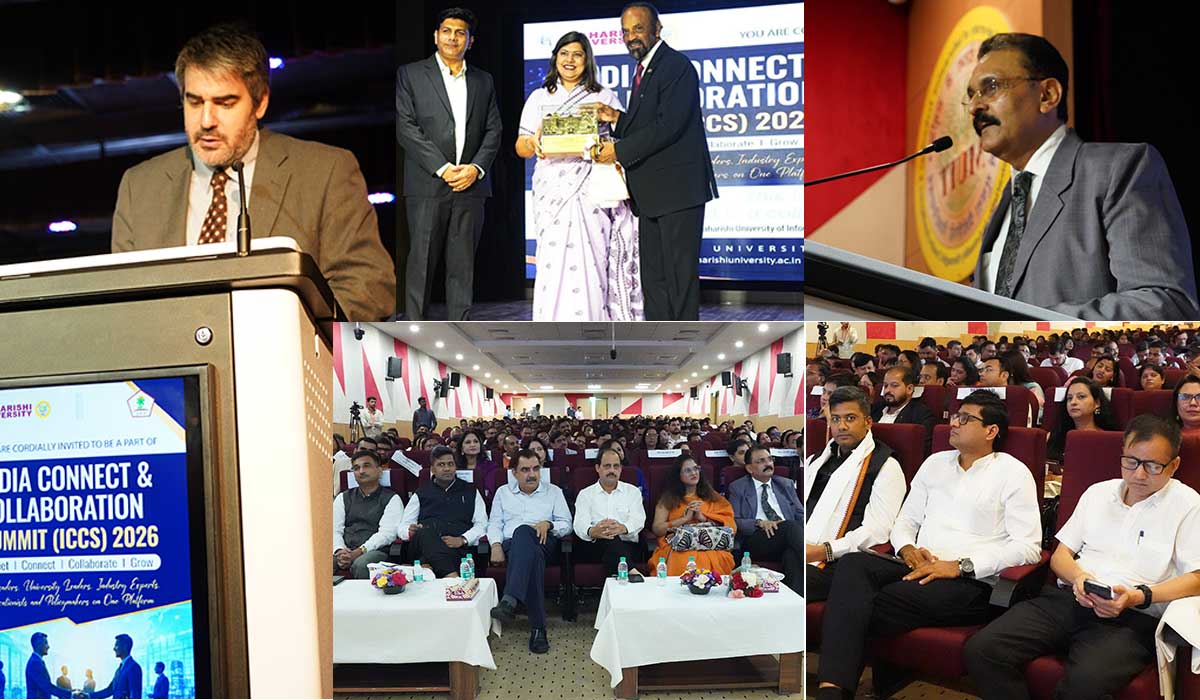
In a world where international relations are increasingly shaped by knowledge, innovation and people-to-people connections, universities are emerging as important bridges between nations. Reflecting this changing landscape, Maharishi University of Information Technology (MUIT), Noida, hosted the India Connect & Collaboration Summit (ICCS) 2026, bringing together diplomatic representatives, policymakers, educationists, university leaders and industry professionals.
The summit was conceived as a platform for dialogue and collaboration, creating an environment where international engagement could extend beyond traditional diplomatic channels and embrace education, skills, entrepreneurship, innovation and industry-academia partnerships.
Diplomacy Beyond the Traditional Table
Among the prominent international guests was Chandradath Singh, High Commissioner of Trinidad and Tobago, whose presence added an important Caribbean dimension to the gathering. Pablo Ricardo Gorosito, Chief of the Consular Section at the Embassy of Uruguay, also participated as Guest of Honour.
Their participation underlined the importance of strengthening India’s connections with countries across different regions and creating opportunities for meaningful institutional and people-to-people engagement.
The summit also brought together Indian stakeholders from education and skills development. R. P. Singh, Additional Director (Skill Education), CBSE, New Delhi, was associated with the programme as a special guest, while university leadership and other distinguished participants contributed to the discussions.
Education as a Diplomatic Bridge
ICCS 2026 reflected an increasingly important reality: education itself can be an instrument of diplomacy.
Universities provide a natural meeting point for different cultures, ideas and professional communities. Student exchanges, joint research, international academic programmes, skills development and industry partnerships can create relationships that endure well beyond a single diplomatic meeting.
Against this backdrop, the summit’s emphasis on collaboration was particularly significant. Rather than treating international relations as a purely governmental responsibility, ICCS placed universities, industry and educational institutions within the wider ecosystem of global engagement.
From Dialogue to Innovation
The programme featured ceremonial and cultural presentations, addresses by university leaders, discussions on the vision and objectives of ICCS 2026, recognition of distinguished guests and networking opportunities.
A presentation focusing on MUIT’s incubation ecosystem added an important entrepreneurial dimension to the summit. It highlighted the role universities can play in transforming ideas and academic knowledge into innovation, enterprises and wider social and economic impact.
This connection between international engagement and entrepreneurship is increasingly relevant for India. Global collaboration today can involve not only governments and universities, but also startups, innovators, investors and young entrepreneurs seeking opportunities across borders.
India’s Expanding Global Connect
The summit comes at a time when India’s international engagement is becoming increasingly multidimensional. Alongside traditional diplomatic relations, India is building global partnerships through technology, education, culture, skills, entrepreneurship and innovation.
Events such as ICCS can contribute to this process by providing international representatives with opportunities to engage directly with India’s academic institutions and emerging talent.
For universities, meanwhile, such platforms can open doors to international partnerships, research collaboration, student mobility, industry connections and new avenues for knowledge exchange.
The Human Side of Diplomacy
Beyond formal speeches and presentations, the summit also demonstrated one of diplomacy’s most enduring principles: relationships are built by people.
A conversation between a diplomat and an academic can become the beginning of an institutional partnership. A meeting between an industry leader and an international representative can create a commercial opportunity. A dialogue between educators can eventually lead to student exchanges or joint research.
These possibilities are often the quiet, long-term outcomes of diplomatic and academic gatherings.
Looking Ahead
The success of ICCS 2026 will ultimately be measured not simply by the distinguished guests who attended, but by what follows.
The relationships initiated in Noida could potentially develop into academic collaborations, international exchanges, skills initiatives, research partnerships, industry engagements and entrepreneurial opportunities.
For Maharishi University, hosting ICCS 2026 represents an opportunity to position its campus as a forum where diplomacy, education, innovation and industry can meet.
The summit’s central message is both timely and powerful: the future of international cooperation will not be shaped only in government offices and diplomatic missions. It will also be shaped in universities, laboratories, classrooms and innovation centres, where the next generation is preparing to engage with the world.
From connection to collaboration, from dialogue to partnership, and from partnership to impact, ICCS 2026 offers a vision of diplomacy that is increasingly inclusive, educational and future-oriented.