
BRICS 2026: From Strategic Vision to Practical Outcomes
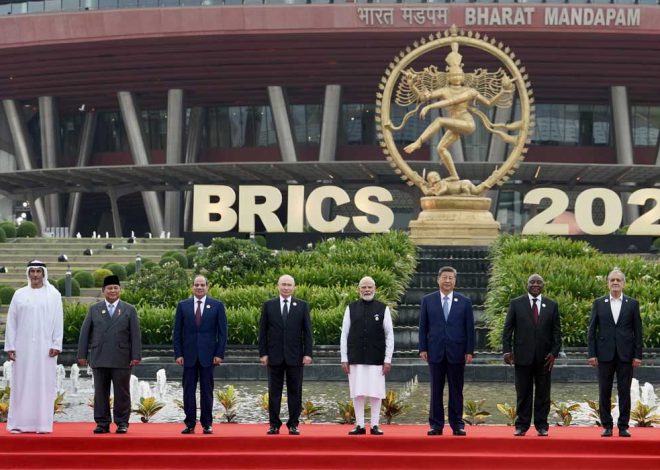
The 18 th BRICS Summit, hosted in New Delhi under India’s chairship, was a watershed moment for contemporary international relations. Twenty-five years after it originated as an economic acronym in 2001, BRICS has evolved into a major Global South forum. The high-level consultations brought together, for the first time, leaders from the expanded 11-member grouping (Brazil, Russia, India, China, South Africa, Egypt, Ethiopia, Indonesia, Iran, Saudi Arabia and the UAE).
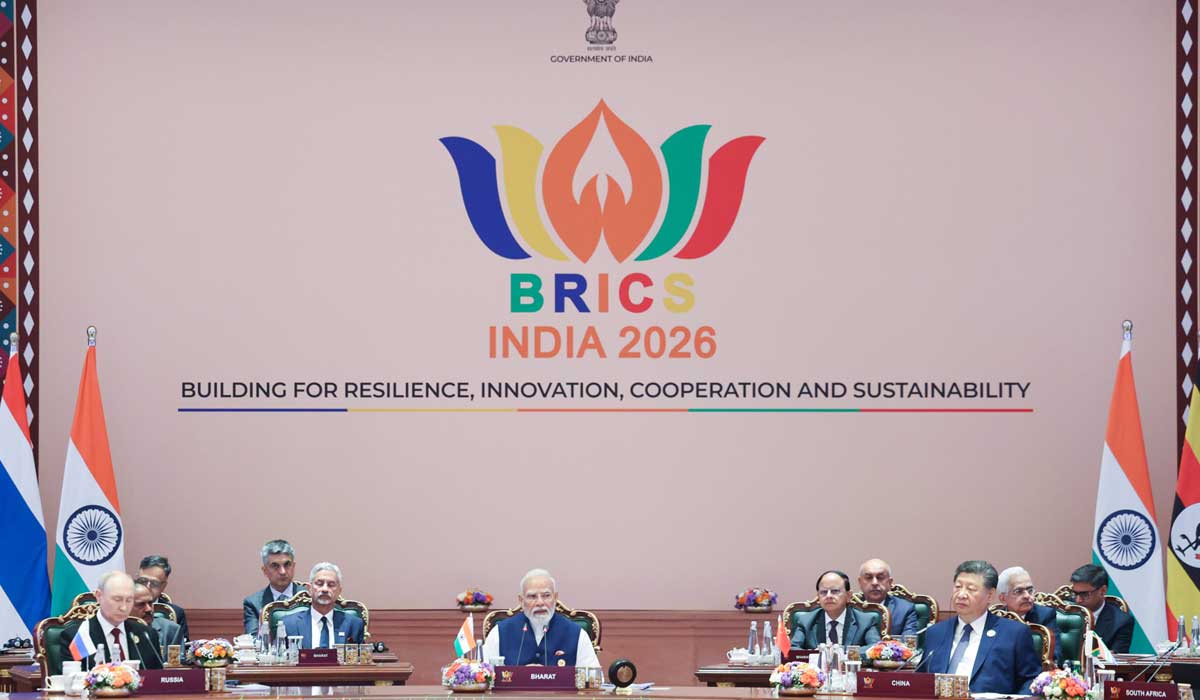
The summit possessed undeniable geopolitical weight with the participation of China’s Xi Jinping (his first India visit in seven years), Russia’s Vladimir Putin, Iran’s Masoud Pezeshkian, Indonesia's Prabowo Subianto, South Africa's Cyril Ramaphosa, Egypt's Abdel Fattah El-Sisi, Ethiopia's Abiy Ahmed Ali and others; while Brazil and the UAE sent high-level representatives.
As dawn broke over New Delhi on 12 September 2026, the 'Bharat Mandapam' venue stood transformed as a focal point of intense high-level diplomatic activity- flanked by elite security cordons, fluttering BRICS flags, and a fleet of media vans under the humid monsoon sky.
Inside the vast halls, polished marble and intricate floral arrangements awaited the participants for the closed plenary; outside, a palpable tension mixed with anticipation hung in the air - high expectations tempered with a sobering awareness of the formidable challenges to peace, tranquility and consensus in a world marked by deepening conflicts and divisions.
Navigating Divisions, Building Consensus
The Summit’s wider significance for the evolving global order can be assessed through four themes: Multilateral Reform, Economic Resilience, Innovation and Development, and India’s diplomatic stewardship - highlighting both its substantive achievements and limitations, while offering cautious optimism for the future.
The central theme of the summit - "Building for Resilience, Innovation, Cooperation and Sustainability," - provided the cue and basis for discussions, against the dark backdrop of the ongoing conflict in West Asia and Ukraine, crippling Western economic sanctions, energy insecurity, trade tensions, accompanied by the increasingly strident calls for reforms in the UN and the multilateral system.
The summit served as a crucial test, with challenging questions being raised as to whether a vastly expanded and politically diverse BRICS could still forge common ground. Nonetheless, the summit was able to demonstrate that the grouping’s fundamental strength lies not in ideological uniformity, but in providing a pragmatic forum where a diverse Global South can bargain, cooperate, and navigate a changing global order.
Key Takeaways
The most consequential outcome of the Summit was the unanimous adoption on 12 September of the New Delhi Declaration, a 140-paragraph consensus document. This followed overnight negotiations dragging-on into the early hours of 12 September.
Navigating the competing priorities and agenda of each of the eleven distinct nations required delicate diplomatic steering. The limits of consensus were initially exposed when the earlier Foreign Ministers’ meeting (that just preceded the summit) failed to yield a joint text, primarily due to sharp differences between Iran and the UAE over the West Asia conflict.
Just before the opening plenary, overnight negotiations had stretched into the early hours, with Indian diplomats and interlocutors huddled together and teaming up to narrow down and bridge the Iran-UAE divides on West Asia. Simultaneously, the Protocol and logistics teams executed their part with clockwork efficiency and precision to welcome leaders like Putin, Xi and others along with their entourage.
India deftly leveraged its presidency, holding intensive diplomatic parleys and bilateral engagement - including direct talks by Prime Minister Narendra Modi with Iranian, Emirati and Russian leaders.
A significant and rare sideline meeting between Pezeshkian and Abu Dhabi’s Crown Prince helped enable compromise language that avoided naming the United States, Israel or specific Iranian retaliatory strikes. The text called for “maximum restraint,” protection of civilians and infrastructure (including IAEA-safeguarded nuclear facilities), respect for sovereignty, and uninterrupted trade, supply chains and energy flows - without a separate detailed reference to the Russia-Ukraine war.
The Declaration carefully calibrated its language on key global friction points. On West Asia, it called for immediate restraint, the protection of civilians and critical infrastructure, and full Palestinian membership in the United Nations within a two-state framework.
On counter-terrorism, it adopted a firm stance against double standards while explicitly condemning the Pahalgam attack.
Regarding global governance, BRICS reaffirmed the urgent imperative to reform the United Nations and its Security Council to reflect contemporary geopolitical realities - supported by China and Russia backing greater roles for India and Brazil - alongside structural updates to the IMF, World Bank, and WTO.
The overarching message was clear: the Global South is actively transitioning from being a passive 'rule-taker' to an active 'rule-shaper' in global affairs.
Building BRICS' Economic Resilience and Strategic Autonomy
Economic and financial autonomy formed a major pillar of the deliberations. In an era marked by unilateral tariffs, coercive sanctions, and trade barriers, the New Delhi Summit prioritized concrete mechanisms to safeguard financial self-reliance and supply chain security across the Global South.
Addressing external economic pressures, leaders such as Russian President Vladimir Putin and Iranian President Masoud Pezeshkian championed independent pathways for trade, capital, and technology. Key proposals—including a dedicated BRICS cargo insurance mechanism, a collaborative Grain Market, and leverage of the New Development Bank’s $140 billion project portfolio—aim to shield member states from secondary sanctions while reinforcing the link between economic stability and regional security.
Crucially, these initiatives do not seek an abrupt displacement of the US dollar or the immediate overthrow of established multilateral institutions. Instead, through local- currency settlements, cross-border payment interoperability, the BRICS Pay initiative, and the BRICS Logistics Supply Chain Cooperation Framework, the bloc is quietly expanding its strategic autonomy. By creating practical alternatives, emerging economies are diversifying risk, reducing systemic vulnerabilities, and enhancing their collective bargaining power within the global order.
Underpinning this push for economic resilience is a call for actionable progress over abstract rhetoric. As BRICS enters its third decade, Indian Prime Minister Narendra Modi cautioned against the weaponization of technology and critical minerals, advocating instead for inclusive digital public infrastructure that anchors innovation directly to human development.
India’s substantive suite of proposed initiatives—spanning an Early Warning System for infectious diseases, disaster management guidelines, a BRICS Startup Innovation Fund, and a Digital Agriculture Network leveraging AI and geospatial tools—demonstrates a commitment to tangible outcomes. Coupled with focused platforms for MSMEs, urban mobility, smart grids, and regenerative agriculture, the summit signaled a decisive shift toward translating technological innovation into job creation, climate resilience, and sustainable development.
From Consensus to Collective Action
The broader significance of the New Delhi Summit lies in what it reveals about the reality of 21 st century diplomacy. BRICS is neither an anti-Western security alliance nor a monolithic world government. Its members maintain distinct strategic trajectories and internal rivalries: India and China remain border rivals; Russia is locked in conflict with Western powers; and Iran, Saudi Arabia, and the UAE hold contrasting visions for West Asia.
The summit demonstrated that BRICS works precisely because its members have learned the art of remaining in the room. By offering a non-ideological venue where nations that refuse to choose between competing global blocs can negotiate, trade, and manage disagreement, the bloc serves as an essential pressure valve in a fragmented international system.
As China prepares to assume the BRICS chairship in 2027, the ultimate test for the expanded bloc will be execution and implementation - converting its aggregate economic weight into functioning payment networks, technology exchanges, resilient supply chains, and meaningful institutional reforms.
In the final analysis, the New Delhi Summit offered neither a sudden global transformation nor a final resolution to international divisions. Instead, it delivered something far more valuable - proof that quiet diplomacy, pragmatic cooperation, and multi-aligned dialogue remain achievable amid deep global fractures. By replacing ideological confrontation with constructive engagement, the summit ended on a note of measured optimism - offering the global community a practical model for building a more inclusive, resilient, peaceful, and responsive international order.
BRICS now represents nearly half of the world’s population. The true measure of BRICS-2026, therefore, will lie, not in the declarations it adopted, but in its capacity to convert collective aspirations into tangible outcomes. Its enduring legitimacy, significance and defining strength lie in demonstrating that, even in a fractured and increasingly contested world – its ability to encourage dialogue, cooperation and collective action remain powerful instruments for building a more balanced, stable, resilient and inclusive global order.
About the Author