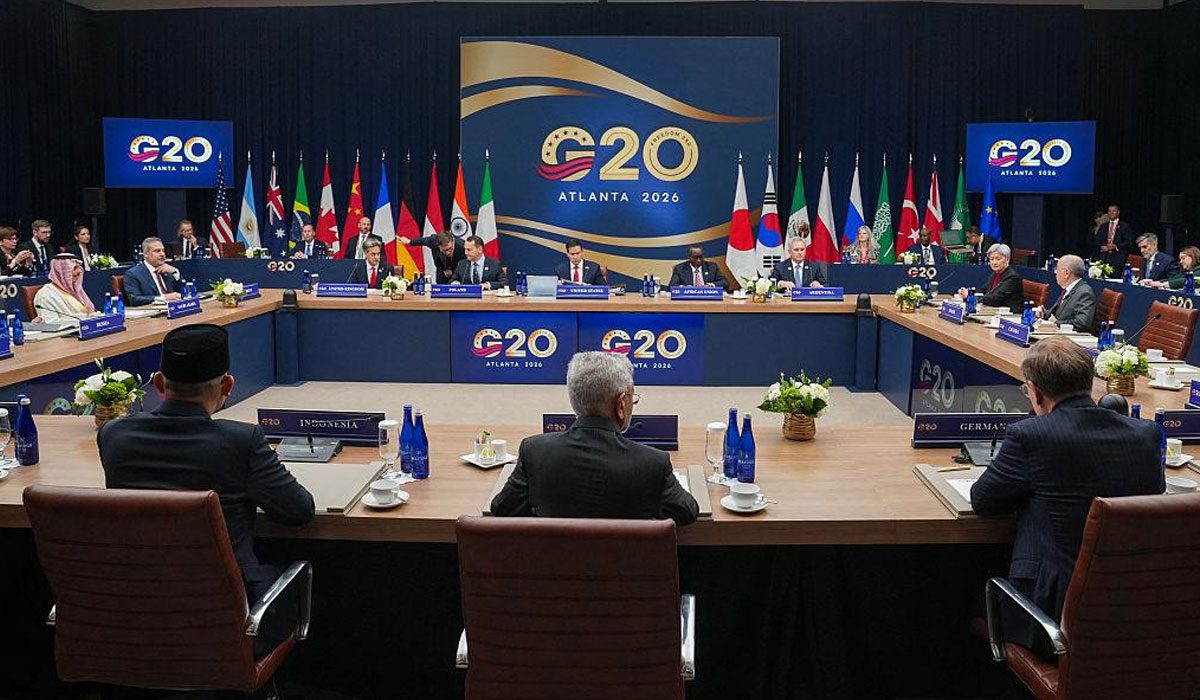
G20 Atlanta 2026: Jaishankar’s Diplomatic Outreach Strengthens India’s Global Engagement
India’s External Affairs Minister engages key international counterparts, raises concerns over maritime security and global economic stability, and advances New Delhi’s diplomatic priorities at the G20 Foreign Ministers’ Meeting.
India’s External Affairs Minister, Dr. S. Jaishankar, visited Atlanta, Georgia, United States, on 30–31 October 2026 to participate in the G20 Foreign Ministers’ Meeting (FMM), hosted by US Secretary of State Marco Rubio. The two-day diplomatic engagement provided India with an important opportunity to interact with leading global powers, strengthen bilateral relationships and exchange perspectives on pressing international challenges.
The meeting took place against a complex international backdrop marked by geopolitical tensions, regional conflicts, economic uncertainties and disruptions to international trade. Global economic stability, energy security, food security, maritime safety, freedom of navigation and resilient supply chains emerged as important subjects of discussion.
India’s Position at the G20 Foreign Ministers’ Meeting
During the deliberations, Dr. Jaishankar emphasised the importance of dialogue, diplomacy and international cooperation in addressing complex global challenges. He highlighted the need to protect freedom of navigation, safeguard civilian shipping and seafarers, and ensure the uninterrupted movement of international trade.
India also drew attention to the economic consequences of geopolitical instability, particularly for developing countries. Disruptions to maritime routes and international supply chains can have far-reaching implications for fuel availability, food security, fertiliser supplies and the overall cost of living.
The Indian position reflected the concerns of the Global South, whose economies often face considerable pressure from international conflicts and disruptions over which they have limited influence. Ensuring stable trade routes, affordable energy and reliable access to essential commodities remains an important international priority.
Eight Key Diplomatic Engagements: Strengthening India’s Global Partnerships
An important dimension of Dr. Jaishankar’s Atlanta visit was his series of bilateral meetings with foreign ministers and senior diplomatic representatives. These engagements provided opportunities to review existing relationships, discuss regional developments and explore avenues for enhanced cooperation.
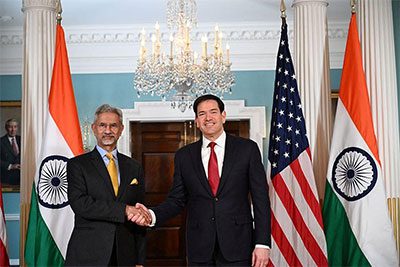 UNITED STATES | Marco Rubio
US Secretary of State
Jaishankar met US Secretary of State Marco Rubio and reviewed the progress of India–US bilateral cooperation. The interaction provided an opportunity to discuss strategic priorities and maintain momentum in the relationship between the two countries.
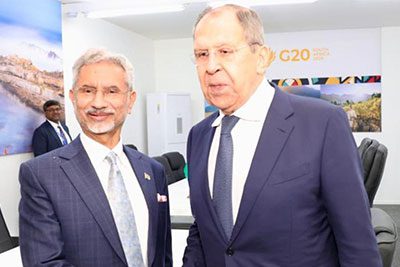 RUSSIA | Sergey Lavrov
Russian Foreign Minister
Jaishankar held discussions with Russian Foreign Minister Sergey Lavrov on the Ukraine conflict, the situation in the Gulf and broader international developments. The meeting also provided an opportunity to exchange perspectives on multilateral issues and regional security.
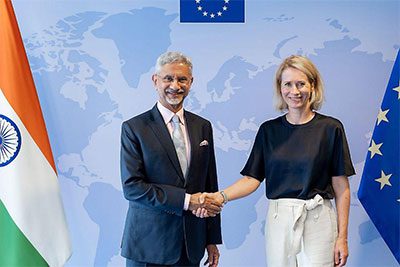 EUROPEAN UNION | Kaja Kallas
EU High Representative for Foreign Affairs and Security Policy
Jaishankar met Kaja Kallas and exchanged views on the Ukraine conflict and the situation in the Gulf. The discussions reflected the importance of sustained diplomatic consultations between India and the European Union on major international developments.
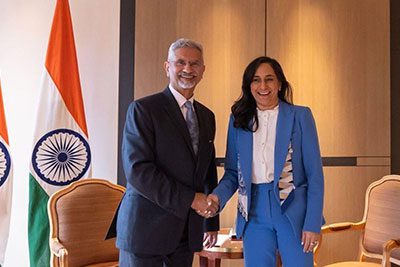 CANADA | Anita Anand
Canadian Foreign Minister
Jaishankar and Anita Anand reviewed the progress of bilateral cooperation and explored opportunities for further engagement. Their discussions also touched upon the Australia–Canada–India Technology and Innovation Partnership, highlighting the potential for stronger technological collaboration.
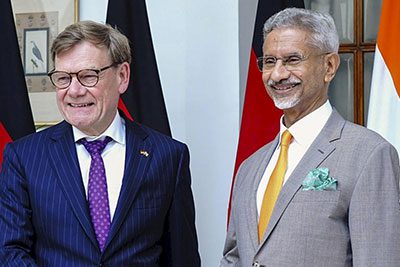 GERMANY | Johann Wadephul
German Foreign Minister
Jaishankar met Johann Wadephul to discuss India–Germany relations and broader international developments. The interaction highlighted the importance of continued diplomatic engagement and cooperation between the two countries on issues of mutual interest.
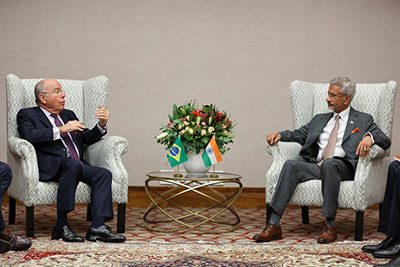 BRAZIL | Mauro Vieira
Brazilian Foreign Minister
The meeting with Mauro Vieira focused on bilateral relations and global issues. The discussions reflected the importance of India–Brazil cooperation and the continued coordination of two influential countries of the Global South on international matters.
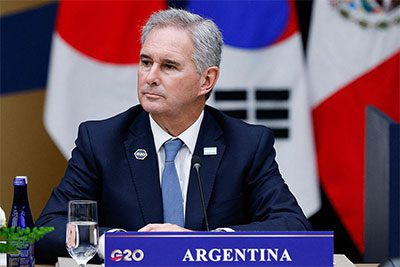 ARGENTINA | Pablo Quirno
Argentine Foreign Minister
Jaishankar met Pablo Quirno and discussed opportunities to expand bilateral cooperation in trade, critical minerals, defence and nuclear energy, alongside wider multilateral issues. The engagement highlighted the growing importance of India’s economic and strategic relations with Argentina.
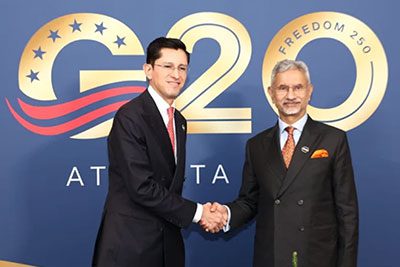 MEXICO | Roberto Velasco Álvarez
Mexican Foreign Minister
Jaishankar met Roberto Velasco Álvarez to explore ways to provide fresh momentum to India–Mexico relations. The discussions reflected the shared interest in strengthening bilateral engagement and identifying new opportunities for cooperation.
G20 Atlanta: Diplomatic Dialogue Amid International Differences
The Atlanta meeting also illustrated the difficulties of building international consensus on major geopolitical and security questions. Differences among participating countries, particularly over the Russia–Ukraine conflict and other international tensions, prevented the adoption of a joint communiqué.
Instead, the United States issued a chairman’s statement outlining shared priorities and areas of concern. These included energy and food security, freedom of navigation and resilient supply chains.
Despite differences in national positions, the meeting provided an important platform for dialogue and diplomatic engagement. It demonstrated that multilateral forums remain relevant in bringing countries together to exchange views, identify common interests and address challenges affecting the international community.
Conclusion
Dr. S. Jaishankar’s participation in the G20 Foreign Ministers’ Meeting in Atlanta represented an important engagement in India’s diplomatic calendar. His interactions with counterparts from the United States, Russia, the European Union, Canada, Germany, Brazil, Argentina and Mexico provided opportunities to strengthen bilateral communication and discuss areas of mutual interest.
The meeting also brought international attention to the importance of maritime security, freedom of navigation, energy and food security, and the economic vulnerabilities of developing countries.
At a time when geopolitical differences increasingly influence international economic and security relations, the Atlanta discussions reinforced the importance of sustained diplomatic dialogue and multilateral cooperation. For India, the meeting was an opportunity to articulate its concerns, engage constructively with major international partners and contribute to discussions on challenges shaping the global agenda.