

India and Nepal Open a New Chapter in Neighbourhood Diplomacy: Modi–Balendra Shah Summit Delivers Major Initiatives in Education, Connectivity and Development
India and Nepal have taken significant steps towards strengthening their longstanding bilateral partnership following the state visit of Nepal’s Prime Minister, Mr. Balendra Shah, to India from 22 to 23 November 2026. During his first visit to India since assuming office, Prime Minister Shah held wide-ranging discussions with Indian Prime Minister Narendra Modi, resulting in major announcements and agreements covering education, technology, entrepreneurship, infrastructure, energy, trade and cultural connectivity.
The visit, held at the invitation of Prime Minister Modi, reaffirmed the importance of India’s Neighbourhood First policy and the shared commitment of both countries to building a future-oriented partnership based on mutual trust, friendship and economic cooperation.
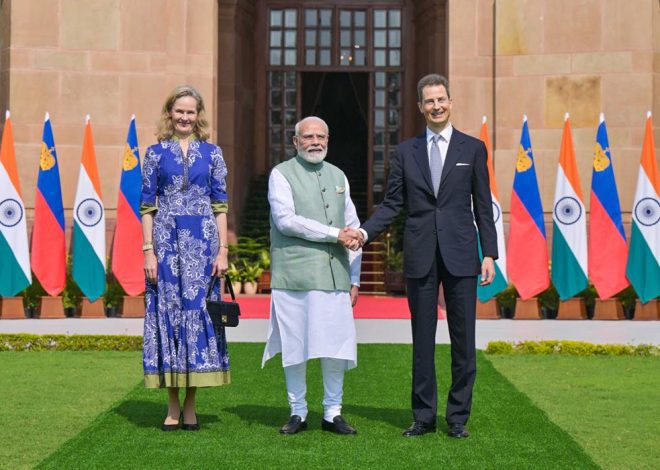
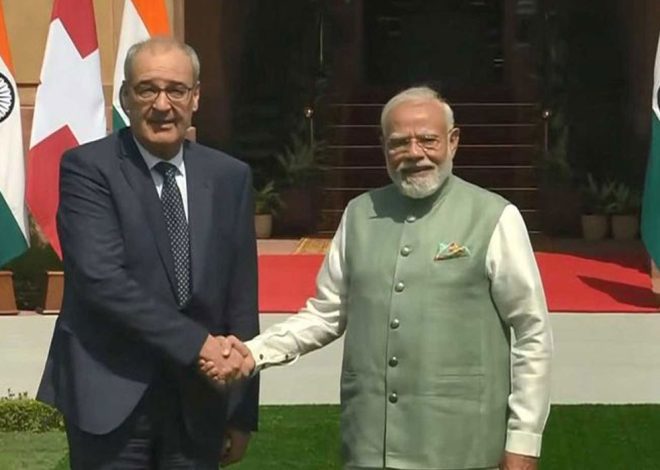
A Warm Diplomatic Welcome in New Delhi
Prime Minister Balendra Shah received a ceremonial welcome at Rashtrapati Bhavan on 23 November. During his visit, he paid homage to Mahatma Gandhi at Rajghat and called on President of India Droupadi Murmu. India’s External Affairs Minister, Dr. S. Jaishankar, also met the visiting Nepalese Prime Minister.
Prime Minister Narendra Modi subsequently held bilateral and delegation-level discussions with Prime Minister Shah at Hyderabad House and hosted a luncheon in his honour.
The discussions focused on strengthening existing areas of cooperation while identifying new opportunities in economic development, regional connectivity, energy security, technology, education and people-to-people exchanges.
IIT Campus, Startup Incubator and Innovation Hub: Investing in Nepal’s Youth
One of the most significant announcements of the visit was India’s decision to establish an offshore campus of the Indian Institute of Technology (IIT) in Nepal.
Prime Minister Modi also announced the establishment of a startup incubator and an innovation hub in Nepal to encourage entrepreneurship, technological innovation and opportunities for young people.
The two countries also agreed to expand scholarship opportunities for Nepali students, particularly in the fields of law and technology.
These initiatives are expected to strengthen educational cooperation, facilitate knowledge exchange and create new opportunities for students, researchers and entrepreneurs. They also reflect a shift towards a partnership that invests not only in physical infrastructure but also in human capital and innovation.
Saryu-Kamala Express: Connecting Ayodhya and Janakpur
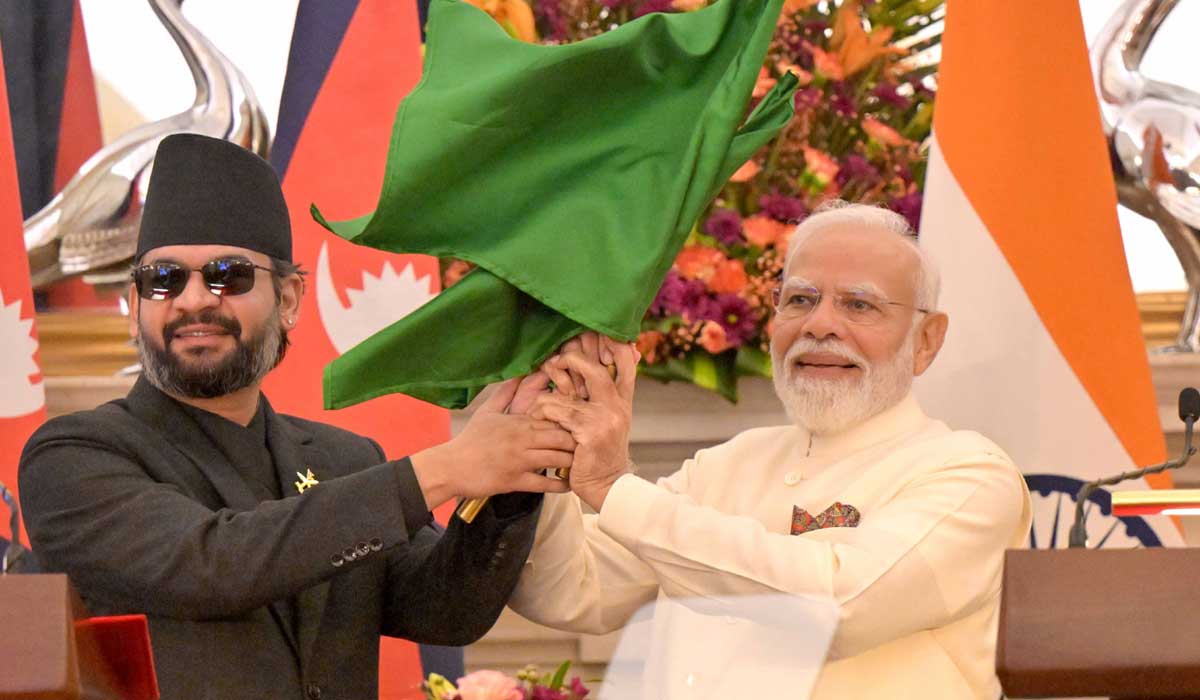
A major highlight of the visit was the virtual flag-off of the Saryu-Kamala Express by Prime Minister Narendra Modi and Prime Minister Balendra Shah at Hyderabad House.
The new weekly train service connects Ayodhya Cantt in Uttar Pradesh with Janakpur Dham in Nepal, two destinations of immense religious and cultural significance.
The railway initiative is expected to strengthen cross-border connectivity, facilitate religious tourism and promote people-to-people exchanges along the Ramayana Circuit. It also highlights the importance of shared civilisational heritage in strengthening contemporary diplomatic relations.
The two leaders further agreed to explore opportunities for developing Buddhist and Shiv-Shakti religious tourism circuits, opening additional avenues for cultural cooperation.
Major Development Cooperation Package for Nepal
India reaffirmed its commitment to supporting Nepal’s reconstruction and long-term development through a development assistance package amounting to INR 15,000 crore, equivalent to NPR 24,000 crore.
The package comprises INR 3,500 crore in grant assistance for post-disaster reconstruction and new infrastructure projects, along with an INR 11,500 crore rupee-denominated Line of Credit for energy sector projects.
The announcement assumes particular significance in the aftermath of the devastating Rasuwa-Bhotekoshi floods in Nepal. Prime Minister Modi expressed condolences for the loss of lives and reaffirmed India’s solidarity with its neighbouring country.
Prime Minister Shah acknowledged India’s humanitarian and technical assistance during the difficult period.
The two leaders also welcomed the proposed establishment of an Agro-Industrial Park in Chitwan with grant assistance from India, aimed at strengthening agricultural processing and value addition.
Strengthening Railway, Road and Border Connectivity
Beyond the Ayodhya–Janakpur train service, the visit advanced several important cross-border infrastructure initiatives.
The two leaders announced the completion of the Field Location Survey for the proposed Raxaul–Kathmandu electrified broad-gauge railway line and agreed to collaborate in the development of Nepal’s East-West Railway.
They also virtually laid the foundation stone for a new Integrated Check Post (ICP) at Banbasa and reviewed progress on other border infrastructure projects.
A new motorable bridge connecting Dharchula in India with Darchula in Nepal was inaugurated, strengthening direct connectivity between western Nepal and India.
The leaders also welcomed progress in the development of Integrated Check Posts at Bhairahawa, Sunauli and Dodhara-Chandani.
In another important development, India announced a new transit connectivity avenue for Nepal through Deendayal Port at Kandla, Gujarat. Access to Paradip Port in Odisha will also be made available once the necessary infrastructure is in place.
Energy Cooperation and Petroleum Infrastructure
Energy cooperation emerged as another important pillar of the discussions.
The two Prime Ministers dedicated Phase II of the Motihari–Amlekhgunj petroleum pipeline to the people of Nepal and virtually laid the foundation stone for a petroleum terminal at Jhapa.
They also emphasised the early commencement of work on the proposed Siliguri–Jhapa petroleum pipeline and agreed to explore cooperation in developing gas pipelines between the two countries.
In the hydropower sector, the leaders virtually laid the foundation stone for the 669 MW Lower Arun Hydroelectric Project.
They also agreed to accelerate work on the detailed project reports of the Pancheshwar, Saptakoshi and Sunkoshi multipurpose projects, which are expected to contribute to water resource management, energy generation and flood mitigation.
Progress on two high-capacity cross-border electricity transmission lines connecting Nepal with India was also welcomed.
Eight Memoranda of Understanding to Expand Institutional Cooperation
During the visit, India and Nepal exchanged eight Memoranda of Understanding (MoUs) covering a broad range of institutional and technical cooperation.
The agreements cover:
Academic and research collaboration between India’s National Forensic Sciences University and Nepal Police’s Crime Investigation Department.
Cooperation between Rashtriya Raksha University and Nepal’s National Police Academy.
Capacity-building and training programmes for Nepalese civil servants.
Cooperation in Ayurveda and other traditional systems of medicine.
Satellite communication cooperation through the South Asia Satellite network.
Technical cooperation in sustainable urban development.
Cooperation in health and medicine.
Cooperation in livestock and fisheries development.
These agreements are intended to strengthen institutional capacities, promote knowledge-sharing and expand collaboration between government agencies and specialised institutions in both countries.
A Joint Vision for a Prosperous Future
An important outcome of the visit was the adoption of the Joint Vision for a “Viksit Bharat and Samunnat Nepal” (Developed India and Prosperous Nepal).
The vision document provides a roadmap for expanding cooperation in economic development, connectivity, energy, water resources, climate resilience, disaster management, sports, startups, digital services, space and innovation.
It reflects the shared ambition of both countries to build a partnership that responds to emerging regional and global challenges while creating tangible opportunities for their citizens.
At the conclusion of the visit, Prime Minister Balendra Shah invited Prime Minister Narendra Modi to visit Nepal. Prime Minister Modi accepted the invitation, with the dates to be finalised through diplomatic channels.
A New Momentum for Neighbourhood Diplomacy
The visit of Prime Minister Balendra Shah to India represents an important moment in the continuing evolution of India-Nepal relations. The announcements and agreements demonstrate that the partnership extends well beyond traditional diplomatic engagement, encompassing education, innovation, economic development, infrastructure, energy security and cultural cooperation.
The decision to establish an IIT campus, startup incubator and innovation hub in Nepal reflects an investment in the aspirations of the younger generation. Meanwhile, the Saryu-Kamala Express and other connectivity projects reinforce the importance of geographical proximity and shared cultural heritage.
For India, a stable, prosperous and well-connected Nepal remains an important partner in its regional vision. For Nepal, cooperation with India offers opportunities to accelerate development, strengthen infrastructure and expand access to technology, education and investment.
As both countries move towards implementing the outcomes of this visit, the emphasis will be on translating diplomatic commitments into meaningful benefits for their people.
The Modi–Balendra Shah summit has therefore provided fresh momentum to the India-Nepal partnership, reaffirming that mutual respect, shared prosperity and people-to-people connections remain central to successful neighbourhood diplomacy.