

China Sets the Pace for a Stronger BRICS at the New Delhi Summit
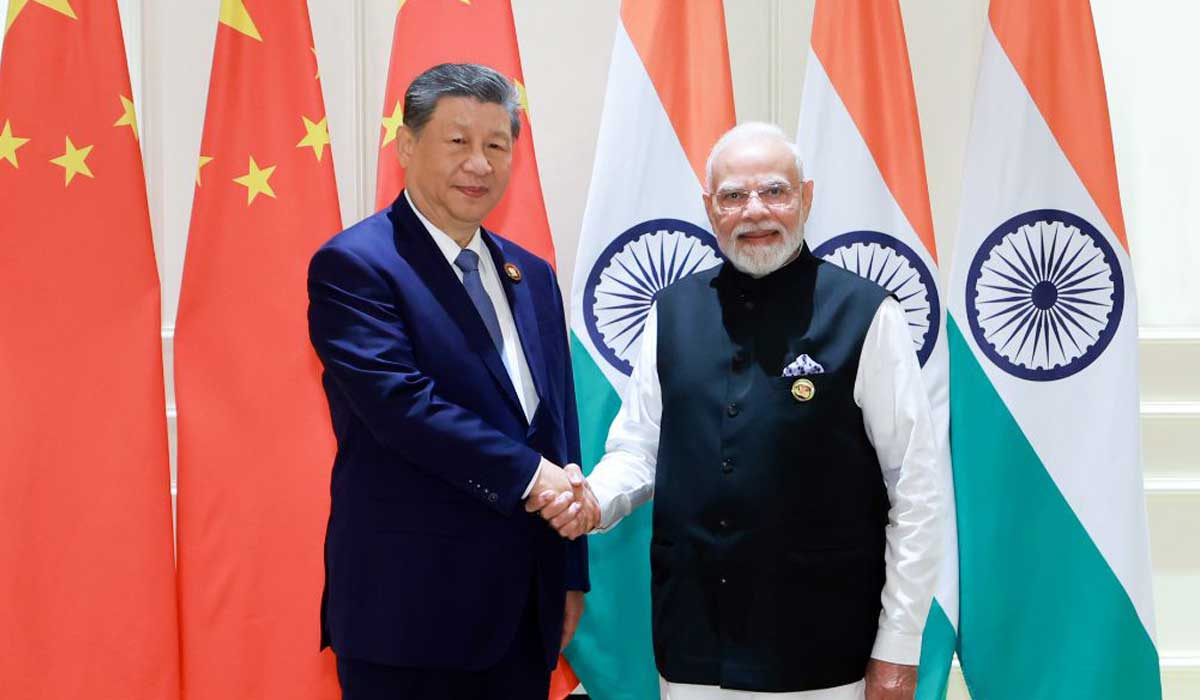
Chinese President Xi Jinping used the 18th BRICS Summit in New Delhi to set out an ambitious vision for the bloc’s next phase, calling for deeper economic integration, stronger industrial and supply-chain cooperation, and greater coordination among emerging economies and countries of the Global South.
Addressing the summit, Xi presented BRICS as an increasingly important platform for practical cooperation at a time when the global economy is facing geopolitical tensions, disruptions to trade and supply chains, and rapid technological change. His message placed China’s economic and technological capabilities at the center of a broader effort to strengthen the expanded BRICS framework.
The intervention underscored China’s weight within the grouping, while also framing Beijing’s approach around openness, mutual benefit and a stronger role for developing countries in global economic governance.
From an expanded bloc to a more integrated one
With BRICS now encompassing a wider group of major emerging economies, Xi argued that the bloc should make greater use of its collective strengths.
Rather than treating expansion as an end in itself, he called for the “Greater BRICS” to translate its growing membership into more concrete cooperation. This includes expanding trade and investment, keeping industrial and supply chains stable, and working toward more integrated markets among member countries.
The emphasis is significant because the enlarged BRICS brings together major producers, consumers, energy exporters, manufacturing powers and rapidly growing markets across Asia, Africa, the Middle East and Latin America.
For China, deeper economic connectivity within this group can create additional channels for trade, investment and industrial cooperation while strengthening the economic links connecting the Global South.
Xi also called for BRICS countries to leverage their position as economies rooted in emerging markets and closely connected with the Global South, while maintaining an open and cooperative approach based on mutual benefit.
China puts technology at the heart of BRICS cooperation
One of the clearest signals from Xi’s speech was the importance Beijing attaches to technology as a new pillar of BRICS cooperation.
China proposed the creation of a BRICS open-source artificial intelligence zone, alongside initiatives aimed at advancing cooperation in the digital economy, smart manufacturing and talent development.
The proposal places AI within the broader BRICS agenda rather than treating it as a purely national technological competition. It also reflects the growing importance of digital technologies to economic development across emerging markets, where access to affordable technology, skills and infrastructure is increasingly linked to competitiveness.
Xi’s proposals included the development of innovation incubators, the upgrading of traditional industries, the expansion of emerging industries and forward-looking planning for future industries.
For China, this approach offers a way to connect its technological and industrial capabilities with the development priorities of other BRICS economies.
Five areas for deeper cooperation
Xi outlined five areas in which he said BRICS cooperation should advance: artificial intelligence; trade and investment facilitation; the digital industry; smart manufacturing; and talent development.
Together, the proposals point toward a broader economic agenda in which BRICS cooperation extends beyond traditional trade to technology, industrial modernization and human capital.
This could become particularly important for newer BRICS members and other developing economies seeking to expand their manufacturing and technological capacities.
The Chinese approach therefore seeks to make BRICS more than a political forum. Beijing is advocating a framework capable of generating practical projects, connecting markets and supporting industrial development across member states.
A stronger voice for the Global South
Xi also linked the future of BRICS to the wider question of global governance.
He called on countries of the Global South to work together to defend international rule of law and reject the notion that power alone should determine international outcomes. His remarks reflected a longstanding Chinese argument for a more representative international system in which developing countries have a greater role in shaping global rules.
The emphasis on the Global South has gained additional significance as BRICS has expanded. The bloc increasingly brings together countries with different political systems, economic structures and foreign-policy priorities, but with a shared interest in increasing their influence within international institutions.
Xi’s message was therefore both economic and geopolitical: BRICS should strengthen practical cooperation while contributing to a more balanced and representative international order.
BRICS and the changing global economy
The summit also highlighted the bloc’s growing economic significance. Indian Prime Minister Narendra Modi noted that BRICS countries collectively represent around half of the world’s population, about 40 percent of global GDP and more than a quarter of global trade.
Against this background, China’s proposals carry weight because of the scale of its economy, manufacturing base, technological capabilities and role in global supply chains.
Xi’s emphasis on supply-chain stability was particularly notable. As companies and governments increasingly seek to diversify production and reduce exposure to geopolitical disruptions, Beijing is advocating greater coordination among BRICS economies to keep industrial and trade networks functioning.
The proposal reflects an important tension facing the global economy: while countries are pursuing greater resilience and diversification, emerging economies also have an interest in maintaining efficient cross-border trade and investment.
China’s place in the next BRICS
China’s role at the New Delhi summit illustrates how the expansion of BRICS is changing the bloc’s ambitions.
The organization is no longer limited to cooperation among its original members. With countries such as Egypt, Indonesia, Iran, Ethiopia and the United Arab Emirates joining the expanded framework, BRICS now brings together a wider geographic and economic spectrum of the Global South.
For Beijing, this creates both an opportunity and a challenge. China can use its economic and technological strength to promote ambitious projects across the bloc, but the diversity of BRICS means that its initiatives must also accommodate the interests of countries with different development priorities and strategic calculations.
Xi’s proposals at the New Delhi summit suggest that China wants BRICS to move in precisely that direction: toward a more integrated economic space in which trade, investment, technology, manufacturing and human capital reinforce one another.
The message from New Delhi was clear. China sees the future of BRICS not simply in expanding its membership, but in increasing its capacity to act. By placing economic integration, technology and Global South cooperation at the center of its agenda, Beijing is seeking to help shape what the expanded BRICS can become — and, in the process, reinforce China’s position as one of its most influential economic and technological powers.
About the Author