




Pakistan Must Protect Remittance Lifeline from Gulf Instability
Strengthening support for overseas workers and expanding domestic opportunities can help Pakistan reduce its vulnerability to Gulf disruptions.
Remittances, as a staple of Pakistan’s economy, cushion it against multiple challenges—both those from within and outside the country. Money earned abroad not only provides sustenance to families on a day-to-day basis, but also replenishes the country’s foreign exchange reserves when needed. Pakistan needs to shield its people from both, the disruptions to employment streams and the ensuing losses at the individual, family and societal levels.
Protection of migrant workers and of remittance flows therefore, have to be an economic priority for Pakistan.
An immediate priority is to prepare itself for possible disruptions to remittances without assuming that this lifeline has been completely cut off; a longer-term one is to wean the country off its reliance on payments from abroad to make up for shortcomings at home.
Resilience Does Not Mean Exposure Is Non-existent
In this context, the figures relating to remittances received in Pakistan are worth noting.
State Bank Pakistan data revealed — according to Mettis Global, a remittance industry monitor — that Pakistan was in receipt of approximately $3.59 billion in workers’ remittances in September 2026, which was an increase of 12.7 per cent compared to the same period last year. However, the inflows registered in September were 1.9 per cent lower than those recorded in August 2026 (Mettis Global, 9 October 2026).
What this means is that no disruption on a systemic level to Pakistan’s remittance flows has occurred. Individual cases notwithstanding, the volumes are substantial, and remain so despite regional headwinds. Similarly, a change in the patterns of remittance flows from one month to another is not enough to conclude that a serious challenge for migrant workers as whole has begun or will soon materialize.
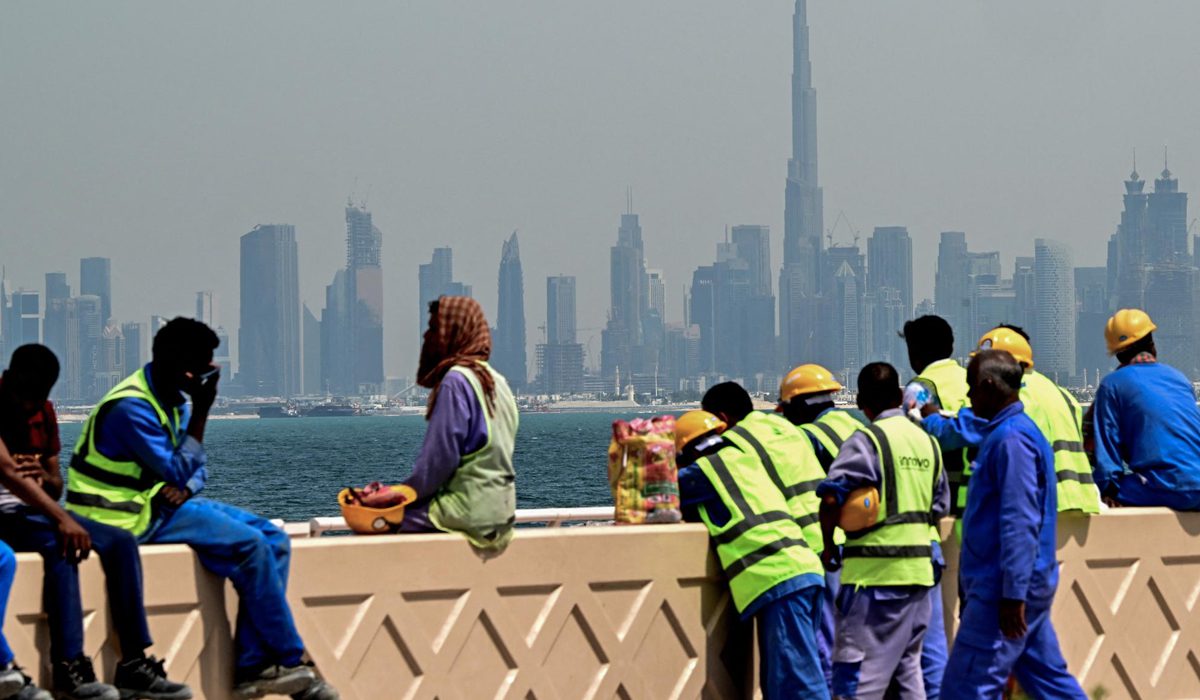
With regard to the significance of remittances, the UN Development Programme’s report on the impact of the Middle East crisis is pertinent here. Quoting its unpublished assessment from April 2026, “Arab states host more than 50 per cent of Pakistani migrant workers on any given day and account for the largest component of remittances to Pakistan. This makes the welfare of Pakistani nationals in the Middle East of particular interest to Pakistan, not only in terms of migrant workers’ livelihoods, but also from a broader socio-economic perspective.”
The situation in the Gulf has created a degree of vulnerability for both Pakistani families and migrant workers. Disruptions may lead to loss of income at a moment when the domestic economy and these families are confronting a host of other issues.
Energy Security and Employment Potential May Contribute To Similar Disruption
When it comes to vulnerability to price shocks, Pakistan’s susceptibility to interruptions in supplies—whether of LNG from Qatar due to a slowdown in sea passages via the Strait of Hormuz or other sources—is apparent to all. On 14 October 2026, for instance, Geo News reported on the arrival in Pakistan of the first LNG cargo of the month. The report noted that the energy security of the country was at risk due to disruptions of supply through the Strait of Hormuz. (Pakistan Energy Security Report, 14 October 2026).
While employment potential in the region might seem to provide an offset, it is necessary to understand that the Gulf economies operate on different principles, and with different degrees of readiness, both in terms of financial and resource inputs. Thus, the situation vis-à-vis energy and natural gas in particular will affect multiple variables — the readiness, resourcefulness and willingness of local employers to carry on employing migrant workers. It will also impact the broader commercial environment, which in turn is likely to trigger reactions among these workers. It is in Pakistan’s interest to closely watch developments that relate to workers’ formal wages, terms of renewed employment and recruitment processes and prepare for possible contingencies that may emerge in each area on a per-country basis.
Gulf Affairs Must Be Advanced Carefully but Consistently: Workers Come First
A host of considerations — employment, investment, security, trade, transit – factor in Pakistan’s relationship with the Gulf states. As a matter of priority — as also of policy – Islamabad must give serious thought to the needs of workers in this complex equation. Embassies and other agencies responsible for looking after overseas Pakistanis should have formal mechanisms by which these workers can air and resolve grievances about matters such as non-payment, disputes over contracts or prolonged processing of renewal of their visas and residency permits.
It is furthermore necessary to develop specific procedures with other countries for addressing issues and problems that may arise while workers are employed there with a sense of security and with opportunities for lawful transfer of earnings. Another important matter is the return and re-entry of migrant workers seeking to re-enter Pakistan as employees or to gain further education. Similarly, it is vital to establish formal processes in these countries for resolving employment disputes, and to facilitate access to local resources during any intercurrent difficulties.
These are all important preparatory steps in order to be ready for a serious disruption. In the meantime, Islamabad’s efforts are needed to strengthen its relationships with Gulf states and other countries, including Iran, in accordance with its strategic imperatives. This is a matter of both security and opportunity for Pakistan, particularly for its overseas workers and businesses. Such ties will be unable to eliminate disruptions entirely but they can mitigate adverse effects on the lives of Pakistani migrants and help the country respond more effectively in case of any large-scale crisis.
Build an Early Warning Capacity
When it comes to remittances, it is vital for Pakistan to go beyond headline figures. The State Bank, overseas employment agencies, embassies and other institutions should develop early warning mechanisms and keep track of matters related to both formal and informal transfer of money to Pakistan. The former type will have to be tracked closely in terms of volumes, as well as recruitment and dispute resolution procedures. Authorities should consider adopting specific procedures for resolving problems of migrant families as well as ways of facilitating access to formal transfer mechanisms. At the same time, the latter’s options should also be explored.
Authorities should be prepared to act when volumes decrease as a result of disruptions. It is important to bear in mind that a reduction in volumes of receipt may not necessarily mean there has been a general disruption to employment. On the other hand, an increase in such figures, however small, can be a sign of a problem for the families who are actually receiving far less than what the volumes suggest.
It is essential for families to have access to formal remittance transfer procedures at reasonable prices on a reliable, easily accessible basis. This entails transparency not only in pricing but also in terms of complaints mechanisms, and contingency planning at the state level in case of any disruption to current procedures. As a matter of priority, it is essential to provide migrant families access to money in a way that not only reassures but also enables them to meet their daily needs.
Strive To Reduce The Country’s Over-Reliance Without Disempowering Households
Remittances belong to the families earning them, and thus it is essential that the state does not instrumentalize them as an input to its own systems of development, as has often been the case so far. Any products or services, as well as financial instruments being sold to overseas Pakistanis as an investment should be considered voluntary on both ends and the associated risks clearly communicated. A far more preferable course is to promote the environment, policy conditions and opportunities that enable families to meet their needs without relying on migrant income.
This involves addressing issues of domestic energy and other essential inputs that are currently forcing many into migration to support their families. It includes promoting the conditions for sustainable business, and opportunities for investment and employment; it entails building expertise and experience, and facilitating access to more diverse and reliable formal channels for future migrants. The diversification of opportunities will take time, especially in the case of employment due to the language skills, qualifications, and other preparations needed. The same applies to alternatives to gas as a fuel source.
In this regard it is essential for Pakistan to pursue options that enable it to reduce its exposure to Gulf disruptions without abandoning the region completely. This will entail a careful balancing act over time, with a particular focus on building domestic capacities while supporting migrant workers at each stage of their journey abroad. Meanwhile, Pakistan must ensure that the resilience created by a healthy remittance stream is not allowed to become a distraction from its efforts to prepare for disruptions and build long-term alternatives.
About The Author